Grit

Talent x Effort = Skill

Skill x Effort = Achievement

There’s an old saying, “hard work beats talent when talent doesn’t work hard”.

I preach this to my daughter now that she is old enough to understand.

Growing up, I was a chubby, 5’10”…ATHLETE!

I’ll be damned if anyone was going to outwork me. I couldn’t make a lay-up for the life of me, but could shoot lights out behind the arc.

I was always picked for three on three games though because I was going to hustle, didn’t need to score and would defend like a pit bull.

In baseball, I never was the most talented or the fastest, but after a game I would always be the first at the concession stand for the free pizza and soda. There wasn’t anyone faster than me for the sprint to food…do I mention I was chubby?

I was always taught to be the hardest worker in the game and I didn’t get to sit back and coast. I didn’t have the talent for that.

The one area that I have the talent to coast is school. I could just show up and get A’s in school.

A couple of quick stories before I get back to the above equations.

When I was in undergrad, I had the honor of being kicked out of a biology class…by my Advisor at that! I have an excellent memory and am very much an auditory learner. This means that I can memorize lectures and then school just required a regurgitation of the material in most cases and rarely an assimilation of material meaning, I just had to recall the information and not put it to practical use. For someone with a great memory, it was just a matter of showing up for lectures and tests. Anyhow, Dr. G (not me Dr. G, but a biology professor Dr. G at Governors State University) told us to read a chapter of the designated book. I read the chapter. I highlighted the chapter and I wrote notes within the margins of the book for the chapter. Another detail that I don’t talk about is that reading is not my strong point. I can read, but have to be an active reader with a highlighter and pen in order to remember a little bit of what I read. Sometimes I would simply record myself reading the chapter and then go back to listen to the recording in order to memorize the material. After reading the chapter, I showed up to the next class in my usual style, popcorn and iced tea or Diet Coke. I never brought books, notebooks or even pens for most classes. Remember, I’m an auditory learner. I just needed to hear it. Also, I was kind of egotistical back then…okay I was a lot egotistical and never back downed when challenged. I now know that not all challenges are worth the time or effort.

Picture this: you are the professor of a college biology course in a lecture hall with about 40 students. There is one student that sits at the back row all by himself. No books, no pens, no notes and his feet kicked up onto the row in front of him. AND HE IS DRINKING SODA AND EATING POPCORN LIKE ITS ENTERTAINMENT.

In the class, Dr. G read the chapter to use that we were supposed to have read for the class. She had notes that were nearly exact to the book.

Well, Dr. G called me up front after class because she didn’t understand my learning style.

Dr. G: “Vince, are you bored in my class?”

Me: “well, you told me to read the chapter and I did. I show up today and you are just re-reading the chapter to me.” (I never said that I was bored, but also didn’t say I wasn’t)

Dr. G: “Vince, (anytime a teacher uses your name like this its like a mom using your full name) how would you like to never have to come back to this class again?”

Me: “I need this class to graduate with the biology degree, can I skip the class and still get the grade?”

Dr. G: “yes, you won’t ever come back (mind you this was my advisor) and you can take the tests in the library”

Me: “sounds good. See ya around”

I never saw this teacher again as she transferred me to another advisor.

In case you were wondering…I got an A (just to spite her and for no other reason).

Talent x Effort = skill

I have a good understanding of the human body. I remember in high school Spanish class, that I would be reading and studying Delavier Anatomy of XYZ books. I would read all of the bodybuilding and weightlifting books I could, including Arthur Jones, Fred Hatfield, Mike Mentzer, Arnold’s Encyclopedia of Bodybuilding, and too many magazines to mention. I had a passion for learning how the body moved. It was a talent to be able to see movement patterns and understand how to make a movement more efficient. That talent plus all of the reading and learning, plus the time that I spent in the gym enabled me to place in state competitions in both powerlifting and strongman.

That skill + effort enabled me to get a Masters degree in Physical Therapy and later the Doctorate in Physical Therapy.

Having seen part of my personality, I also later obtained the OCS (a Board Certification in Physical Therapy which is only achieved by a small percentage of physical therapists) just because I don’t want anyone thinking that they were better than me. That’s the chip on my shoulder from childhood issues.

This profession has treated me well. I have done my best to give back to this profession.

In life, I try to continue to move forward. I don’t know if I will always be a treating clinician, but while I am, I want to be among the best treating clinicians. I want my patients to walk away saying “that was worth it”.

The equation above is from Duckworth’s book Grit: The Power of Passion and Perseverance.
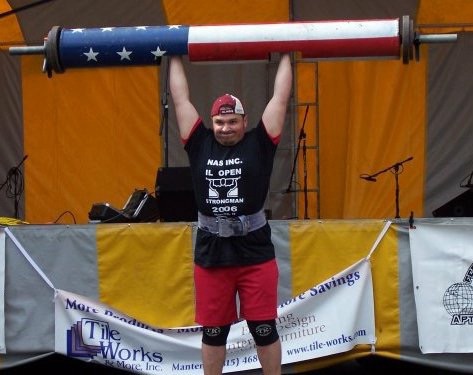
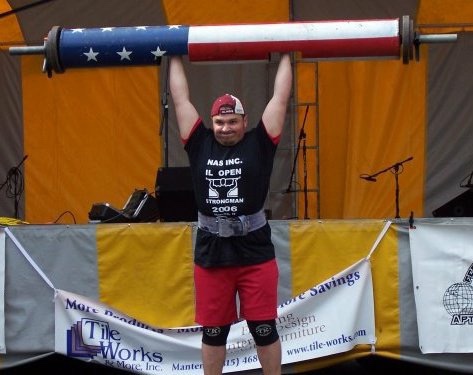
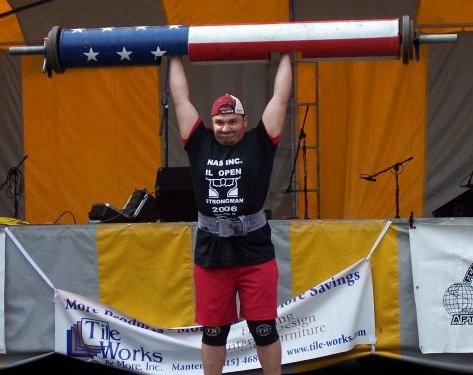
2007 Illinois State Strongman Competition

Physical activity after a stroke

Physical activity levels in people that experienced a stroke do not meet general activity guidelines.

After 20 years in practice, I’ve evaluated and treated many patients with a stroke. On the flip side, I have family that have experienced a stroke. I’ve learned that each person is unique. Each person has a unique personality and drive. Each person has a different “why”.

When I say “why”, I mean “why” try to get better”? “Why” go through therapy? “Why not” just sit around and get busy dying.

My uncle had a stroke. He was a pillar of health before the stroke. He was a gettr done guy. Why wait for someone to do that which I could do. I have major respect for my uncle because his life and my dad’s parallel each other.

With that said, after his stroke, is still determined to be independent and is back to living his best life. He has physical limitations, but he worked hard to figure out how to get around those limitations. He is back to volunteering and helping other veterans like himself.

On the flip side, I have seen those patients that fall into the “why…me” track. These patients struggle to get better.

My first patient as a student intern was in a subacute rehab. I was given the choice of two patients. I could’ve treated the patient that just had a total knee replacement (back when I first started in this profession, patients stayed in the hospital for days and then went to a skilled nursing facility or subacute rehab commonly after the surgery). Instead, I chose to take the patient that experienced a stroke. I knew in my career that I would see thousands of patients with knee replacements, but I wouldn’t be in the setting to see as many patients that experienced strokes.

I remember this patient vividly. He was a business owner and he had a name and business that used alliteration in his introduction. Once he introduced himself, the glitter in his eye disappeared. He started crying almost immediately.

THIS WAS MY FIRST PATIENT AS A STUDENT!

WTF!

I had a lot of experience working with people that had struggles, having grown up either at a private bar or local VFW.

This guy was told by his doctors that he would never walk again (doctors are not God). If you’re a physician reading this…be careful how you speak to patients. This also applies to physical therapist that are reading the blog.

The patient went on to tell me how he lost his business, his wife divorced him and took everything he had but the crucifix on his neck. His van broke down and he would have to live in his van (not down by a river for those old enough to get it).

Also, for my first day at the rehab unit, my clinical supervisor told me that she just got a promotion and wouldn’t be able to be with me at all during my internship and that she was sure I’d do well.

That sucked and added a little more pressure to my clinical. I almost got kicked out of this clinical twice, which is better than the time that I do get kicked out of an inservice later in my student career.

Back to the alliteration introduction patient.

He was crying, sitting in a wheelchair, and feeling horrible for himself because of what he was told by God…I mean the doctor.

I had a choice to make. We always have a choice to make when working with people. Which version of me dos the person in front of me need at that specific point in time.

I flipped the coin between empathetic shoulder to cry on and ear to listen and “eat lightening and crap thunder” (this is Mick from Rocky for those young whippersnappers).

I chose Mick. I was as hard as I could be without being an asshole (which was good that I didn’t have a supervisor because she may have thought I crossed the line on day one when I said “you want to cry or you want to walk!“).

This guy chose to walk. By the time he was discharged after 4 weeks, I took him for a walk around the outside of the hospital grounds. Realistically, I sat in the wheelchair and he pushed me for about 15 minutes.

This guy not only walked, but he regained his freedom in life. He changed his perspective. He didn’t have to live by a river, but was able to get a job and get back on his feet.

I’ll never forget alliteration introduction guy. He got that sparkle back in his eye by the time he was discharged.

THE PATIENT IS THE ONLY PERSON THAT MATTERS!

Not the stroke! The patient may always have disabilities, a limp, an inability to walk, but it’s sour job to help them find the “why”!

That “why” is what will help the patient to increase physical activity levels. We may not “fix” the problems, but we need to do our best to not let problems compound on problems.

How one book can change your pain.

Neck pain affects many, and treatments like spinal manipulation therapy, medication, and exercise can help.

A majority of the population will experience neck pain at some point in life.

Treatments commonly used for neck pain are spinal manipulation therapy, medication and a home exercise program.

Bronfort et al (2012) tried to answer the question regarding which option may be the best treatment for neck pain.

The manipulation group received mobilization and manipulation of the cervical or thoracic spine after an evaluation in order to determine if there were any areas of the spine that did not move well. These patients were assessed by chiropractors with at least 5 years of experience. The chiropractors could use any technique and see the patient for over a 12 week period. The patients in the spinal manipulation group could also receive light massage, assisted stretching, and hot/cold packs. The visits lasted 15-20 minutes.

The medication group received NSAIDs, acetaminophen, narcotics, and muscle relaxants. The visits lasted 15-20 minutes and the patient was seen based on a physicians recommendations.

The home exercise group received 2 sessions lasting an hour per session split over the course of 1-2 weeks. These patients were issued “Treat Your Own Neck” by Robin McKenzie. These patient’s sessions also discussed basic anatomy and advice regarding posture, lifting, pushing and pulling.

How’s this sound thus far? We all have our biases. Aside from medication management, as a PT, I am trained on both Spinal Manipulation Therapy and Mechanical Diagnosis and Therapy, which is the basis for the book used in the study.

Having treated patients for 20 years has allowed for perspective. My bias is that the exercises will have a greater effect than the manipulations, but I also believe that manipulations have value for patients. The thought is that if we spend our time with patients only doing hands on activities such as massage and manipulations, that we will never “ teach a patient to fish”. The patient will always be depending on the “hand out” or better described as the “hands on” from the therapist. In reality, spinal manipulation therapy and exercises are meant to be used as an adjunct to get the patient back to life and no longer need to grab their wallet to pay for healthcare services.

In the end, both spinal manipulation resulted in similar outcomes for patients except for one category in which spinal manipulation will typically be favored as explained above…patient satisfaction.

In my humble opinion, people like when things are done to them or for them instead of having to do the work themselves…especially when they are paying for it! This holds true for going out to dinner, oil changes, home repairs etc. There will always be a service sector making money by minimizing the work needed by the customer.

One result that favored the exercise group was neck range of motion.

The exercise group and manipulation group scored similar on their perception of function, but the exercise group moved more.

Let’s put this in perspective:

The manipulation group used 15 vists on average

The home exercise program used 2 visits on average

The medication group used 5 visits on average

Time is money. Would you rather pay for 15 visits to get similar functional results, but less range of motion if it saves you the effort of doing exercise yourself or would you rather save the time and money but put the effort in yourself?

The good news is that you have options and both lead to similar results.

If you have a high deductible, you may prefer to pay out of pocket for 2 visits instead of 15.

If you have met your out of pocket max, you may just see it as free healthcare and want to go for the hands on experience.

All of this is important and your physical therapist or chiropractor should be having this discussion with you at some point t in your care.

If you are in need of physical therapy in the South Chicago Suburbs, I’m here to help. I’m trained in both spinal manipulation therapy and the “McKenzie Method” and finally am a Board Certified Physical Therapist in Orthopedics through the American Physical Therapy Association.

If you are interested in the book that resulted in 2 visits, click the link below

https://amzn.to/3OYV7cN

I will teach you to be rich by Ramit Sethi

Hey all,

It’s been awhile since I’ve been on the blog. Since my last post, I have been working for a university setting and have switched to focusing on personal finance in my free time.

Having read a lot of personal finance books from Ramsey, Kiyosaki, Collins and such, I thought I would give the book by Ramit Sethi a go.

For those that don’t know, Ramit has a Netflix show, podcast, YT channel, and a book. After listening to many of his podcasts, I decided to read the book.

The podcast is fairly long content, so it would take a couple of commutes to listen to each episode, especially since my longest commute now is only 25 minutes. There are a lot of details in the podcast and it is similar to a Ramsey Solution podcast in which he is taking real people and analyzing their personal finances. Ramsey does it in minutes and Sethi does more of a deep dive over the course of 40-60 minutes.

The book “I Will Teach You To Be Rich” is the same name as the podcast. I found the book a little remedial at first. It wasn’t until I had conversations with some coworkers and family that I realized this book actually has a large audience. For those that don’t understand the dangers of credit card debt this book is worth multiple of its value. I used to own a company and during my days, I would have conversations with multiple patients and employees per day. One particular conversation comes to mind:

The person had over $10K in credit card debt, but instead of plowing all of the excess money towards the credit card, the person was “investing” in RobinHood. Not to say that there is a problem with using RobinHood to invest, but investing in RobinHood for a chance to make 8-10% while paying a credit card 20% will always keep the person trying to dig out of a hole, spinning wheels. This person couldn’t grasp the concept that credit cards need to be paid off every month. For this person, the book would be a lifesaver.

This book is written for the beginner OR someone that doesn’t want to spend too much time thinking about money and financial health. There’s a strong theme to automate a lot of investments. Again, this is great for a majority of people.

If you don’t know why a “health savings plan” can act like a super Roth for healthcare expenses, this book is perfect for you. It will explain all of the steps that a person should take before investing in this type of account.

To buy the book, click the link: https://amzn.to/3T2dGwd

As an Amazon Affiliate, I earn a commission for each person that purchases a book. I would be just as fulfilled if you got the book from the library or borrowed the book from a friend. The information is good regardless of how you get the book.

Chameleon

While in PT school, I was called a chameleon.

This was meant as a derogatory name.

The person. Said that I wasn’t authentic and that I could fit in with any group, meaning I didn’t fit in anywhere.

I learned at a young age that I had to be able to fit in to survive.

My family transitioned from a gang war territorial neighborhood to a farming community.

My dad was an alcoholic and I was raised in a bar or VFW.

I had to learn how to act around adults, gang members, murderers, drug dealers, country folk and farmers.

This has helped me immensely in life because I don’t feel insecure around too many groups. I don’t feel there to be a communication block around others. I can be empathetic to multiple groups.

As a PT, it is easier for me to put my own biases aside to help the person in front of me and I am quicker to u defat and the biases and experiences of the patient in front of me.

I learned at a young age to keep my mouth shut until I understand the situation.

Back then it was to maintain the peace and avoid conflict.

Now it is to gain trust and improve the therapeutic alliance.

Basics of health insurance

The Costco #costcoconnection actually has some pretty good articles.

This is a topic that unfortunately many don’t understand or take the time to understand how it impacts them during the year.

When I was in private practice, I had so many conversations with patients and prospective patients about deductibles, copay, co-insurance, and especially towards the end of the year…out of pocket max

Ok.

  1. Deductible: most all insurances now have a deductible. This means: the amount of money that the patient has to pay(after adjustments) before the insurance company will start paying their part.
    Check out the funny video in the comments to learn more about adjustments.

If a patient has a $5000 deductible, it means that the patient is paying all of the medical bills in whole for the first $5000 before the insurance company kicks in.

Why does this matter?

If you have a high deductible and don’t plan on spending more than $5000 in a year, it may be better to go through a cash based medical practitioner instead of using insurance.

The cash based professional may actually be cheaper when averaged over the course of a year, even though you still are paying the premium (the amount you pay out of your paycheck every 2 weeks etc) to carry the insurance to cover the risk of major medical issues.

If you know that you are a frequent flyer of the medical system, then purchasing a lower deductible may be more advantageous than the high deductible plan.

This takes some analysis and guess work every year to determine which plan one will buy into.

  1. Copay/co-insurance: after you paid your deductible, the insurance company will now start to pay for some or all of your medical care after this point, depending on what your insurance is contracted to pay. It’s common to see insurances pay for 80% of the ADJUSTED BILL, and the patient is responsible for the other 20%.

This means that you first pay for your premium (the amount coming out of your check to have the right to carry insurance, the n You pay your deductible: the amount of money you have to pay out of pocket before you trigger the insurance paying for anything to begin with AND THEN YOU PAY THE COPAY OR CO-INDIRANCE: which is the part you agreed to share of the payment with your insurance company of your medical bills.

  1. Out of pocket max: this is like the heavens have opened (depending on the perspective). This means that you have spent so much on your own healthcare throughout the year that the insurance company now says: you’ve been tortured enough, we’ll cover everything from here.

This means that the insurance company will now start paying for everything (heavens opening up and angels singing), BUT it also means that you were so sick and needed so many procedures and testing throughout the year that you spent through your premium, deductible, and copays/co-insurance.

Ehler-Danlos Syndrome: the lived experience

“Joint hypermobility Syndrome (JHS) and Ehlers-Danlos Syndrome are heritable disorders of connective tissue…affects the skin, blood vessels and ligaments…symptoms include joint instability, increased range of motion, easy bruising, and joint pain…increased incidences of fibromyalgia , dysautonomia, and urinate and gastrointestinal problems.”

Some people are just very flexible. Like very flexible. Think of the kids that would do crazy party tricks. Those that can fold themselves up into crazy shapes and call themselves “double jointed”. This flexibility, as cool as it may seem to do party tricks, may actually be an inherited problem called Ehlers Danlos Syndrome or joint hyper mobility syndrome.

The problem with the “party trick” gene is that it also comes with its own set of problems like dislocations, heart rate issues, pain, and sometimes comes with both bowel and bladder issues.

“…those with JHS suffered significantly greater psychological distress compared to those without the condition, namely anxiety, depression, and panic disorders…A lack of professional awareness of the syndromes can cause considerable delay in diagnosis, and the otherwise normal outward appearance of patients can lead healthcare professionals to question the legitimacy of their pain and symptoms.”

I didn’t understand this at first. That’s just my ignorant response having never experienced working closely with patients that have EDS. Now that I’ve treated more than a dozen patients with this diagnosis, I understand the anxiety. Patients worry about subluxations. For those that don’t know this term, it means a joint pops out and then pops itself back in with little effort. It is still darn painful.

A long time ago, I used to be strong. A former strongman and power lifter, I had respectable enough numbers to be able to qualify for the national stage. As a lifter, I wanted to learn how to snatch and clean and jerk. I got decent at the movements and during a 215 lb snatch, I dislocated my shoulder. I made an error in judgement and tried to save an “unsavable” lift. My shoulder popped out and it was darn painful. Within a minute I was able to reduce it, but that left me questioning my abilities, left me with pain for months, left me much weaker than I had been and really impacted my confidence with lifting…Patients that have EDS have frequent dislocations. Some of the patients that I’ve treated have weekly dislocations and I’ve had to draw on my own experience to better be able to treat this population.

Also, so many clinicians don’t know anything about this disorder. Even physical therapists, many have “heard of it”, but that’s about the extent. Understanding the repercussions of the disorder, nope. I routinely see patients with low back pain and if I have a patient that can palm the floor with flexion, I’ll check the Beighton Scale to at least screen for hyper mobility. I’ve had 2 patients that were later diagnosed with EDS-JHS after being referred back to the physician and geneticist.

“…five major overarching themes: lack of professional understanding; social stigma; restricted life; trying to “keep up”; and gaining control”

On a side note, I’ve seen an Oxford comma, but never an Oxford semicolon. I actually had to look up the rules for using a semicolon and this sentence didn’t really fit the rules. I did learn that I should be using the semicolon more often in my writings.

The patients that I work with express frustration about finding medical professionals that understand the disorder.

One patient had to go to the Emergency Room for treatment and when the physician got to the acronym POTS in the list of problems, he asked the patient what it meant. The patient told the physician to at least go look it up before attempting to provide any treatment for the recent bout of near syncope (fainting). As a clinician, I can understand the difficulty of keeping up with different syndromes, but as a professional I know it’s my duty to do my due diligence prior to attempting to treat a patient complaint.

Patients were told their problems were “growing pains…all in your head…there must be something wrong in your mind…”

Imagine knowing that you have a problem, but the medical professional is so arrogant to say you must be creating this. Some of these patients were labeled as having Münchausen syndrome. Just because we can’t define a problem, doesn’t mean that the patient’s problem doesn’t exist. It simply means that we are ignorant of the problem or not enough funds or attention have been paid to the problem in the medical literature to influence population health.

As medical professionals, we have to get better at saying: “I don’t know, but I will look more into it. If I don’t have the answer by the next visit, I will refer you to someone that specializes in this problem”

We have to be more humble. I understand the want to be able to give the patient an answer, but but sometimes we don’t have the answer.

We can’t be all things to all people and we have to be okay with that. There’s a balance that has to take place among the following: in clinic work responsibilities (which as professionals extend beyond clinic hours many days per week), life outside of the clinic, and keeping up to date with the research.

This is the life we signed up for and if the medical professional can’t keep up with all three, that’s fine. Be self-aware enough to know this and establish priorities.

In saying this, don’t be so arrogant to tell the patient that the problem is all in their head or growing pain because we don’t have a better answer. If we are defaulting to this, we have to also say something along the lines of “I tested you for everything that I know how to test and you are negative for everything that I know”. At least be humble enough to tell the patient that it’s our knowledge that may be the limiting factor in figuring out their problems.

“Patients described physiotherapy with inexperienced practitioners as ‘useless, ‘diabolical’…No help whatsoever’, many felt that their physiotherapists had ‘given up’ and reported that exercises had worsened their pain or led to further injuries”

There’s a pendulum in our profession. The pendulum always exists. It’s differing viewpoints.

On pain: the viewpoints historically have been bio mechanical and psychosocial. They tend to meet somewhere in the middle.

On treatment: the viewpoints seem to be manual therapy vs exercise. Again things tend to meet in the middle.

The reason I bring this up is that a recent discussion focused on PT as simply a way to provide linear progression to our patients. Unfortunately, not all patients will be able to progress like this. Using a straight linear progression approach may actually do harm to these patients. I had the honor of meeting one of the GOATs of powerlifting, Eddy Coan, and I asked him what his secret to success was. His answer shocked me:

“I avoided injury”

After listening to him talk about this, it made great sense. Although he wasn’t looking to make huge progressions year to year, he never had a regression.

This is something that has stuck with me and I literally just had this conversation with a patient last night. The patient called me and was disheartened because she had to miss an appointment. We discussed the macro picture of how she has made progress and that even though the progress is slow, missing one session in 6 weeks will not cause her significant issues in her big picture goal.

So often we miss the big picture. Having lifted with high level athletes in my past, I’ve seen lifters go a year before setting a new personal best lift (PR). These lifters didn’t get frustrated because they understood the game and that progress is going to be slow at times, but will come eventually. These athletes understood that stressing the body will create change, as long as the stress is not added so rapidly to create injury.

We have to keep that mindset when working with patients. We can’t expect linear progressions week to week or worse yet, session to session. We have to honor the body’s ability to adapt and understand that tissue remodeling can take a long time in order to make progress.

“Studies have indicated a lack of training in JHS/EDS for primary care doctors and other healthcare professionals such as physiotherapists.”

I don’t have anything to add to this other than…

YOU KNOW WHO YOU ARE!

If you lack the training, go get it. Sometimes it means sitting down on a Saturday or your off day and just diving deep into the research papers because there is no one teaching us this stuff.

The link to the article can be found HERE

Healthcare algorithm for lumbar spinal stenosis

Feeling under the weather and had to stay home from work.

Taking the opportunity to play catch up on some of the articles that I have piling up.

This article is well written and I learned something within the first couple of pages, which is always great.

We see clinical presentations of Lumbar Spinal Stenosis on the daily, but I didn’t realize that there were three separate classifications of LSS.

This is a great algorithm, depending on perspective. For instance, as a PT, rehab measures are highlighted as the second step of evaluation/intervention. I’m good with that. I always believe that self-management, assuming the patient has some semblance of competence, should be step one.

As a surgeon, I could see how this may or may not be your cup of tea.

For those that aren’t busy enough, I could see understand the opinion below of wasting time to get to surgery because the patient may end up there anyway.

I fully understand the second surgeon saying that these types of algorithms would be very useful to minimize unwarranted referrals to surgeons.

It’s interesting to me to see the generational separation between the two opinions also.

I’m curious if these opinions are inherent, based on experience, evidence, based on self-preservation or based on the patient’s needs.

The third statement is more clear to me now than it was while I was in private practice.

For instance, I would get a patient in for an evaluation within 24 hours if needed. I was the manager and stood to gain the most by having more patients on our census than say the other clinicians. The business also stood to make more profit, which would trickle down to me.

Also, in private practice there is always the belief that there is a finite number of patients walking through the door, so “make hay while the sun’s out”.

In a large corporate setting, HOPTS, and some POPTS, there’s a large waiting list. These patients may have to wait weeks or months to see a provider. In the meantime, they are waiting to enter the algorithm. I can understand how one physician sees this as a waste of time. A patient sitting for weeks at home without care, but wants care, is something that I struggle with now that I am no longer running the show.

Overall, good to see differing opinions and how the algorithm proposes to manage LSS.

Comer C, Ammendolia C, Battie M et al. BMC Muskuloskeletal Disorders. (2022) 23:550

PT profession reflections

Long post about the PT profession.

From a WebPT survey:

More than 1 in 10 PT/PTA are considering leaving healthcare altogether.

14% are considering transitions to a non-clinical role within healthcare.

So…about 27% of clinicians are looking to stop being a clinician and 36% are not looking to make any changes in their career path.

These numbers to me are scary.

About 1/4 of our profession is dissatisfied with their decision to practice clinically as a professional.

Where are we going wrong?

Better yet…what’s the solution?

  1. Fewer patients per day
    Maybe. It depends on how many patients are being seen to start with. Based on the same survey, POPTs clinics are averaging 14.4 visits per day, but larger hospitals are averaging 15.6/day. Those companies with 50-149 providers are averaging 16.9 patients per day. I personally think that 10 patients per day is doable, but this will leave time for paperwork after seeing patients. I don’t personally have a problem with this, but staying late only should happen in the event of evaluations, progress notes or discharges. Even for these, they could be done in front of the patient, but there may be a loss in therapeutic alliance with the patient if our head is behind the keyboard on the first day. I personally choose to stay at eye level for evals, progress notes and discharges. I may change levels more frequently during daily sessions to type on the computer.
  2. Making more money?
    This is a tough one. Realistically, the healthcare system is set up to treat professionals like “widget makers”. We essentially get paid per widget made. Meaning we get a % of the revenue generated. In order to get more money, we have to generate more revenue. Una few-for-service model, the only way to generate more revenue is two-fold: bill more units per patient and see more patients per day. One, the other, or both could lead to challenging the therapist’s morals and lead to burnout. This system needs to change, and I believe that it will. Unfortunately, there is no guarantee that if it changes it results in more revenue to the professional. Having experienced the other side of fee-for-service, I would say that PTs that partner with ACO’s and are willing to take some risk, have the potential to have a great work/life balance and get paid a fair wage.
  3. Climb the ladder or growth opportunities?
    Not really in this position, at least not without expanding one’s skill set. The issue is that a PT with 40 years experience and a BSPT (a 4-year degree) has equal opportunities for growth than one with a DPT (6-7 years of education). Clinicians graduate with a DPT and unless they learn how to think outside of the box, develop a niche, become an expert or celebrity, they will always be a widget maker.
  4. Personal values no longer reflect that of the company/culture
    I combined these two because they are very similar for me. When these two are combined, this makes up the largest reason why clinicians are leaving their positions. Anecdotally, I agree and see the same circumstances. Clinicians, at least for now, have a choice as to where to work. We are in an environment in which the number of PTs closely matches the number of positions available. The professional can choose to leave a position and feel confident that there is another opportunity to either find greener pastures or realize that there’s not too many difference in company cultures when the end goal is to maximize profit. I believe that this will be changing in the coming years, as reflected in the APTA’s newest workforce analysis. Unfortunately, this means that clinicians will either stay in an environment that misaligns with his/her values, change to a job for less income (supply/demand), take a job that affords them more pay for the insult to their values or leave the profession altogether. This, I believe, is our largest threat to the profession right now. Burnout, paired with fewer jobs, is the largest threat to the professional. There are options to get out of the rat race, but not everyone is cut out to be an owner or leader. This also comes with its own risks and rewards.

Vitamin B12 and Thiamine levels

For those that know me, I’ve always been a gym junkie.

I exercise because it’s part of life. The same thing holds true for me with supplementation.

I’ve been taking supplements since graduating high school. I took multi-vitamins, individual vitamins, B vitamins and so many others.

All I ever got for it was neon green pee. Those that lived this lifestyle know about the neon green pee.

Once I turned 40, I started paying more attention to my blood levels.

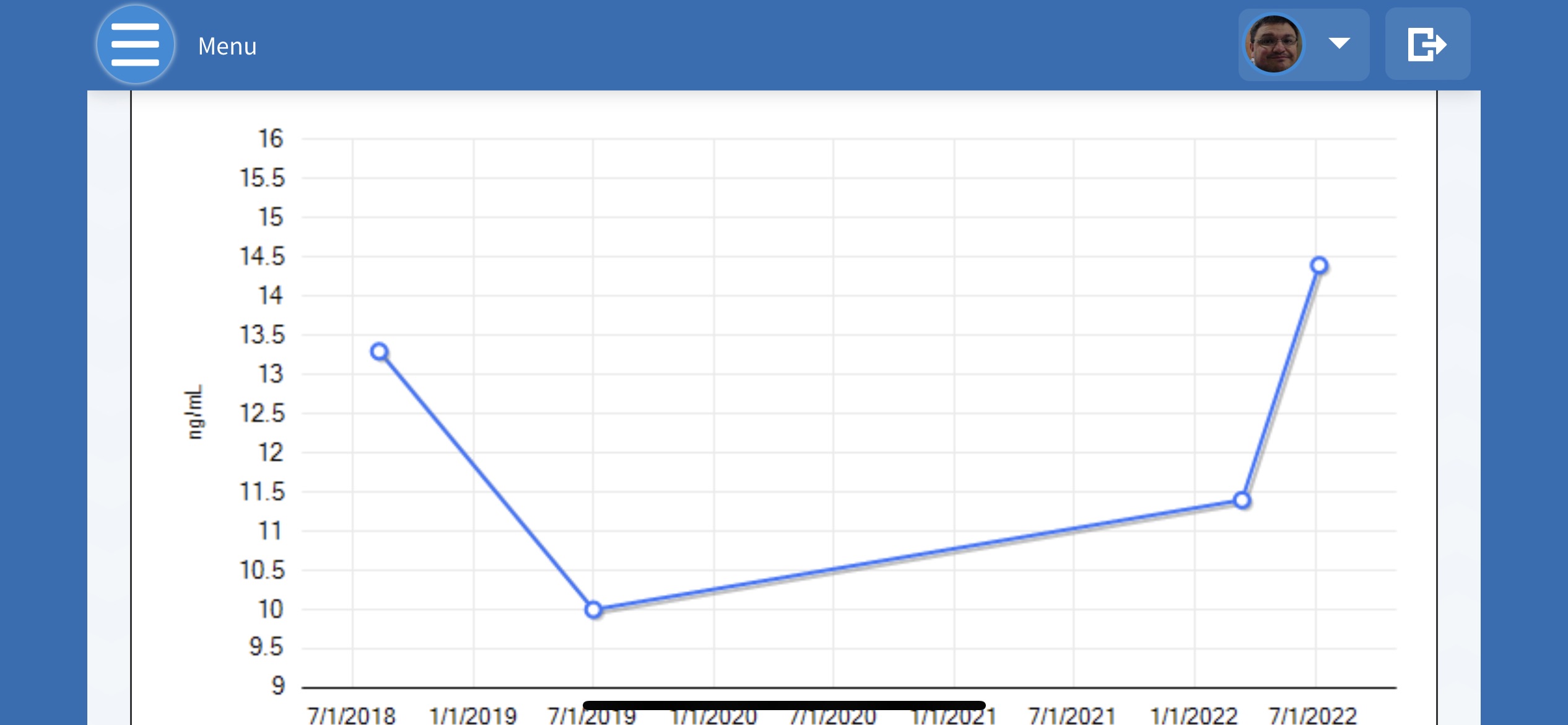
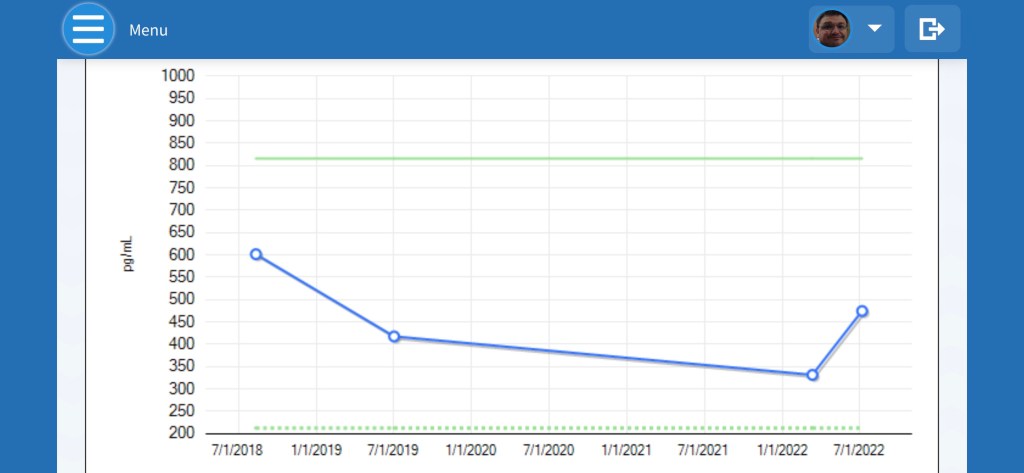
I recently tried a new supplement Liquid IV and my blood levels started to show the change. I tried taking a multi-vitamin and one extra B pill. I tried to add a Vitamin B pill and there was no changes in my energy levels or blood work.

Once I started Liquid IV, the ones without caffeine in order to minimize the variables of the experiment, my energy levels went up and this was validated with improved bloodwork.

Thiamine levels

B-12 levels

This is the product

If you’re interested in the results that I got, click the link below.

https://amzn.to/3P59xm6