Healthcare algorithm for lumbar spinal stenosis

Feeling under the weather and had to stay home from work.

Taking the opportunity to play catch up on some of the articles that I have piling up.

This article is well written and I learned something within the first couple of pages, which is always great.

We see clinical presentations of Lumbar Spinal Stenosis on the daily, but I didn’t realize that there were three separate classifications of LSS.

This is a great algorithm, depending on perspective. For instance, as a PT, rehab measures are highlighted as the second step of evaluation/intervention. I’m good with that. I always believe that self-management, assuming the patient has some semblance of competence, should be step one.

As a surgeon, I could see how this may or may not be your cup of tea.

For those that aren’t busy enough, I could see understand the opinion below of wasting time to get to surgery because the patient may end up there anyway.

I fully understand the second surgeon saying that these types of algorithms would be very useful to minimize unwarranted referrals to surgeons.

It’s interesting to me to see the generational separation between the two opinions also.

I’m curious if these opinions are inherent, based on experience, evidence, based on self-preservation or based on the patient’s needs.

The third statement is more clear to me now than it was while I was in private practice.

For instance, I would get a patient in for an evaluation within 24 hours if needed. I was the manager and stood to gain the most by having more patients on our census than say the other clinicians. The business also stood to make more profit, which would trickle down to me.

Also, in private practice there is always the belief that there is a finite number of patients walking through the door, so “make hay while the sun’s out”.

In a large corporate setting, HOPTS, and some POPTS, there’s a large waiting list. These patients may have to wait weeks or months to see a provider. In the meantime, they are waiting to enter the algorithm. I can understand how one physician sees this as a waste of time. A patient sitting for weeks at home without care, but wants care, is something that I struggle with now that I am no longer running the show.

Overall, good to see differing opinions and how the algorithm proposes to manage LSS.

Comer C, Ammendolia C, Battie M et al. BMC Muskuloskeletal Disorders. (2022) 23:550

PT profession reflections

Long post about the PT profession.

From a WebPT survey:

More than 1 in 10 PT/PTA are considering leaving healthcare altogether.

14% are considering transitions to a non-clinical role within healthcare.

So…about 27% of clinicians are looking to stop being a clinician and 36% are not looking to make any changes in their career path.

These numbers to me are scary.

About 1/4 of our profession is dissatisfied with their decision to practice clinically as a professional.

Where are we going wrong?

Better yet…what’s the solution?

  1. Fewer patients per day
    Maybe. It depends on how many patients are being seen to start with. Based on the same survey, POPTs clinics are averaging 14.4 visits per day, but larger hospitals are averaging 15.6/day. Those companies with 50-149 providers are averaging 16.9 patients per day. I personally think that 10 patients per day is doable, but this will leave time for paperwork after seeing patients. I don’t personally have a problem with this, but staying late only should happen in the event of evaluations, progress notes or discharges. Even for these, they could be done in front of the patient, but there may be a loss in therapeutic alliance with the patient if our head is behind the keyboard on the first day. I personally choose to stay at eye level for evals, progress notes and discharges. I may change levels more frequently during daily sessions to type on the computer.
  2. Making more money?
    This is a tough one. Realistically, the healthcare system is set up to treat professionals like “widget makers”. We essentially get paid per widget made. Meaning we get a % of the revenue generated. In order to get more money, we have to generate more revenue. Una few-for-service model, the only way to generate more revenue is two-fold: bill more units per patient and see more patients per day. One, the other, or both could lead to challenging the therapist’s morals and lead to burnout. This system needs to change, and I believe that it will. Unfortunately, there is no guarantee that if it changes it results in more revenue to the professional. Having experienced the other side of fee-for-service, I would say that PTs that partner with ACO’s and are willing to take some risk, have the potential to have a great work/life balance and get paid a fair wage.
  3. Climb the ladder or growth opportunities?
    Not really in this position, at least not without expanding one’s skill set. The issue is that a PT with 40 years experience and a BSPT (a 4-year degree) has equal opportunities for growth than one with a DPT (6-7 years of education). Clinicians graduate with a DPT and unless they learn how to think outside of the box, develop a niche, become an expert or celebrity, they will always be a widget maker.
  4. Personal values no longer reflect that of the company/culture
    I combined these two because they are very similar for me. When these two are combined, this makes up the largest reason why clinicians are leaving their positions. Anecdotally, I agree and see the same circumstances. Clinicians, at least for now, have a choice as to where to work. We are in an environment in which the number of PTs closely matches the number of positions available. The professional can choose to leave a position and feel confident that there is another opportunity to either find greener pastures or realize that there’s not too many difference in company cultures when the end goal is to maximize profit. I believe that this will be changing in the coming years, as reflected in the APTA’s newest workforce analysis. Unfortunately, this means that clinicians will either stay in an environment that misaligns with his/her values, change to a job for less income (supply/demand), take a job that affords them more pay for the insult to their values or leave the profession altogether. This, I believe, is our largest threat to the profession right now. Burnout, paired with fewer jobs, is the largest threat to the professional. There are options to get out of the rat race, but not everyone is cut out to be an owner or leader. This also comes with its own risks and rewards.

Vitamin B12 and Thiamine levels

For those that know me, I’ve always been a gym junkie.

I exercise because it’s part of life. The same thing holds true for me with supplementation.

I’ve been taking supplements since graduating high school. I took multi-vitamins, individual vitamins, B vitamins and so many others.

All I ever got for it was neon green pee. Those that lived this lifestyle know about the neon green pee.

Once I turned 40, I started paying more attention to my blood levels.

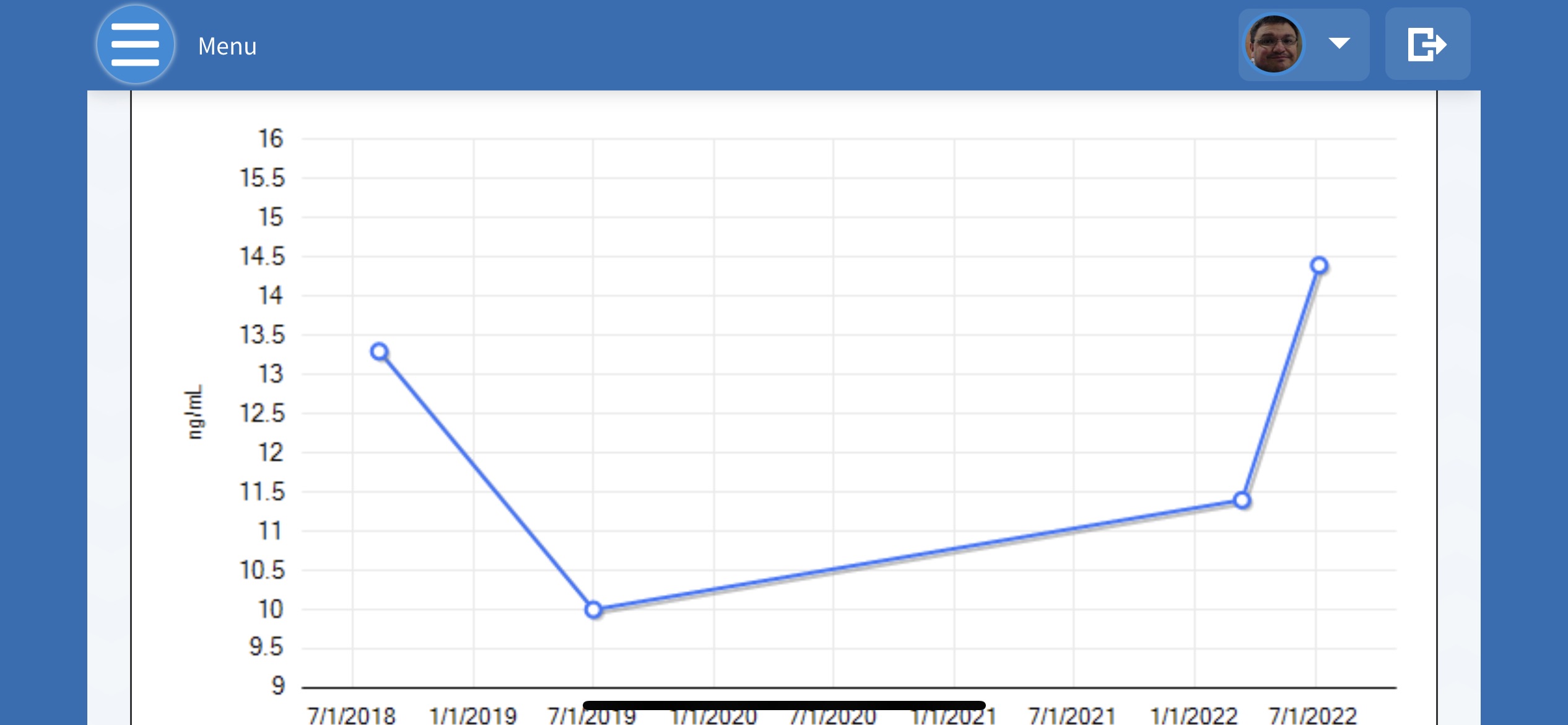
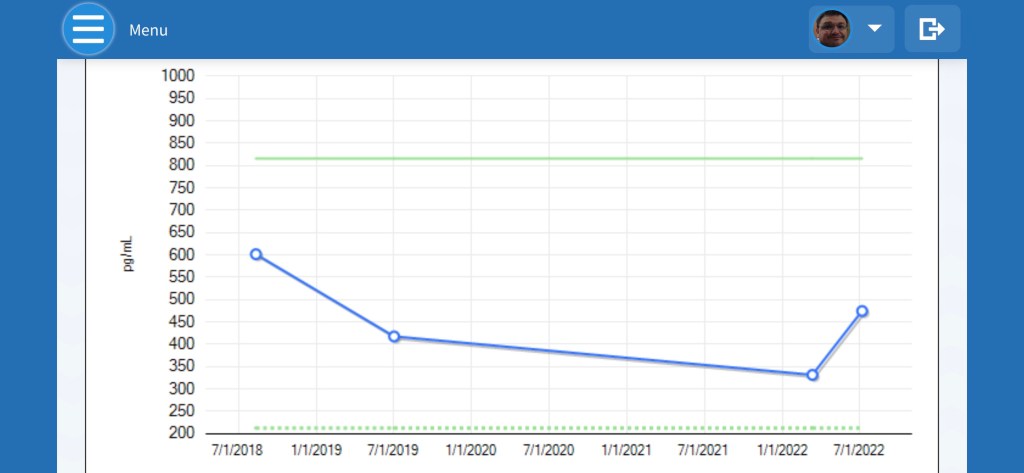
I recently tried a new supplement Liquid IV and my blood levels started to show the change. I tried taking a multi-vitamin and one extra B pill. I tried to add a Vitamin B pill and there was no changes in my energy levels or blood work.

Once I started Liquid IV, the ones without caffeine in order to minimize the variables of the experiment, my energy levels went up and this was validated with improved bloodwork.

Thiamine levels

B-12 levels

This is the product

If you’re interested in the results that I got, click the link below.

https://amzn.to/3P59xm6