
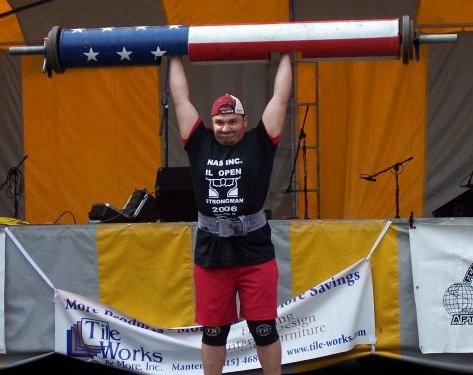
Grit

Talent x Effort = Skill

Skill x Effort = Achievement

There’s an old saying, “hard work beats talent when talent doesn’t work hard”.

I preach this to my daughter now that she is old enough to understand.

Growing up, I was a chubby, 5’10”…ATHLETE!

I’ll be damned if anyone was going to outwork me. I couldn’t make a lay-up for the life of me, but could shoot lights out behind the arc.

I was always picked for three on three games though because I was going to hustle, didn’t need to score and would defend like a pit bull.

In baseball, I never was the most talented or the fastest, but after a game I would always be the first at the concession stand for the free pizza and soda. There wasn’t anyone faster than me for the sprint to food…do I mention I was chubby?

I was always taught to be the hardest worker in the game and I didn’t get to sit back and coast. I didn’t have the talent for that.

The one area that I have the talent to coast is school. I could just show up and get A’s in school.

A couple of quick stories before I get back to the above equations.

When I was in undergrad, I had the honor of being kicked out of a biology class…by my Advisor at that! I have an excellent memory and am very much an auditory learner. This means that I can memorize lectures and then school just required a regurgitation of the material in most cases and rarely an assimilation of material meaning, I just had to recall the information and not put it to practical use. For someone with a great memory, it was just a matter of showing up for lectures and tests. Anyhow, Dr. G (not me Dr. G, but a biology professor Dr. G at Governors State University) told us to read a chapter of the designated book. I read the chapter. I highlighted the chapter and I wrote notes within the margins of the book for the chapter. Another detail that I don’t talk about is that reading is not my strong point. I can read, but have to be an active reader with a highlighter and pen in order to remember a little bit of what I read. Sometimes I would simply record myself reading the chapter and then go back to listen to the recording in order to memorize the material. After reading the chapter, I showed up to the next class in my usual style, popcorn and iced tea or Diet Coke. I never brought books, notebooks or even pens for most classes. Remember, I’m an auditory learner. I just needed to hear it. Also, I was kind of egotistical back then…okay I was a lot egotistical and never back downed when challenged. I now know that not all challenges are worth the time or effort.

Picture this: you are the professor of a college biology course in a lecture hall with about 40 students. There is one student that sits at the back row all by himself. No books, no pens, no notes and his feet kicked up onto the row in front of him. AND HE IS DRINKING SODA AND EATING POPCORN LIKE ITS ENTERTAINMENT.

In the class, Dr. G read the chapter to use that we were supposed to have read for the class. She had notes that were nearly exact to the book.

Well, Dr. G called me up front after class because she didn’t understand my learning style.

Dr. G: “Vince, are you bored in my class?”

Me: “well, you told me to read the chapter and I did. I show up today and you are just re-reading the chapter to me.” (I never said that I was bored, but also didn’t say I wasn’t)

Dr. G: “Vince, (anytime a teacher uses your name like this its like a mom using your full name) how would you like to never have to come back to this class again?”

Me: “I need this class to graduate with the biology degree, can I skip the class and still get the grade?”

Dr. G: “yes, you won’t ever come back (mind you this was my advisor) and you can take the tests in the library”

Me: “sounds good. See ya around”

I never saw this teacher again as she transferred me to another advisor.

In case you were wondering…I got an A (just to spite her and for no other reason).

Talent x Effort = skill

I have a good understanding of the human body. I remember in high school Spanish class, that I would be reading and studying Delavier Anatomy of XYZ books. I would read all of the bodybuilding and weightlifting books I could, including Arthur Jones, Fred Hatfield, Mike Mentzer, Arnold’s Encyclopedia of Bodybuilding, and too many magazines to mention. I had a passion for learning how the body moved. It was a talent to be able to see movement patterns and understand how to make a movement more efficient. That talent plus all of the reading and learning, plus the time that I spent in the gym enabled me to place in state competitions in both powerlifting and strongman.

That skill + effort enabled me to get a Masters degree in Physical Therapy and later the Doctorate in Physical Therapy.

Having seen part of my personality, I also later obtained the OCS (a Board Certification in Physical Therapy which is only achieved by a small percentage of physical therapists) just because I don’t want anyone thinking that they were better than me. That’s the chip on my shoulder from childhood issues.

This profession has treated me well. I have done my best to give back to this profession.

In life, I try to continue to move forward. I don’t know if I will always be a treating clinician, but while I am, I want to be among the best treating clinicians. I want my patients to walk away saying “that was worth it”.

The equation above is from Duckworth’s book Grit: The Power of Passion and Perseverance.
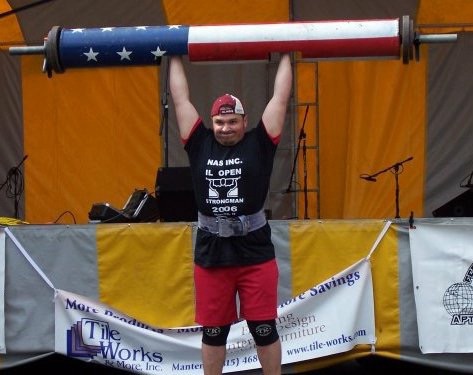
2007 Illinois State Strongman Competition

Physical activity after a stroke

Physical activity levels in people that experienced a stroke do not meet general activity guidelines.

After 20 years in practice, I’ve evaluated and treated many patients with a stroke. On the flip side, I have family that have experienced a stroke. I’ve learned that each person is unique. Each person has a unique personality and drive. Each person has a different “why”.

When I say “why”, I mean “why” try to get better”? “Why” go through therapy? “Why not” just sit around and get busy dying.

My uncle had a stroke. He was a pillar of health before the stroke. He was a gettr done guy. Why wait for someone to do that which I could do. I have major respect for my uncle because his life and my dad’s parallel each other.

With that said, after his stroke, is still determined to be independent and is back to living his best life. He has physical limitations, but he worked hard to figure out how to get around those limitations. He is back to volunteering and helping other veterans like himself.

On the flip side, I have seen those patients that fall into the “why…me” track. These patients struggle to get better.

My first patient as a student intern was in a subacute rehab. I was given the choice of two patients. I could’ve treated the patient that just had a total knee replacement (back when I first started in this profession, patients stayed in the hospital for days and then went to a skilled nursing facility or subacute rehab commonly after the surgery). Instead, I chose to take the patient that experienced a stroke. I knew in my career that I would see thousands of patients with knee replacements, but I wouldn’t be in the setting to see as many patients that experienced strokes.

I remember this patient vividly. He was a business owner and he had a name and business that used alliteration in his introduction. Once he introduced himself, the glitter in his eye disappeared. He started crying almost immediately.

THIS WAS MY FIRST PATIENT AS A STUDENT!

WTF!

I had a lot of experience working with people that had struggles, having grown up either at a private bar or local VFW.

This guy was told by his doctors that he would never walk again (doctors are not God). If you’re a physician reading this…be careful how you speak to patients. This also applies to physical therapist that are reading the blog.

The patient went on to tell me how he lost his business, his wife divorced him and took everything he had but the crucifix on his neck. His van broke down and he would have to live in his van (not down by a river for those old enough to get it).

Also, for my first day at the rehab unit, my clinical supervisor told me that she just got a promotion and wouldn’t be able to be with me at all during my internship and that she was sure I’d do well.

That sucked and added a little more pressure to my clinical. I almost got kicked out of this clinical twice, which is better than the time that I do get kicked out of an inservice later in my student career.

Back to the alliteration introduction patient.

He was crying, sitting in a wheelchair, and feeling horrible for himself because of what he was told by God…I mean the doctor.

I had a choice to make. We always have a choice to make when working with people. Which version of me dos the person in front of me need at that specific point in time.

I flipped the coin between empathetic shoulder to cry on and ear to listen and “eat lightening and crap thunder” (this is Mick from Rocky for those young whippersnappers).

I chose Mick. I was as hard as I could be without being an asshole (which was good that I didn’t have a supervisor because she may have thought I crossed the line on day one when I said “you want to cry or you want to walk!“).

This guy chose to walk. By the time he was discharged after 4 weeks, I took him for a walk around the outside of the hospital grounds. Realistically, I sat in the wheelchair and he pushed me for about 15 minutes.

This guy not only walked, but he regained his freedom in life. He changed his perspective. He didn’t have to live by a river, but was able to get a job and get back on his feet.

I’ll never forget alliteration introduction guy. He got that sparkle back in his eye by the time he was discharged.

THE PATIENT IS THE ONLY PERSON THAT MATTERS!

Not the stroke! The patient may always have disabilities, a limp, an inability to walk, but it’s sour job to help them find the “why”!

That “why” is what will help the patient to increase physical activity levels. We may not “fix” the problems, but we need to do our best to not let problems compound on problems.

How one book can change your pain.

Neck pain affects many, and treatments like spinal manipulation therapy, medication, and exercise can help.

A majority of the population will experience neck pain at some point in life.

Treatments commonly used for neck pain are spinal manipulation therapy, medication and a home exercise program.

Bronfort et al (2012) tried to answer the question regarding which option may be the best treatment for neck pain.

The manipulation group received mobilization and manipulation of the cervical or thoracic spine after an evaluation in order to determine if there were any areas of the spine that did not move well. These patients were assessed by chiropractors with at least 5 years of experience. The chiropractors could use any technique and see the patient for over a 12 week period. The patients in the spinal manipulation group could also receive light massage, assisted stretching, and hot/cold packs. The visits lasted 15-20 minutes.

The medication group received NSAIDs, acetaminophen, narcotics, and muscle relaxants. The visits lasted 15-20 minutes and the patient was seen based on a physicians recommendations.

The home exercise group received 2 sessions lasting an hour per session split over the course of 1-2 weeks. These patients were issued “Treat Your Own Neck” by Robin McKenzie. These patient’s sessions also discussed basic anatomy and advice regarding posture, lifting, pushing and pulling.

How’s this sound thus far? We all have our biases. Aside from medication management, as a PT, I am trained on both Spinal Manipulation Therapy and Mechanical Diagnosis and Therapy, which is the basis for the book used in the study.

Having treated patients for 20 years has allowed for perspective. My bias is that the exercises will have a greater effect than the manipulations, but I also believe that manipulations have value for patients. The thought is that if we spend our time with patients only doing hands on activities such as massage and manipulations, that we will never “ teach a patient to fish”. The patient will always be depending on the “hand out” or better described as the “hands on” from the therapist. In reality, spinal manipulation therapy and exercises are meant to be used as an adjunct to get the patient back to life and no longer need to grab their wallet to pay for healthcare services.

In the end, both spinal manipulation resulted in similar outcomes for patients except for one category in which spinal manipulation will typically be favored as explained above…patient satisfaction.

In my humble opinion, people like when things are done to them or for them instead of having to do the work themselves…especially when they are paying for it! This holds true for going out to dinner, oil changes, home repairs etc. There will always be a service sector making money by minimizing the work needed by the customer.

One result that favored the exercise group was neck range of motion.

The exercise group and manipulation group scored similar on their perception of function, but the exercise group moved more.

Let’s put this in perspective:

The manipulation group used 15 vists on average

The home exercise program used 2 visits on average

The medication group used 5 visits on average

Time is money. Would you rather pay for 15 visits to get similar functional results, but less range of motion if it saves you the effort of doing exercise yourself or would you rather save the time and money but put the effort in yourself?

The good news is that you have options and both lead to similar results.

If you have a high deductible, you may prefer to pay out of pocket for 2 visits instead of 15.

If you have met your out of pocket max, you may just see it as free healthcare and want to go for the hands on experience.

All of this is important and your physical therapist or chiropractor should be having this discussion with you at some point t in your care.

If you are in need of physical therapy in the South Chicago Suburbs, I’m here to help. I’m trained in both spinal manipulation therapy and the “McKenzie Method” and finally am a Board Certified Physical Therapist in Orthopedics through the American Physical Therapy Association.

If you are interested in the book that resulted in 2 visits, click the link below

https://amzn.to/3OYV7cN