Basics of health insurance

The Costco #costcoconnection actually has some pretty good articles.

This is a topic that unfortunately many don’t understand or take the time to understand how it impacts them during the year.

When I was in private practice, I had so many conversations with patients and prospective patients about deductibles, copay, co-insurance, and especially towards the end of the year…out of pocket max

Ok.

  1. Deductible: most all insurances now have a deductible. This means: the amount of money that the patient has to pay(after adjustments) before the insurance company will start paying their part.
    Check out the funny video in the comments to learn more about adjustments.

If a patient has a $5000 deductible, it means that the patient is paying all of the medical bills in whole for the first $5000 before the insurance company kicks in.

Why does this matter?

If you have a high deductible and don’t plan on spending more than $5000 in a year, it may be better to go through a cash based medical practitioner instead of using insurance.

The cash based professional may actually be cheaper when averaged over the course of a year, even though you still are paying the premium (the amount you pay out of your paycheck every 2 weeks etc) to carry the insurance to cover the risk of major medical issues.

If you know that you are a frequent flyer of the medical system, then purchasing a lower deductible may be more advantageous than the high deductible plan.

This takes some analysis and guess work every year to determine which plan one will buy into.

  1. Copay/co-insurance: after you paid your deductible, the insurance company will now start to pay for some or all of your medical care after this point, depending on what your insurance is contracted to pay. It’s common to see insurances pay for 80% of the ADJUSTED BILL, and the patient is responsible for the other 20%.

This means that you first pay for your premium (the amount coming out of your check to have the right to carry insurance, the n You pay your deductible: the amount of money you have to pay out of pocket before you trigger the insurance paying for anything to begin with AND THEN YOU PAY THE COPAY OR CO-INDIRANCE: which is the part you agreed to share of the payment with your insurance company of your medical bills.

  1. Out of pocket max: this is like the heavens have opened (depending on the perspective). This means that you have spent so much on your own healthcare throughout the year that the insurance company now says: you’ve been tortured enough, we’ll cover everything from here.

This means that the insurance company will now start paying for everything (heavens opening up and angels singing), BUT it also means that you were so sick and needed so many procedures and testing throughout the year that you spent through your premium, deductible, and copays/co-insurance.

Taking a jump

“ in fact, when you understand that you don’t have to justify your dreams to anyone else for any reason, that’s the day you truly begin to step into what you’re meant to be.“

I’m going to agree to disagree on this one. As you heard before, I made quick changes in my career without consulting my then wife…that relationship ended.

Although I don’t have to justify my dreams, I have to justify my decisions to my family. Making a quick jump, or even a well-thought-out jump, to satisfy my dream may not be worth it if the dream adversely affects family finance or security.

For instance, I quit the hospital the third time (that’s right, they took me back a second and third time) in order to chase a dream of managing my own clinic. I took a stupid pay cut in order to do this. I chose to cut my own pay by almost 20%. Not only that, I quit the cushy hospital job to go manage a clinic that was easily losing $100K per year. After 6 months of following my dream…reality set in. My wife said that I had to make a decision of opening my own clinic and leaving this one or going to find a job.

That was a smart move on her part. Although I increased the number of patients that were coming into the clinic by a little over 10%, it still wasn’t enough to justify the overhead that I inherited and the salary that I was getting. I was averaging about 28 visits per week, but that amount of money barely covered the overhead. There was no chance of profiting any time soon. Because of that, there was no chance of getting a raise any time soon. Mind you, during this time period I was also ranked in an honorable

https://www.google.com/amp/s/www.updocmedia.com/2017-top-40-influencers/amp/

Class by my peers. This was my opportunity to advance my lot in life. I am now making about 10% more than when I left the hospital and this year will mark my break even point. Every week after this year marks a betterment than where I was when working for the hospital. The cool thing is that I am still following my initial dream because I now have my own company, am managing patients the way I feel appropriate, and have created close relationships with many physicians and the community I serve. This was what I set out to do when I initially left the hospital.

Don’t get me wrong, Palos Hospital was a great place to work. I worked with an unbelievable team in which we all respected each other’s strengths and there were no egos on the team. (I say that because I may have had the biggest ego at the time so no one else appeared to have an ego in comparison.) None of us would hesitate to reach out to another PT or PTA if we were stuck with a patient. I have always recommended anyone to take a job there if they have the opportunity. My chief complaint with the hospital was that there was no chance of advancing one’s career, and I was looking for more.

If I never took that chance to chase a dream, I would still be in a job that I was frustrated with, although more changes were made after I left which may have satisfied my need for change. If my wife didn’t have that conversation about the reality of finances, I may still be trying to steer a sinking ship that I inevitably had no control over.

I now am in a spot to have more control and am avale to support my family while advancing my career, community involvement, and education of peers.

Patients pay for services

Anyone that says that people won’t part with money are delusional. We know that people are paying cash for PT services. We know that people are meeting their deductibles and paying copays/coinsurance.

As professionals, we have to figure out how to educate patients on

1. Solving their problems

2. Understanding the true costs of healthcare.

Patients first purchase our services because of a few reasons

1. They were referred to us by their physician.

2. They are referred to us by their friends/family

3. They hear about us from internet searches

4. They choose us blindly

Regardless of how they find us, we have to give them value when they come to us.

For instance, my mom had therapy at one of the big chains a few years back. She said that she would only be able to attend PT twice per week, but the PT has her sign up for 3x/week. What do you think happened?

She canceled her appointment once per week…because that’s exactly what she said that she would do when asked about frequency.

Instead of listening to the patient and scheduling 2x/week, they scheduled 3x/week and after 3 weeks they discharged her for non-compliance.

Who was in the wrong? Was the clinic providing value…maybe? Did they listen to the patient and establish expectations and alliance…nope.

The value of the session always lies with the receiver and not the giver.

Many of us tho I ourselves to be rockstars…me included, but take this piece of advice from “The Rock“.

What matters is what the patients think and how they perceive the service. They are the ones paying for the service. We have to establish the expectation with the patient and then…deliver.

They will part with their money in these situations. We just have to follow the basics.

Cualquiera que diga que la gente no se separará del dinero es delirante. Sabemos que las personas están pagando en efectivo por los servicios de PT. Sabemos que las personas alcanzan sus deducibles y pagan copagos / coseguros.

Como profesionales, tenemos que descubrir cómo educar a los pacientes sobre

1. Resolviendo sus problemas

2. Comprender los verdaderos costos de la atención médica.

Los pacientes primero compran nuestros servicios por algunas razones

1. Nos los remitió su médico.

2. Son referidos a nosotros por sus amigos / familiares

3. Se enteran de nosotros por búsquedas en internet

4. Nos eligen ciegamente

Independientemente de cómo nos encuentren, tenemos que darles valor cuando vengan a nosotros.

Por ejemplo, mi madre recibió terapia en una de las grandes cadenas hace unos años. Ella dijo que solo podría asistir al PT dos veces por semana, pero el PT tiene su inscripción por 3 veces por semana. ¿Qué crees que pasó?

Ella canceló su cita una vez por semana … porque eso es exactamente lo que dijo que haría cuando se le preguntara sobre la frecuencia.

En lugar de escuchar a la paciente y programar 2 veces por semana, programaron 3 veces por semana y después de 3 semanas la dieron de alta por incumplimiento.

¿Quién estaba equivocado? ¿La clínica estaba aportando valor … tal vez? ¿Escucharon al paciente y establecieron expectativas y alianza … no?

El valor de la sesión siempre recae en el receptor y no en el donante.

Muchos de nosotros pensamos que somos estrellas de rock … yo incluido, pero tomo este consejo de “The Rock”.

Lo que importa es lo que piensan los pacientes y cómo perciben el servicio. Ellos son los que pagan por el servicio. Tenemos que establecer la expectativa con el paciente y luego … entregar.

Se separarán con su dinero en estas situaciones. Solo tenemos que seguir lo básico.

PT in the pandemic

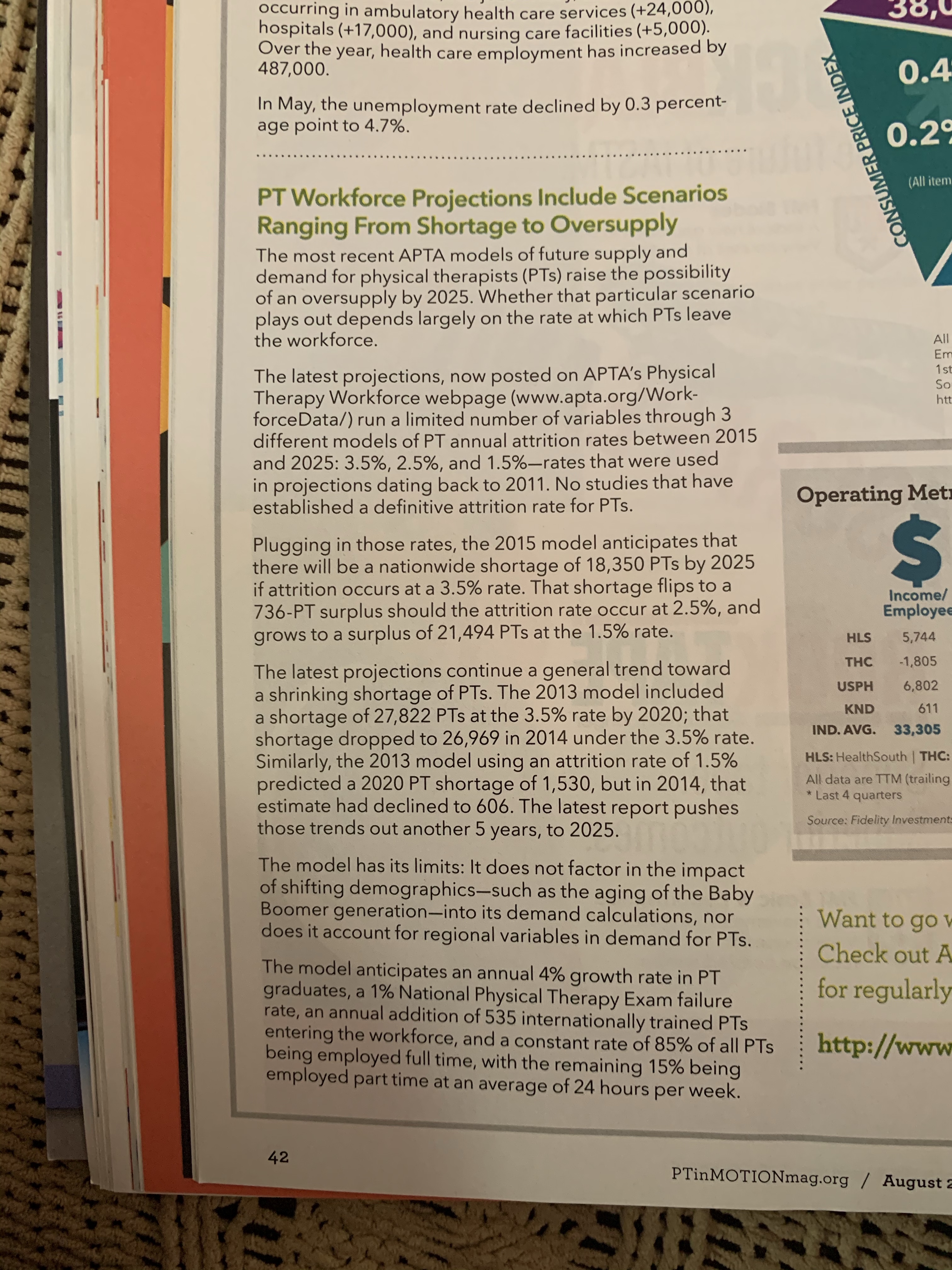
The physical therapy profession is frequently ranked in the top xyz jobs in the country. Looking at the statistics above, we are seeing that the field may reach saturation in my lifetime.

The previous data doesn’t take into account new school openings, which in my state is projected to graduate an additional 120 PTs per year. This doesn’t take into account the 210+ PTs that already graduate in the set of IL per year.

I write this during the COVID pandemic, which sees many PTs out of work, furloughed or laid off. I can remember during the housing crises of 2008, I thought that I was in a recession-proof job. We are seeing now that this is not the case. I thought that even in the worst times that I would be able to keep my salary steady and have increased buying power during these down times…I was wrong.

There are only certain jobs, in our profession, that are safe during the pandemic. Outpatient physical therapy is not among those types of jobs.

This pandemic will change much in our profession. We are seeing the rapid growth of telehealth. We are seeing more patients agree to in-home PT. We are seeing “mill PT clinics” transition to one-one care because of safety concerns regarding seeing more than 1 patient at a time.

There are many opportunities for PTs that are not afraid of work. There are many challenges for those that haven’t accepted the fact that this profession has to be more than the 9-5.

How will you change your outlook for the career due to the pandemic?

What do you think will happen to our profession in the future because of the pandemic?

Finally, how are you improving your skills to make yourself more recession-proof in the future?

Outpatient Therapy Services Payment System

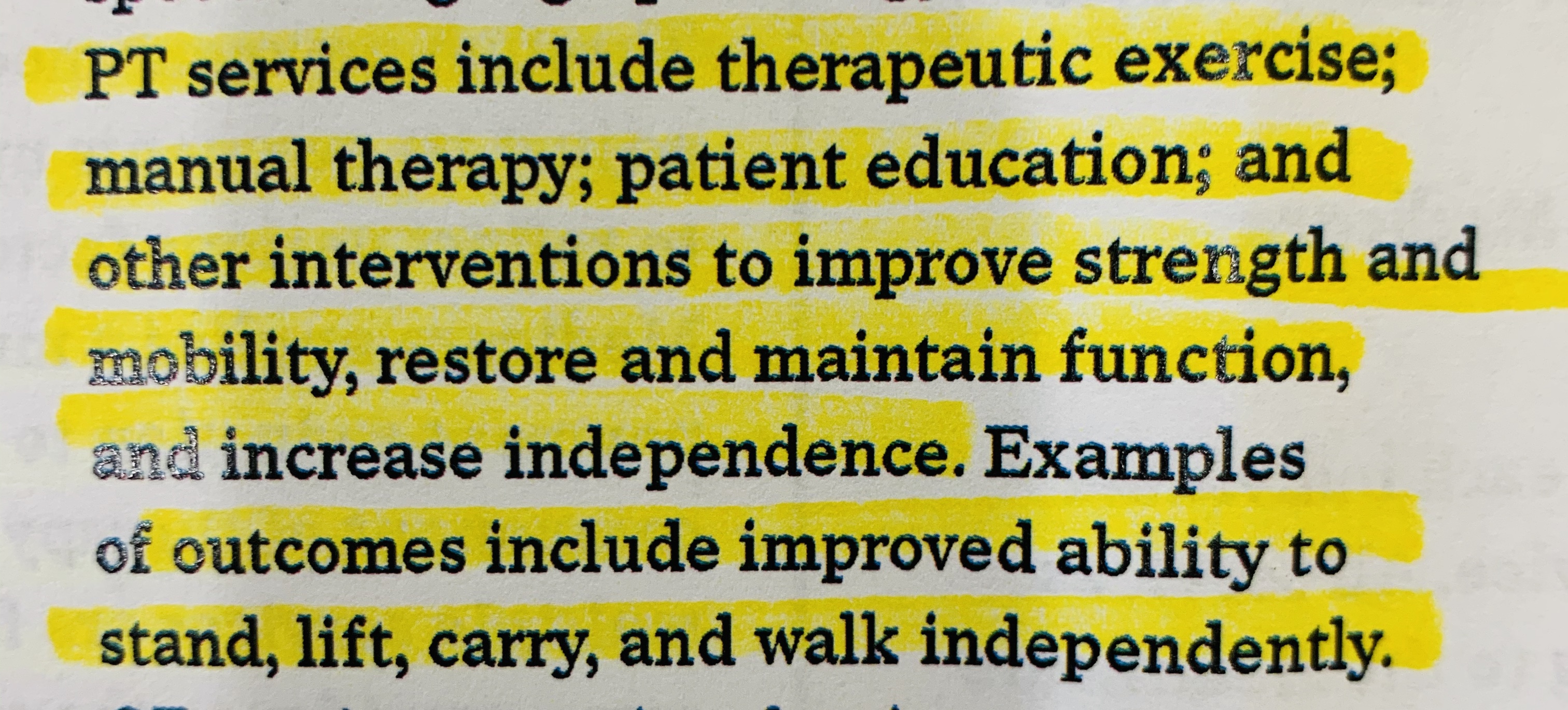
Physical therapy services are performed by someone licensed in the physical therapy profession. This can either be a licensed physical therapist (either a Bachelor, Master, or Doctor of Physical Therapy) or a licensed Physical Therapist Assistant (Associate degree).

Aspects of our profession that are performed in the clinic are as follows:

therapeutic exercise: exercises performed in order to help a patient improve function, strength, endurance, range of motion and/or reduce pain

Neuromuscular re-education: training movement patterns, balance, coordination, kinesthetic sense (where the body is at in space during movement), posture, and proprioception (where the body is at during one moment in time)

Manual therapy: using ones hands or tools to perform massage, joint mobilization (moving individual or groups of joints), traction, passive ROM (using hands to move a joint through its range) in order to improve pain, range of motion, swelling or other restrictions

These are the most common interventions used in my clinic. Other interventions used are modalities (which may or may not have evidence to support the intervention and may or may not be covered by an insurance plan). Some are as follows:

Ultrasound

Electrical stimulation

Heat/cold

Mechanical Traction

Iontophoresis

Laser therapy/light therapy

This is still a grey area for many Physical Therapists (PTs). Although the rules are very straightforward, some clinicians never read the rules that insurance companies impose to the clinicians. When a clinician is treating a patient and is in-network with the insurance company, the PT is accepting the rules imposed by insurance companies. Medicare will pay for medically necessary services.

It is up to the PT to establish this necessity in the documentation. The PT the. Needs to have a physician or other allowable non-physician provider (think nurse practitioner) sign off on the initial documentation, which establishes the PTs plan of action/treatment/care. This plan of action must establish a few details and is valid for up to 90 days.
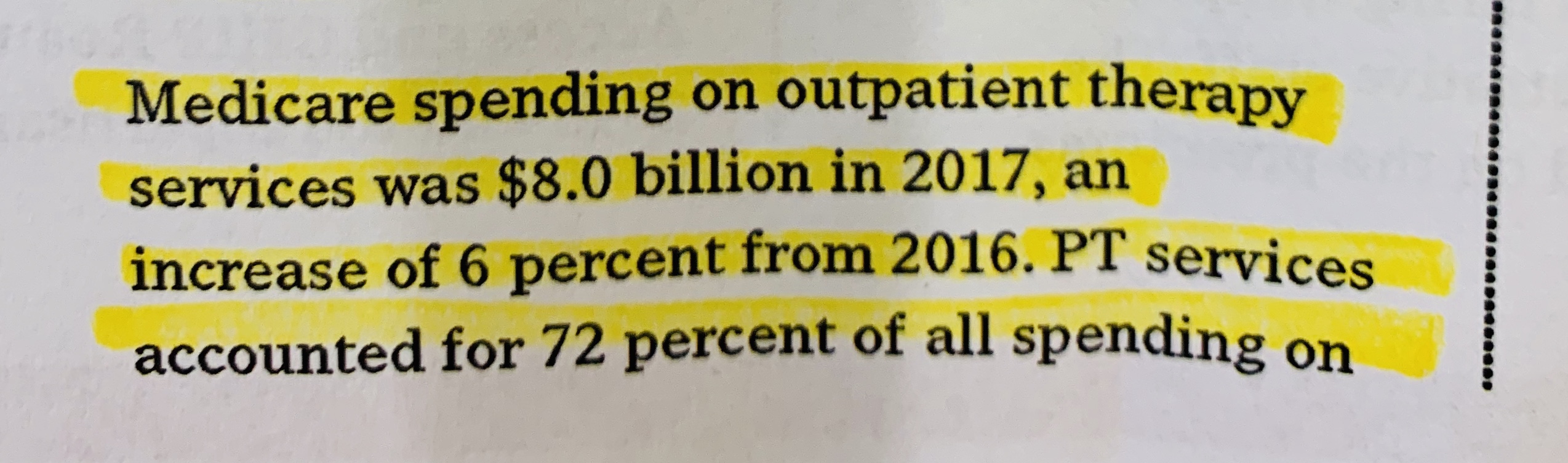
Let’s talk numbers. Our spending on outpatient therapy services (occupational therapy, speech therapy, physical therapy) is more than many countries spend to run the entire country. This is a very large number and insurance companies, both public and private, are trying to cut down on the total expenditures over time.

It makes sense, because expenses have increased by 6% year to year for the previous years.
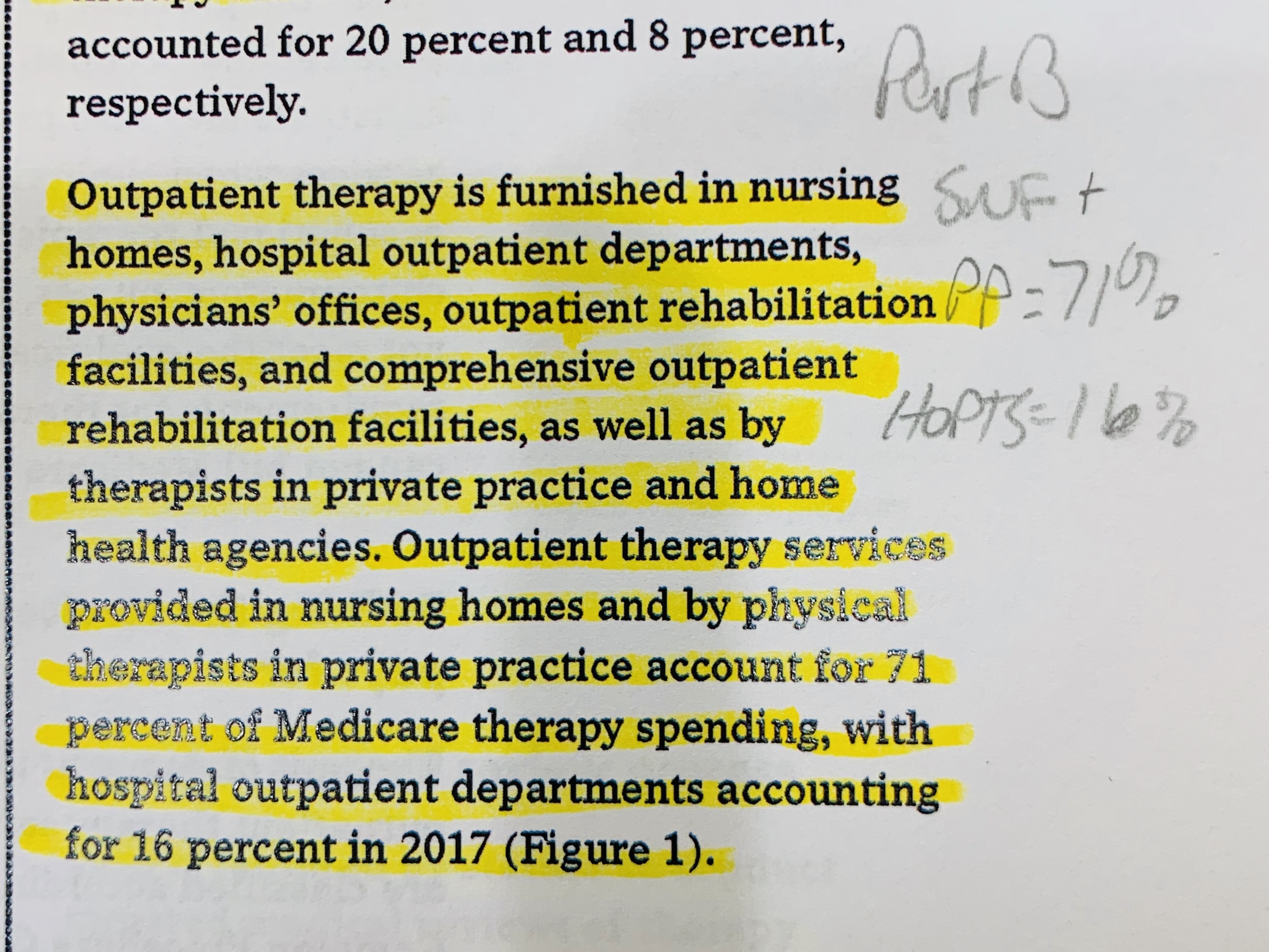
It may come as a shock to many patients, but “outpatient” benefits can be used in an inpatient setting 🤫.

If you were in a nursing home, they may have used your outpatient benefits to pay for part of your rehab. This may not be the best use of your funds as seen Here and Here.

Surprisingly hospital outpatients use fewer funds than I suspected. It has been documented that many physicians are pressured to keep a patient “in-house”. This means that physicians are not “supposed to” refer a patient out of the hospital network. This keeps all of the money within the hospital to find profits. This was highlighted in a previous news Article

In a way, I’m not surprised that private practices see such a large amount of the Medicare pie, as it’s been noted how many are abusing the system for large payouts. Such as this company that settled for $7M for performing abusive practices. These practices are very common to see in the field of PT.

Patients with Medicare are only to be billed for non-group services (which by the way pay at a much lower rate), when they are actually seen one-one.

Also, patients are only to be seen by licensed professionals. This means that technicians (techs) or aides are not allowed to guide a patient through their exercise program, at least if the company plans to bill for these services. Don’t believe me…here’s another Example.

So I guess that I am not surprised by how much money is spent in outpatient settings.
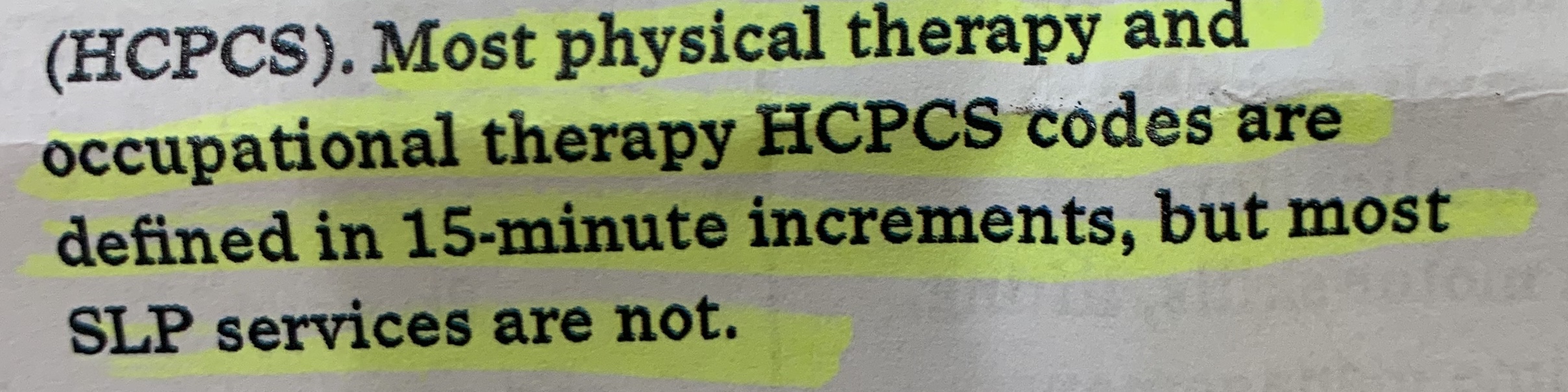
Many patients don’t understand that sessions are typically billed by the “15 minute rule”. This essentially means that for every 15 minutes, or at times the better half of 15 minutes (8 minutes), that the patient will see a charge on their explanation of benefits or receipt for services.

For example, a patient may see 3 separate charges for a session if the patient was seen in the clinic for 45 minutes. It can get messy if this is not explained to the patient.

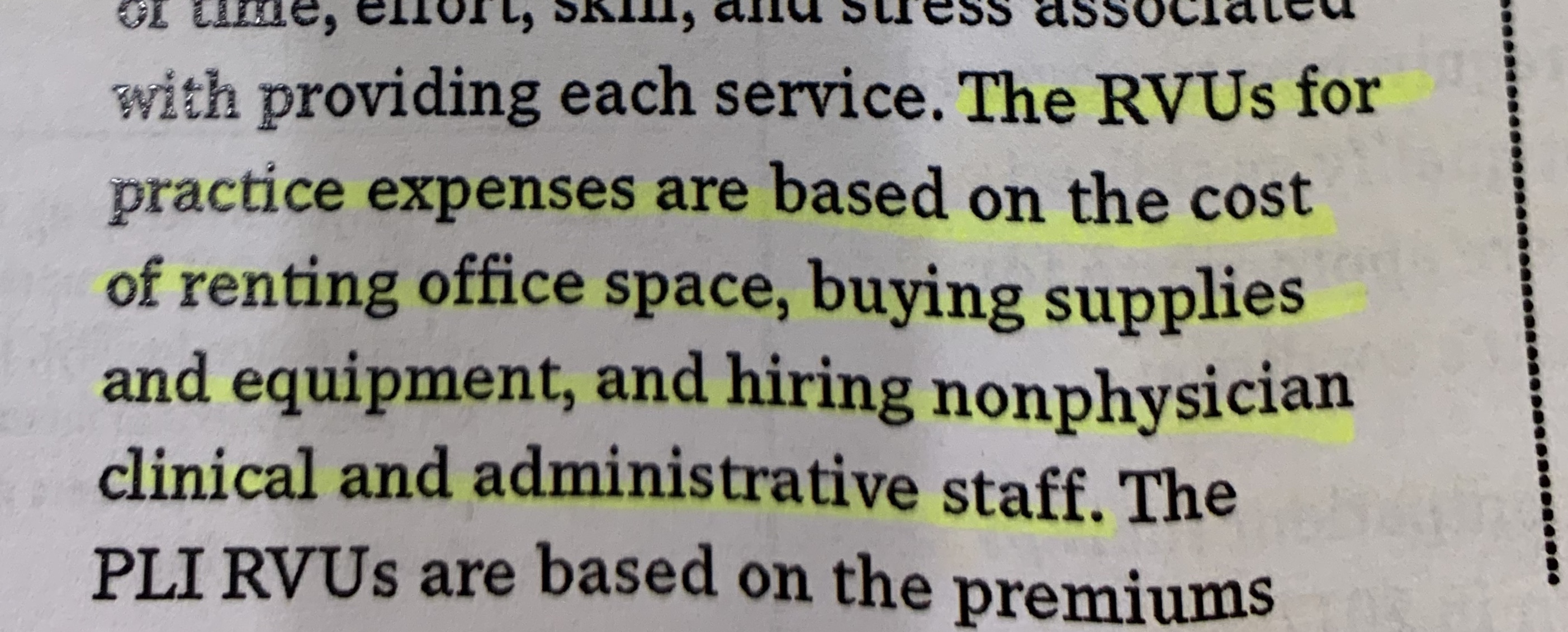
The amount of money that Medicare reimbursed is different for different areas of the country. This is based on how much the cost of performing business is within a certain locale.
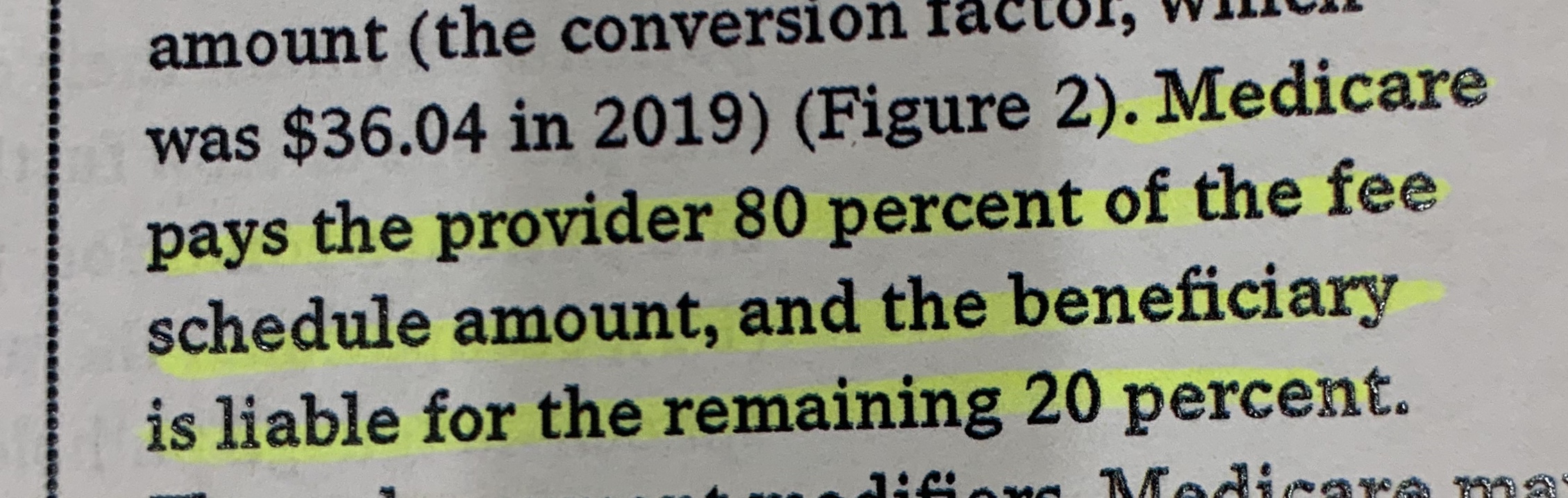
Those that have Medicare have to pay 20% of accepted/fee schedule amount.

This is where things can get confusing. For instance, I’ve seen an average visit (1 hr) be charged from $360-$1200 to the insurance company. This is a huge range in charges, which is also a problem with our healthcare system because it makes it difficult for patients to understand the actual charge.

Out of the charge for an hour, Medicare will allow close to $100 depending on how that hour was broken up into charges. The other $260-1100 is written off as an “adjusted” amount based off of insurance “savings”. (This savings number is also arbitrary to make it look like you get a great deal from having insurance).

Of the $100 that is allowable, the patient is responsible for 20% of that charge. The patient can choose to have another entity, a Medicare supplement or secondary, pay the other 20%. Of course the patient has to pay a monthly premium, unless on state aid, for that other 20%.

This is a way for business to start gaming the system. They will start to shorten session lengths so that they don’t lose as much money per session. There are three separate components that go into what is allowable by Medicare. They cut one of the three components by 50%.

Companies are then shortening sessions to the least allowable to maximize charges, such as shortening sessions to 25 or 40 minutes in order to maximize their reimbursement per session. They will then keep the patient coming in for more sessions per week in order to maximize payment.

Sometimes it’s what’s best for the patient, but many times it’s only what’s best for the company.
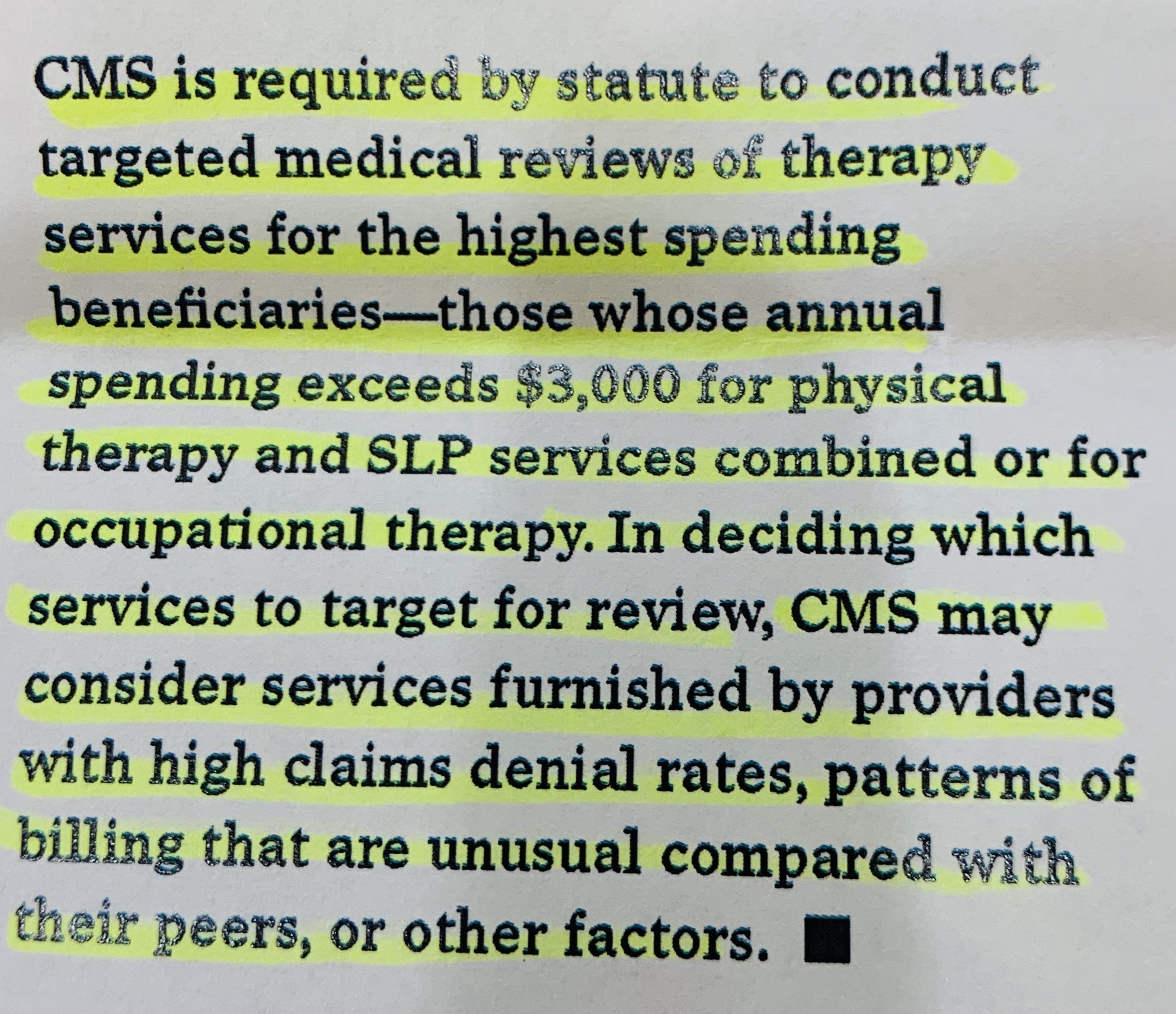
Those companies that charge more, or are in the upper tier of chargers in our profession. For instance, in our state their was a company that was audited and asked to pay back over $600K to Medicare due to inappropriate charges.

The article can be found Here

Medicare for all

Are you paying attention?

Medicare for all would not be a great option, since we can barely sustain Medicare for some.

Government has to get more and more creative in order to make the 💰 last longer.

Part of that creativity is to reduce output.

Another part of that will be to increase revenue to this system.

Reducing output is easy. They are simply paying less for services and taking less risk than previous years.

For instance, ACO (hospitals and other entities) are seeing less reimbursement than previous years for the same procedure.

Less income means that the hospitals have to find other ways to generate income or to become “leaner” in their operations. This may mean less one-one time for PTs.

What do you think the solution should be?

See some of the comments to understand why we are running into problems.

Life purpose and changes

“If you want to change the world, you have to enroll others in your plans and vision.”

Adam Robinson

About 2 years ago I started a blog. It was just for fun and the premise behind the blog is this “the only knowledge wasted is the knowledge not shared”. I saw this quote on a t-shirt; a blog was born.

My goal is to provide high quality content to readers through this blog in order to assist them with making decisions regarding choosing a health care practitioner. The secondary goal is to educate physical therapists at least up to the point of at patients. It sounds cynical that I believe that some patients have more knowledge than the PT, but I also believe that the patient has more to lose and more at stake than the PT.

The PT only has a paycheck at stake, maybe a reputation. The patient has life limitations and issues that may prevent them from truly experiencing life. That way more at stake than the PT has on the line. In this fashion, I have seen patients becoming smarter over the years through forums, FB groups, reading blogs and watching videos.

The reason why I say high quality content is because there are a lot of lies and misinformation on the World Wide Web (internet). Healthcare professionals prey on the weak and ignorant to take their money using scare tactics and unrealistic hype.

I ain’t got nothing to sell you other than making you a better human through work. Nothing ventured, nothing gained.

I have increasing demands on my time with a family, managing multiple clinics, treating patients and community involvement.

My posts will become fewer and fewer as I try to fit them into my life instead of fitting my life around my work.

Love your life or change it

Dr. Vince Gutierrez, PT

It’s like the Gamler by Kenny Rogers

“If you must play, decide on three things at the start: the rules of the game, the stakes, and the quitting time.”

Chinese proverb.

This is a lesson that learned later in life. I entered into an agreement under one pretense (set of rules) and after entering the agreement and quitting my job, the rules changed. At that point, I had to ride out the decision that I had made to quit and try to make the best of it.

I wasn’t fully aware of the rules; they changed during the game.

After making the decision to leave my current job, in order to open a clinic with a friend near where I created my following, it was decided that the clinic would be 35 miles away! This was a major blow because now I was starting completely fresh and had no following (although a few patients chose to make that drive). I was able to get in front of over 1,000 pairs of eyes in person and 160,000 pairs of eyes through social media and newspapers.

Unfortunately, I still didn’t know all of the rules until well into the game and at that point my wife and I realized that I couldn’t win the game and we started to discuss quitting time.

Luckily for me, I busted my ass to build my following in this new area. A local business wanted both my skills and my work ethic. The fact that I was able to bring new faces to the clinic was a bonus.

The clinic needed another PT within a few months and through hustle and blessings, I was also able to build a following among PTs, so finding another PT that wanted to work with me wasn’t difficult.

I am now making more money working fewer hours and learning more about the business of health care than I had during the previous 12 years of my career.

I had to learn the lesson the hard way.

Whenever you are entering into an agreement, both sides need to understand the rules of the game, the risks and rewards and when to call it quits.

“You got to know when hold em; know when to fold em; know when to walk away; know when to run.”