Guard your ears

Patients want to know why they hurt. 🤷‍♂️🤔🙏

They want to know what we can do to help them get rid of their pain to get back to life. 🌈☀️

They want to know that movement is safe. ❤️👊

They want to know that nothing serious is wrong. 🚩

How many healthcare practitioners are answering the first one with a definitive answer of “xyz” is why your experiencing pain

AND

then goes on to put limitations on the patient

AND

tells the patient that it will take 3X/week for 4-8 weeks in order to get better 💵💸

😂😔🤔❌👎🤯

Patients, YOU NEED TO KNOW THAT IT IS RARE TO BE ABLE TO DETERMINE THE EXACT CAUSE OF YOUR PAIN!

There are many factors that can have a role in pain that for me to give you a single answer may do more harm than good.

I will tell you possibilities and we can have a discussion of how you think these possibilities ply a role in your symptoms, but even then we will not narrow it down to a specific tissue.

What we won’t do is

1. Increase your fear of movement

2. Create a restriction to specific movements without a timeline to reintroduce movements.

3. Overtreat you because we have created a fear of movement, taken away your mobility and then told you that you need to see me for 36 sessions.

If you are spending any money on your health care, don’t you want to see the person that keeps you for fewer visits, listens to your complaints, comes up with solutions to your issues and has a heart of a teacher.

Any 🐒 can take your money, but not every professional can provide you the help you’re paying for.

Ankle dorsiflexion range

The ability to pull your toes/front of the foot towards your shin is called dorsiflexion.

You may not realize how important dorsiflexion is, until you lose it.

The lack of dorsiflexion can cause a person to walk with the feet/toes pointed out.

A loss of dorsiflexion can cause the heels to rise when attempting to do a squat. On that note, there is a difference between a squat and a crouch.

There are ways to improve this.

Watch the video below.

Video

Cervical myelopathy: how to test clinically

“… The onset is often insidious with long periods of episodic, stepwise progression, and may present with a vast array of clinical findings from patient to patient.”

Cervical myelopathy is like neck pain to the extreme. It isn’t just a neck issue, but it ends up encompassing anything below the neck. It can cause arm symptoms, leg symptoms, difficulty walking, weakness throughout the body, spastic robot-like walking, and breathing issues.

This is a neck problem that needs to be addressed ASAP!

Let’s take a look at some of the research on this problem, what your therapist should check, and when it’s time for the patient to be sent back to a physician for imaging to determine if the patient is a candidate for surgery…it is that important.

Some quick stories (or not so quick).

I’ve had two patients with cervical myelopathy. One patient had symptoms of this, but also had arm problems from a previous injury. Because of this, the CSM (cervical spine myelopathy) was delayed in diagnosis until the patient demonstrated abnormal gait…10 months later!

The second case was picked up in the clinic immediately on the first day. I performed this cluster, to be learned later, on the patient and he was very positive. We had a conversation about the need for imaging and a consult with a neurosurgeon. The patient essentially said…thanks but no thanks.

Unfortunately this patient lost use of his hands and developed a walking pattern that was very abnormal before he decided that surgery was the right choice.

Here’s a quick Video describing CSM.

“May involve lower extremities first, weakness of the legs, and spasticity”

Spasticity is an issue that could be seen in walking for some people, but is testing using movements under speed like in this Video

What we will see is that the body reflexively slows down or stops the movement from happening rapidly.

“lower motor neuron findings in the upper extremities such as loss of strength, atrophy, and difficulty in fine finger movements, may present”

This means that we may see generalized weakness, loss of muscle mass (smaller muscles) and difficulty with picking up pennies and buttoning buttons.

“neck stiffness, shoulder pain, paresthesias in one or both arms or hands, or radiculopathic signs”

Neck stiffness is self explanatory. The neck movement may not be fluid or it may be restricted due to pain. There may be symptoms such as pain, tingling or numbness radiating into the shoulder(s) regions, arm(s) region or down to the hand(s) region. We may also see changes in sensation or reflexes.

“An MRI is most useful because the tool expresses the amount of compression placed on the spinal cord, and demonstrates relatively high levels of sensitivity and specificity.”

There is little reason for a PT to recommend an MRI, unless there are specific conditions found during the evaluation. The type of presentation notes above is one reason for a PT to recommend an MRI to the referring physician or the patient’s primary care physician.

X-rays do not do a good job of demonstrating any soft tissue (muscle/spinal cord/disc/ligaments/tendons) abnormalities.

Mind you, this presentation is not common and for the most part, an early MRI is not indicated for neck or back pain.

“The tests, when used alone, are not overtly diagnostic and may lead to a number of false negatives and in rare occasions, false positives”

It is recommended that, when CSM is suspected, the physical therapist use the cluster (groups) of testing in order to strengthen the likelihood of this suspicion. One test used alone is not enough to consider other testing.

“in reality, the diagnosis of CSM involves MRI findings and clinical findings, with equal weighting of both results”

Because the clinical exam is so important for this diagnosis and subsequent imaging, it is important that the PT and physician be familiar with the testing described.

“Of the 10 variables included in the regression modeling, the tests of Babinski and Hoffman’s signs, the Inverted Supinator sign, gait Abnormality, and age > 45 years were retained.”

I’ll be honest. In my first 10 years, I never tested for the inverted supinate sign or Hoffman’s sign until I read this paper. This is a testimony to continuing one’s education beyond taking courses. I don’t recall (those that know me know that I have a pretty good memory) ever learning this cluster through any of the coursework that I took since 2007.

After reading this article, I practiced these tests on a bunch of healthy individuals, those with neck pain in which I didn’t suspect a spinal cord issue, so that I could get better st the test and understand the normal response. This way, I learned the test mechanics and felt confident performing the test on anyone. It enabled me to understand the difference between the “healthy” patients on which I tested this specific cluster and the few in which had a positive test.

Rant: I hear it from so many students and new grads that they feel like they haven’t learned how to perform the tests or what to see as a result of the test because they only get to test healthy individuals. Having gone through the mechanics of this cluster for years, I hope that students understand that they must become confident at performing the mechanics of the test (kinesthetic learning) and know how a healthy response looks. One may go his/her entire career without ever seeing this presentation, but that doesn’t mean that one can’t perform the test and understand a normal result. I bring this up because I hear the same type of arguments regarding vestibular testing and ocular testing.

Every patient that has a history of stroke gets a vestibular-ocular exam because there may be lingering positive testing after the neurological event. This again strengthens my ability to perform the test and increases my likelihood that I will see positive testing…so I know what it looks like for future patient evaluations that may come in off of the street through direct access.

“A finding that included three of five positive tests yielded a positive likelihood ratio of 30.9 and a post test probability of 94%”

Even if you’re not a statistician, this is important information.

A positive likelihood ratio greater than 10 is an indication that your testing is giving a result that increases the chances of that being the diagnosis.

A post-test probability of 94% indicates that there is less than a 10% chance that the diagnosis or classification is incorrect after testing.

This is a much better percentage than we have of most orthopedic issues.

“”this study found that selected combinations of clinical findings that consisted of (1) gait deviation; (2) + Hoffman’s sign; (3) inverted supinator sign; (4) + Babinski test and (5) age > 45 years were affective in ruling out and ruling in cervical spine myelopathy.”

If you are a student and plan on treating patients…you must know these tests.

If you are a therapist treating these patients…you must know, be confident administering and understand the repercussions of a positive test.

If you are a patient…know that not all therapists have the same training and some may not even know these tests exist. I hope this makes you take a more thoughtful approach in choosing your next PT.

Article

Reflections on “The Alchemist”

“The shop is exactly the size I always wanted it to be. I don’t want to change anything, because I don’t know how to deal with change. I’m used to the way I am.”

This is nothing like me, but we have met all types.

I personally thrive on change. I haven’t held a single position for more than a couple of years. One of the reasons I really enjoyed working for a larger company was that I could move through the company relatively easy and learn other jobs, without sacrificing my place in the company or benefits.

When I worked at Sam’s club, I started as a “cart boy” (man do I miss Don and Howard). I moved to cashier, where I held the title of Big Dog (only those that worked their would get it, but it was the person who scanned the most items per hour) many times. I worked at the service desk, as a cashier supervisor, overnight stocking, tire and battery center and freezer cooler.

Those that know me, know that I don’t know a damn thing about cars. Over time, I could do a set of 4 tires in less than 15 minutes from the time the car hit the lift to the time the tires hit the ground.

My first day in TMA resulted in me needing a drug test! Got to love Bill Foster for saving my job that day. I was told to drive a large older ford into the garage. What they didn’t tell me was that I had to take the turn wide using a three point turn. I took it tight (I had no clue), and I was scraping the side of the truck against the brick building for about 1/2 the bed. The truck was so loud that I couldn’t hear it.

Bill Foster comes running out giving the stop sign like a third base coach. I hopped out without a clue of what had happened.

He sold me as an incompetent idiot to the owner of the truck, as it being my first day on the job…and let me tell you that I was very grateful to be called that because the guy totally calmed down and was happy to get a new paint job. It was the first and only time that I had to be drug tested for being an imbecile.

If you live in Joliet and know Bill Foster, thank him for saving my job that day.

Don’t be afraid of change…what’s the worse that can happen?

A new paint job.

Reflections on “The Alchemist” Part XV

“The closer one gets to realizing his personal legend, the more that personal legend becomes true reason for being, thought the boy.”

Working…playing…living.

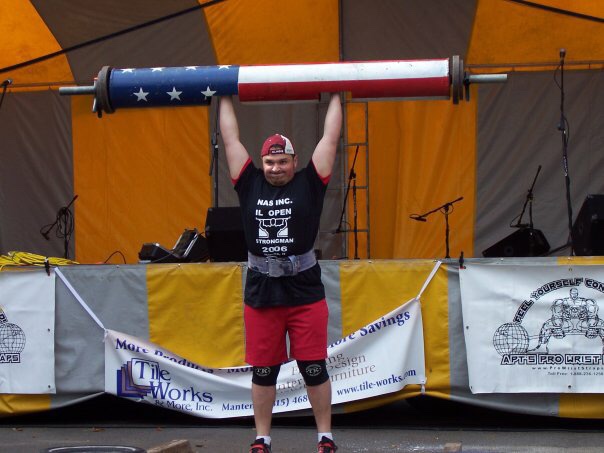
I used to go to work to collect a paycheck. It was alright, I had other passions that were more important. Some may not know, but I was previously a competitive strength athlete, having placed 2nd in IL in both powerlifting and Strongman. If you don’t believe me, check this out (https://youtu.be/Z-BXSbcpwRw).

I’ve since quit competitive lifting, but still needed that outlet of playtime. “Work” has become play. Each patient that presents to the clinic is a new puzzle that I get to piece together. There are so many facets to the puzzle. Movement is obvious…I’m a PT…there will be movement. Personality is another. Beliefs and biases. Teaching the patient and learning from the patient.

Living. I’ve heard it a couple times this week alone. A patient walks into the clinic and says either “it’s like a miracle” or “it’s like magic”. My xyz is almost gone or completely gone. Symptoms that had been present for days, weeks, months, decades seem to vanish with simple treatments that patients can perform at home.

Did I mention I love my job?

If not, I love my job. I still get goosebumps when I get this response. It’s like a kid in a candy store. I have to keep from wetting myself I get so excited to hear these phrases. Although it makes me feel good to help the patient get back to their previously lifestyle. It’s a different feeling for me.

It’s like beating Bowser. It’s up, up, down, down, left, right, left, right B, A, B, A, select start.

Yeah…it’s that feeling. It far surpasses money. It’s about the game.

Reflections on “The Alchemist” Part XVI

“When someone makes a decision, he is really diving into a strong current that will carry him to places he had never dreamed of when he first made the decision.”

A long time ago, I was unsure of what to do as a profession. I prayed and prayed between going to medical school and going into education. After much prayer, I decided to become a high school teacher. I thought I would teach biology since science always came easy to me.

After attending Joliet Junior College, my goal was sidetracked by a want. I wanted to experience the college life and the city life. I chose to go to UIC in order to experience the city. Little did I know, they didn’t offer a biology secondary education program. I was more interested in experiencing the college life than teaching biology, so I signed up to be a Spanish teacher. To me it was like a compromise. Mind you, I didn’t speak Spanish outside of what everyone learned in high school. I should’ve put a little more thought into that decision. I spent a year at UIC studying mostly Spanish and experiencing the city through tours, classes and groups. It was a very expensive year…which I’m still paying off. In the end, I came to my senses and realized that the Spanish language just isn’t why I want to spend my entire career around.

I transferred to Governors State University to finally study Biology secondary education. I made it through the program and during one of my student teaching experiences, I realized that politics never go away. This situation was enough for me to not want to be a part of the education profession.

Luckily for me, one of the courses I took was taught by a PT professor with PT students in the course. Because the body has always made sense to me, it was a blow-off course for me, but many of the PT students struggled.

The professor came up to me and noted that if I applied to PT school that I would definitely get into the program. I had no intentions of becoming a PT initially. Aside from a short bout of PT after surgery when I was younger, I didn’t even know why PTs really did aside from follow the protocol by the surgeon.

I had my plans of becoming a teacher squashed. I had nothing better to do at the time, so I applied to PT school. I didn’t realize how hard it was to get into a PT program because I was essentially recruited into the profession.

I still think about that day at Loyola University kneeling at the statue of Jesus by the lake. It’s one of those things in which the best laid plan is laughable by God. I had no clue that my life would go into this direction.

Now that I’m here, I feel I should make the most of it. These past two years have really pushed my comfort level and people have noticed. UpDoc Media tanked me in the top 40 in the country, as an influencer in 2017. The local newspaper, that I read growing up, ran a two page article about my journey. I’ve impacted many kids in our community both through my story and volunteering.

I’m not at the place I want to be financially, but I think that after 12 years in this profession that I am starting to find my place.

Reflections on “The Alchemist” Part XIII

“People need not fear the unknown if they are capable of achieving what they need and want.”

This is something that it took me time to figure out. I was afraid of making the jump back to private practice physical therapy because of the lifestyle that I had grown accustomed to living.

When making this jump, I wasn’t thinking about the sacrifices we would have to make, such as no vacations for awhile, making dinner at home instead of Chiptle, brewing our own coffee instead of going to Dublin (because Starbucks is too expensive even when doing well).

Essentially, what I had to decide is…is the sacrifice worth it? Do I think I’m too good that I can’t go back to living the same way I grew up in order to achieve a long term goal?

Have I gotten so used to living easy that I’m above making sacrifices?

The answer is no. I made a jump and failed. It’s okay. We still have the basics and a roof over our head.

This simply means that we lived to take another risk. I landed back on my feet, but have to work longer hours than previously.

My wife is the true hero of this story. She is the one that (wo)mans the fort while I’m off trying to save the world. Without her as the cornerstone, I wouldn’t be able to attempt any of the goals that I have succeeded and failed while attempting.

For all, take a risk, when you are ready and able. Don’t make the leap if you can’t afford to fail. Don’t stay in a failing business if the end result is a major impact on your or your family’s health.

As long as a failure is not a figurative death blow, nothing ventured nothing lost or gained.

Cervicogenic dizziness

“…characterized by the presence of imbalance, unsteadiness, disorientation, neck pain, limited cervical range of motion, and may be accompanied by a headache.”

Dizziness can have multiple factors. The cervical spine, or neck region, can have a role in a person feeling unsteady or dizzy.

“…when all other causes of dizziness are excluded”

Before making a jump to the cervical spine, the professional performing the evaluation/examination should rule out red flags. Some of these include an active stroke, instability of the neck region after a major trauma, a severing or tear in an artery that supplies the brain.

Other causes of dizziness are BPPV (Benign Paroxysmal Positional Vertigo), vestibular hypofunction, Ménière’s disease, issues affecting the inner ear such as a fistula and many other conditions. Click here to learn more about vestibular issues and dizziness.

“… dizziness should be closely related to changes in cervical spine position or cervical joint movement”

In order to state that the dizziness is coming from the neck, movements of the neck should create a change in symptoms.

It seems like common sense, but I’ll never state that common sense is in abundance in healthcare.

It’s like a person comes in complaining of shoulder and arm pain when looking down, which goes away when looking up, but the clinician spends all of the allotted time moving the shoulder and arm 🤦🏻‍♀️

“diagnosis of exclusion”

This is important. In order to get to this as the cause of the patient’s symptoms, the clinician has to rule out red flags (really bad stuff), BPPV (fast changing symptoms), vestibular dysfunctions (slow changing), brain issues (really slow changing) and then finally get to the neck.

The reason this is called a diagnosis of exclusion is this: when a person is thorough all of the possibilities have been ruled out. This is all that’s left.

“…no single test is able to diagnose the condition, and the diagnosis can not be verified by outcomes, imaging, laboratory values, or unique signs and/or symptoms”

This is important. If there are no tests to determine that this is the problem, it truly is a last resort to treat. We are hoping that this is the cause, and it takes a hard sell job to get the patient on board for treatment of this problem.

“…a systematic process is a pragmatic tool for differential diagnosis of CGD…with utilization of a rule out, rule in paradigm”

This is important. The rule in/rule out paradigm is another way of sayin whiteboarding, at least in my head.

This not so short video series speaks to performing differential diagnosing. Although as a PT, I am not allowed to issue a medical diagnosis, we have to be able to perform differentials and I’ll explain why.

When a physician refers a patient to PT for these issues, many times the diagnosis code given is “dizziness and giddiness”, “frequent falls”, or generalized weakness. No offense to any physician, but this doesn’t tell me what’s wrong with the patient.

In defense of the physician, they may not be trained to perform the testing required in order to determine what is the underlying, or root cause, of the dizziness. Also, on average physicians don’t get to spend the allowed time with the patient in order to perform these tests. I surely can’t treat something if I don’t have an idea of what is wrong. There must be some clue telling me where to start, and this is the power of doing a differential in order to classify what is the major problem and what may be the lesser problems causing a person to be dizzy or off balance.

Because there is not just one cause, there can not be just one treatment.

Hope this makes sense.

“CGD should not be considered if the patient does not have neck pain…neck pain can occur at rest, with movement or with palpation”

It only makes sense that if we believe that there is a problem in the neck that is causing a major disruption in that persons ability to function that we should also be able to find a problem in the neck if we try hard enough.

Pain is so elusive that it may not present in a typical manner. I have patients that only have neck pain provoked at their end-range, which is limited. This would fit the category.

“Vertigo as an illusion of movement;a sensation as if the external world were revolving around the individual (objective vertigo), or as if the individual were revolving in space (subjective vertigo). Vertigo is not a symptom arising from cervical spine, but rather is caused by peripheral vestibular disorders or lesions within the vestibular pathways of the central nervous system”

This is where things become fun. It reminds me of taking my daughter to a fun house. First, getting into the house was hilarious. It started as a house of mirrors. I can’t believe how many times she hit her face into the mirror because she thought it was the exit. The first time she hit her face on the mirror, I was a concerned dad and tried to offer help. By the time she hit her face on the mirror the third time I couldn’t constrain myself any longer. Because it was a house of mirrors she saw me laughing…1,000 mirrored reflections laughing.

I digress.

To get out of the fun house, we had to cross a bridge that had a tunnel spinning around it, which gave the illusion that we were moving. If one closed the eyes and walked, it was easy. If one kept the eyes opened it was a scene out of a sinking ship. My daughter was holding onto the rails for dear life…even though nothing she was standing on or touching was moving.

Vertigo is something like that 😂.

“The duration of symptoms for CGD can range from days to months to years”

This is where I start to have some issues.

A classification of dizziness that we can’t prove, have no great testing to show us that it is happening can have a duration of a short period of time to a long period of time.

Holy specific Batman! This is why, as healthcare professionals, we can struggle at time. The research doesn’t give us concrete information that is useful when in front of the patient.

Patient: how long can this last

Doctor: 🤷‍♂️ months to years

Patient: how long do you think it will last for me

Doctor: (silence)

“Ménière’s disease is a chronic vestibular disorder characterized by episodic bouts of aural fullness, vertigo, and hearing loss. Cervicogenic dizziness however, typically does not include aural fullness, tinnitus or hearing loss”

What in the world is aural fullness?

This is a full feeling within the ear. Think of feeling pressure or a buildup of within the ear. In Ménière’s disease, this feeling comes and goes. The sensation may be accompanied by spinning sensations and hearing loss.

If the patient is experiencing hearing loss, then we can state that the cervical spine is not having a role in this symptom and additional testing of the vestibular, or balance gauge, system needs to be checked to ensure that nothing was missed.

As Johnnie Cochran has become famous for saying:

“If it doesn’t fit, you must acquit”

Some reading this may not be old enough to u see stand this phrase, but the meaning is that if part of the evidence presented doesn’t fit the case then there must be a different perspective followed.

This means that if you are experiencing dizziness that stems from the neck, you shouldn’t also experience hearing loss. If your provider is not listening to your symptoms, you may be wasting both time and money by undergoing treatment for the wrong classification.

“BPPV is the most common vestibular pathology… crystals become dislodged from the utricle and migrate into one of the three semicircular canals located within the inner ear.”

Benign (not harmful) Paroxysmal (sudden occurrence or intensification of symptoms) Positional (relating to the position of the body against gravity) Vertigo (illusion of movement when no movement is occurring) (BPPV) is very common to experience in one’s lifetime. About 3 out of every hundred will experience this. Although it doesn’t come close to the statistics for back pain, it is the most likely reason for experiencing vertigo.

The bad news: it really sucks to have this happen because any activity becomes difficult when you are experiencing your world spinning.

The good news: it’s treatable in a high percentage of cases with very few visits.

“if a patient has symptoms of vertigo accompanied by nystagmus in response to changing head position in space, then BPPV is more likely than CGD”

The nystagmus is the quick movement of the eyes. If we see a nystagmus (it is visible to the clinician) when moving patients through different positions, this helps to clarify not only that the patient has a positional dizziness, but also where the problem is located based on the position and the movement of the eyes.

For instance, if the patient has symptoms during a Dix-Hallpike, we can assume posterior canal, we then have to know if it is the left side or right sided canal in order to understand the proper direction of treatment.

If the patient has a positive Roll test, then this would implicate the horizontal canal, but again we would have to understand the side of dysfunction.

“… symptom duration lasting only a few seconds were significantly more common in the BPPV group. Cervical neck movement, fatigue, anxiety, and stress were also found to be more common precipitating factors for exacerbation of symptoms in the CGD group as compared to the BPPV group”

BPPV has short lasting symptoms. Once the crystals settle, then the symptoms subside.

The other symptoms of anxiety and stress do not tend to be causative factors in BPPV.

“…acute, unilateral, peripheral vestibular loss due to labrythitis or vestibular neuronitis…marked vertigo, imbalance…nausea and possibly vomiting…spontaneous horizontal, direction fixed nystagmus in room light”

When we see an acute peripheral vestibular loss it’s pretty cool, at least for me, as the eyes are all over the place. Because the eyes have difficulty focusing, the patient will see objects blurred or moving. This can create an imbalance and the movement seen, paired with the lack of actual movement of the body, can create a nausea feeling.

Although it is fun to work with, it is never fun to be vomited 🤮 on. My first year, I had no clue what I was doing and got a lot of vomit on my shoes.

“Key symptoms frequently present in vestibular migraine, but not CGD, are aura, true vertigo , throbbing headaches, sensitivity to auditory or visual sensory stimulation, and oculomotor changes”

If you’ve ever had a migraine, these can be debilitating. The sensitivity to light and sound are the two symptoms I hear the most, along with nausea. Cervicogenic dizziness should not present with the auditory or visual issues as these are controlled by cranial nerves (think brain nerves) and not neck nerves.

“Cervical arterial dysfunction (CAD) and whiplash associated disorders (WAD) are non-vestibular pathologies that can mimic CGD”

I had one patient with cervical artery dysfunction that presented with a dizziness. The dizziness was produced with neck movements, but not with other testing. It wasn’t until he started to demonstrate a nystagmus with the seated rotation extension test, along with neck pain, that I sent him back to his referring physician. An ultrasound confirmed arterial dissection.

It’s common in my practice to see proprioceptive issues, as tested by the JPET, in patients after a car accident. We use the laser frequently with these patients.

“…as CAD related dizziness presents with only one symptom in less than 1% of the cases. Other symptoms of CAD include severe headache, diplopia, nystagmus, numbness around the lips or mouth, dysphagia, dysarthria, and upper motor neuron signs”

The patients that present with a suspicion of cervical artery dysfunction or dissection should be referred back to the physician immediately, as this is a risk factor for major complications like stroke.

“Common symptoms of WAD are cervical neck pain and hypersensitivity, decreased cervical ROM, dizziness, tinnitus, and headache”

I see the hypersensitivity frequently in the clinic, along with reduced movement in the neck and a fear avoidance mentality. We don’t expect to see hypersensitivity in those with cervical based dizziness.

“Positive results on cervical instability testing or CAD testing indicate a need for immediate medical attention and imaging”

Again, this was stated above, but I will leave the quote as it is very important to get these patients medical attention immediately.

“A neurological screen should include an assessment of radicular symptoms, myotomes, dermatomes, deep tendon reflexes, upper motor neuron signs and cranial nerve function”

This is a basic evaluation.

Has your PT ever checked your lower reflexes or

“…the vestibular examination should be next”

This type of evaluation is looking at the health of the vestibular nerve and possibly the cochlear nerve through special tests.

The semicircular canals are also tested through positional testing, described later in the post.

Some of the testing performed in the clinic are as follows:

Head Impulse Test or Head Thrust

Head shaking test

The DVAT is described below.

“A thorough evaluation of the cervical spine is best performed in step 4 because first ruling out vestibular dysfunction increases the probability that the cervical spine is the cause of the dizziness”

This goes back to the classification of exclusion. If we’ve cleared the brain of signs of stroke, cleared the canals for signs of BPPV, cleared the nerve of signs of hypofunction and looked at other possibilities such as fistula, then we are left with the neck.

Treating the neck can be helpful for many, but it shouldn’t be the first line of treatment for a patient walking off of the street with complaints of dizziness.

The JPET is one way to test the cervical spine for deficits in spatial awareness.

The Head neck differentiation test is another way of assessing the neck region for dizziness.

“…oculomotor evaluation should include evaluation of nystagmus, skew, smooth pursuit, saccades, Dix-Halpike test, static and dynamic visual acuity, and the vestibule-ocular reflex (VOR) including VOR cancellation and the head thrust test”

Another video showing a nystagmus

The Test of skew is a part of the HINTs exam, which could indicate an active stroke.

Smooth pursuit is another test to measure brain involvement in dizziness.

Saccadic testing is easy to perform in the clinic.

The Dix-Hallpike maneuver is classic for testing of the posterior semi-circular canal, which is typically implicated in BPPV.

The DVAT is used to classify BVH and UVH. (I am choosing to use a student page for this one to help support student programs).

“A horizontal, direction, fixed nystagmus, is consistent with unilateral peripheral vestibular hypofunction.”

These are hard to imagine without context. This video is perfect to demonstrate a quick horizontal beat towards the stronger side.

The eyes will slowly drift in one direction and rapidly correct towards the other direction. This is an indication that one vestibular nerve is “stronger” than the opposite nerve.

This can be treated successfully through rehab.

Article