
The age old question (for healthcare providers at least)

The age old question


How do we get patients in the door? Many therapists, especially the mom and pop clinics, struggle with this question. Some physicians are spoken for by specific companies, which makes getting a referral from the physician difficult. Some insurance companies are making it difficult to see a physical therapist of choice, at least without you paying $$$$ out of pocket. So how do we get patients?


  1. “…marketing to physicians-would not provide the expected revenue stream. Instead, a direct-to-consumer marketing strategy was needed and needed fast!”


Why does it take so long for PT’s to catch on to this concept? I have heard it all my career; “patient’s need a referral in order to come to therapy, so we should market to physicians.” There’s a great documentary done by a fellow meathead called “Prescription Thugs”. Drug companies realize that if they can sell their drugs to the patients, that the patients will go to their respective physician and ask for the prescription. The question is where do we want to spend our marketing dollars or time? I have seen over and over again, the physical therapists takes coffee to the physician and tries to grab the physicians ear for a couple of minutes. THIS WILL NOT WORK! Think about it. When you go to the physician, how much time do you actually see the doctor? What…5 minutes…maybe 10 max? How much time do you think that the doctor has to offer you…for free? Not much. With that said, there are some companies that have doctors ears. I will let you make the conclusion about how they are able to get into the doctors ears for 5 minutes.

I think that a good t.v. commercial would look like this…dream with me.  A father picking up his child and having a big red throbbing circle radiating from his back.  Black screen. A mother breast-feeding her daughter and a big red throbbing circle radiating from her neck. Black screen. A weekend warrior doing pull-ups with a red circle radiating from the shoulder.  A different weekend warrior playing basketball with the circle from the knee.  Black screen.  DO YOU HAVE ANY OF THESE SYMPTOMS?  Go talk to your doctor and then see movementthinker.org.

My biggest referral source is previous patients. I have so many patients requesting me at this point that I am unable to satisfy the need in a 40-hour work week. There are many private practices that would kill to have this problem. I see this as a major problem though because I stand for very personalized care to each patient and if I can’t get the patient in the door…it’s not very personalized.


  1. “1. Clearly define the customer”


Who is my customer? Anyone that I come in contact with knows about my blog. Everyone is my customer. This is where you define your elevator pitch. What do you do? I can tell you what I do. I offer specialized care in which I take the puzzle that is your problem and break it down into smaller pieces that you can understand and teach you how to aide in not only fixing yourself, but preventing your problem from returning. I am a teacher, disguised as a physical therapist. My customer is anyone that has a problem…puzzle…that revolves around movement based pain or limitations.


  1. “2. answer the question, ‘Why should the consumer come to our clinic specifically and pay cash at our practice”’


I will give you value. Within a short number of visits I will teach you about your problem. I will guide you and teach you how to fix your problem. I will educate you on why this may have started and how to keep it from coming back again. I will ensure that you understand the basics of human movement. I will guide you to resources that you can read if you want to learn more than you can in a short number of sessions. I will tell you if therapy will help you. I will tell you if you are more likely to respond to surgery than to therapy.


Not only that, but I will do this in a short number of sessions in order to save you money in the process. It would be cheaper for you to pay out of pocket to see me than to go through your insurance company. I will give you value.


  1. “3. Determine how to effectively reach that target market”


You’re reading the first way that I am answering this question. I just realized that I have reached over 900 “visits” over the previous 4 months. Officially, this blog now reaches more people than I can care for in the clinic. This is my start of marketing myself and my knowledge to others. Whether you choose to come see me or not, you will be better after having read the blog.


Quotes from:


Clinton SC. OVERCOMING MARKETING OBSTACLES: A cash-based practice perspective. IMPACT. April 2016: 52-56.


Predator or prey?


Predator or prey?


We are being sold to every day. Credit card adverts in the mail. Spam email. Donations requests that tear at our heart strings. Drug companies listing off symptoms until you notice that they are talking about you. We are always being asked to open our wallets. My turn to ask.


  1. “Awareness: Before all else, the target of your sales efforts must know you exist.”


We are all in sales. If you don’t think that you are in sales, you are an employee, not an owner. Please see my previous post about taking ownership. Once you realize that you are selling, you have to understand what you are selling. When you understand what you are selling, then you must figure out who would buy/use/partake in your product or wares. Regarding PT, I am always selling myself. I used to think that if I was good enough, that people would find me. Boy was I full of shit! Word of mouth is great, but my words are my best marketing tool. If you hear me speak…hear my passion…hear my attitude towards mechanical pain…you would want me to treat you. I have to go out and take your ear, otherwise I am not selling…just hoping.


  1. “Engagement: Once they are aware, you must engage their interest or be forgotten.”


I met many people throughout my career that didn’t know that I was a therapist…and still don’t. Previously, I did a poor job of awareness, but now I engage…and do I! If you see me on the street, walk away! I will talk your ear off about your pain or symptoms. I will go so far as to offer to treat you for free sometimes just because I get a thrill from solving the puzzle that is your pain. Many people have come to my home to be treated…none paid of course, as that would be unethical/illegal in the state of Illinois. The home of the unbalanced budget, high taxes, inept politicians, Governors that call prison home…but I can’t charge for my services without a referral from a physician. Huff…Huff…Huff. I digress.


  1. “Education: Once they are engage, you have the opportunity to share your value through education”


Look, I don’t have cable. I don’t have Dish, Comcast, U-verse. I admit it…I don’t have t.v. I do have Netflix and Hulu and Youtube. I love that I can watch what I want, when I want. It just so happens that I have an addition to crab fishing, weightlifting /crossfit and documentaries. I can’t watch these in marathon format on t.v. What I am saying is that I have money that I spend wisely, only on things that will benefit my life. Once I have your ear, I will educate you to the point that you will understand how I could benefit your life. Even if I can’t solve your puzzle…I will at least educate you to such an extent that you will understand why I can’t fix you (or help you fix yourself) and I will refer you to the best person that I think will be able to give you a better opinion or fix.


  1. Conversion: Once they are educated, you can comfortably make “the ask”, converting the sale”


I don’t like this saying as much. By the time I get to step 4, I shouldn’t have to make the ask. I picture the guy at the baseball game…you’ve seen him. HOT DOG…GET YOUR HOT DOG HERE! I only have to let you know that I have a hot dog…and you should want it. (Pun intended). By the time I get to this step, you should be seeking me out, I shouldn’t have to seek you out. If you don’t seek me out, then I feel that I have failed at steps one through three.


  1. “Amplification: Once you have made the sale, you can now amplify sales through new relationships.”


I will be a blood sucker. I will hound you to tell the whole world. I take that back…profess to the entire world how great I am! Just joking. I will ask though that if you know someone that could benefit from my services that you simply give them my number.


Give me their ears and I will take their money…sorry…make them better.


Quotes taken from:


Quatre T. Marketing Strategies: Five-Step sales for Physical Therapists Who Hate Selling. IMPACT. April 2016:12-13.

Put UP or Shut UP!

lean-scatter-480x240


What are you doing to make your company better? If you are employed, then it is your company. Take stock in your employer. If you can make your company more efficient, then you deserve a raise. None of us should be getting raises for time served. It is not prison, at least it shouldn’t seem like prison. Find your passion and follow it. If you don’t have passion for at least one part of your job, then reassess your career path. Once you find IT, then make yourself valuable.


  1. “Process changes entails ‘looking for changes we can make within our system to become more efficient’”


If we believe that no system is perfect, and we can look at our own system (regardless of the profession or business) to ask ourselves ‘How can we be better’, then this will open Pandora’s box. For instance, I recently asked myself what can we as a department be doing better. There were a lot of suggestions that were thrown out. We delved into one suggestion and it a brick wall when we broached a certain subject. Pushing further, it turns out that another department limits our department. Our conversation didn’t go any further than this, but I would love to be in an upper level position to be able to bring the two departments together in order to demonstrate to the two departments how closely entwined they are with each other. This was just one suggestion of improvement that I discussed with my supervisor. In my opinion though, things will never change if they are never analyzed.


  1. “’In the end, whether it’s a clinical process or an operational one, anything you do that is part of that process must create value for your customer’”


Who is our “customer” in healthcare? The easy answer is the patient, but that answer is too easy and cookie cutter. I would challenge that answer. That is one of our customers, but maybe not THE customer. When we look in terms of retail, who is the customer? Is it everyone that is in the store…in an ideal setting, the answer is yes, but realistically our customer is the one that is spending money on our wares. In PT, the wares are PT. The customer (the one giving us the money) though is not the patient as much as it is the insurance company. How do we best create value for our payers? We fix our patients, which some believe to be our customers. This is not to demean the patient by any means, but we have to understand who feeds us. If the patient’s had to pay our of pocket, then I would say that the patient is the customer and that would create a different set of values.


  1. “Michael Porter, PhD, in The New England Journal of Medicine…defines value ‘as the health outcomes achieved per dollar spent.’…’Value should always be defined around the customer, and in a well-functioning health care system, the creation of value for patients should determine the rewards for all other actors in the system…value in health care is measured by the outcomes achieved, not the volume of services delivered…”


What this is saying is that the health care providers (therapists in this specific example) should get paid for doing a good job (meaning the patient gets better and avoids other costly procedures such as MRI’s, surgery, prolonged loss of work, etc) instead of getting paid for DOING a lot of stuff to the patient. In my opinion, this means that if you have back pain, then the therapist should get paid a certain amount for a specific outcome. If this outcome occurs in a short period of time, then the therapist makes more money per visit overall. There is value though in identifying patients that will not benefit from therapy and the therapist should also be rewarded for getting this patient to the proper practitioner to fix the problem. Another way to say this is that the therapist should be “punished” by having to refund money to the payer if the patient needs to undergo a surgery that the therapist though was avoidable. If we save the health care system a lot of money by avoiding surgery, then we should see a percentage of that health care savings. On the flip side, if we stated that the patient would do well with therapy and the patient did not do well, or needed surgery, then the money that we were paid should have to be paid back in order to help pay for the surgery. This is opening up a box, but as I stated before, the cream will rise to the top and those that are good at their job will learn how to maximize income by becoming better at fixing those that can be fixed and referring those that can’t be fixed on to someone else that can fix the patient.


  1. “Companies are seeking ways to reduce costs in response to health care reforms and in anticipation of the ever-closer move away from fee for service and toward value-based care”


This is all fine and dandy, but the companies need to inform the employees what is happening in the health care world. There are many companies, mine included, that have cut jobs, which has created a more stressful environment company-wide. We all hear, do more with less, but what should be said is that “we are getting paid less and have to get creative in order to continue to stay solvent”.


  1. “…the patient is the customer. Value, therefore, depends on patient experience…outcomes are greatly influenced by the amount of time the patient spends with actual caregivers”


My company does some things right and some things wrong. We need to assess the patient experience. This starts well before the patient is actually sitting in front of us for an evaluation. When the patient pulls into your business, is the entrance marked appropriately? Are you easy to find? Did your receptionist ensure that the patient had directions to get to your clinic? Now that the patient has found it, how easy is it to park? Does the patient have to walk a long way in order to see the clinician? Is the waiting room busy? Is the waiting room cluttered? Is the waiting room clean? Is there coffee? Is there demographic based reading material in the waiting room? Is the front desk staff warm and receptive? Does the front desk staff make an effort to remember patient names? When the patient registers for the first visit, are they simply handed paperwork to fill out, or does the receptionist offer to help? After registered, does the therapist come to the patient, or is the patient brought back to wait for the clinician? Is it a long walk to get to the clinic? Are there private rooms (or at least a private area) available to talk candidly with the patient, without the patient feeling stifled due to outsiders? Are the beds clean? Is the room inviting to the patient? Does the clinician have all the tools needed to take care of the patient?


This only describes the first 5 minutes of a patient experience and it can go on and on? Are companies still thinking about the patient experience, or simply the $$$.


I can say that my company does not ask me to violate any ethical considerations and as long as the patient is in the clinic, I am with the patient and caring for the patient. That patient is vulnerable, that’s why they are there, and I do my best to ensure that the patient understands that they are in a caring environment. This doesn’t always mean that I can help or “fix” the patient, but the patient understands that they will learn, be cared for, and get their money’s worth in the session.


  1. “The goal is to minimize the amount of time any patient must wait to be seen once he or she has called to make an appointment…3 days or less”


I have seen wait lists of up to 2 weeks to see the practitioner of choice. This is absurd. If the patient has to wait, the therapist better be fantabulous. This is uncalled for to have a wait list longer than 3 days. My first job, we prided ourselves in getting the patient in the clinic within 24 hours if the patient wanted to be seen.   It meant sacrifice at times, but the patient was always my priority.


  1. “…examining the department’s intake procedure, its insurance verification process, and even the performance of individual PT’s who might become more efficient by changing some of their protocols”


All businesses, healthcare is not an exception, could stand to become better. There are many avenues in which to improve, as I listed many instances, which could be evaluated in the first 5 minutes of a patient experience. Could the therapist be better? Of course! Is the therapist doing something to become better…highly unlikely…unfortunately. (This is simply my observation over the course of 8 years in practice. Once we start getting paychecks and life happens, the professionalism and giddiness that we entered the profession with starts to get pushed down by other priorities)


  1. “Lean…all about continuous improvement-taking every functional area of your practice, business, department, or organization and continuously challenging everyone who is part of it to do things better.”


This can be scary. Imagine having someone telling you that “you suck”. Scary right?! It will never happen, but unfortunately, it’s what we hear when we are told that we have to change. We can all be challenged, but how we are challenged is what matters.


Story time: Sam’s club 8298 Joliet IL. The year was about 2002 and a new GM came to the store. David was a good leader. I was working in Tires at the time and there were about 4 of us in the department on this day. He asked me to do one job and report back to him when I was done. No one else was asked to do anything more, so I was the only one working while everyone else waited for the next customer. After the first job, he gave me another…and another…and another. Six hours later, I was frustrated and angry because I was the only one working. I confronted him about it after 6 hours and he said something along the lines of wanting to see how much he could push me before I pushed back. He was surprised that it took 6 hours, as he though it would take much less. I respected him more for that, only because he told me his end-game.


  1. “It (Lean) allows you to find the steps that are not providing value so you can eliminate them.”


Change is hard. It is hard to change what has always been done, but if no one looks at “what has always been done”, then we will never know if it can be done better, or needs to be done at all.


  1. “incremental changes are made to a process and either accepted or rejected depending on the results”


This is similar to what we do in an evidenced based version of healthcare. We attempt to change one variable and note the result. If the result was bad, then we change back to what we were doing originally and attempt to change a different variable in order to make the patient better. This is the same concept, just applying to business instead of patient care. The trick is to allow the variable some time in order to allow itself to show its change. For instance, if I were to offer valet parking, I couldn’t assess it in one day. It may take time for my patients to realize that this is offered and even longer still for it to become an everyday occurrence. When it is established, I can then take inventory on whether it is good/bad/indifferent and if the valet needs to be improved or eliminated.


  1. “You’re continuously making changes, but they’re easy to reverse…if you do something that doesn’t lead to significant improvements, you go back to what you were doing before.”


This is very self explanatory, but I rarely see it put into practice. Complacency is the killer of excellence.   Unless we are constantly striving to improve, then we will be passed up by those that are.


  1. “if you want to come in and start your therapy today, you can, and you can make your appointments for whenever is most convenient for you. You just have to be willing to see different therapists”


This is a very simple concept, but if the patient is never made aware that they will be seeing different therapists, then the patient may not be as happy with the convenient time as they would with the same PT. This is something that my current company has tossed around, but has not taken 100% initiative with.


  1. “I would encourage any PT to see the journey in their setting from a patient’s perspective”


What would my patient’s think about their experience? I believe that the clinical aspect is covered thoroughly, but is there something else that I could be doing to enhance the experience?


  1. “Patient’s were starting late because it was taking too long to do all the paperwork. In that case, she says, ‘We brought everyone together to look at all the ways we had patients register. We then figured out what was absolutely necessary-as opposed to what we were doing just because we’d always done it that way…managed to reduce the average intake time by almost 10 minutes”


This is huge for me. I hate that I have to wait for a patient to complete all of the paperwork on the initial evaluation. When I have to wait for the patient, I am left with 2 options: cut the session short so that my next patient doesn’t have to wait, or make the next patient wait. Who is more important at this stage? It would be ideal for the patient to be completely registered prior to coming in for the first appointment. Why can’t this be done when the patient comes in to schedule?


  1. “’…quiet the external noise’ that too often exists in workplace environments…When we reduce that volume of noise, we free up our clinicians and frontline workers.”


This is interesting because this exact line was used in a previous e-mail from an employer. Unfortunately, just saying it doesn’t do much if the “leadership” doesn’t follow the same line. Noise could be anything from rumors, complaints, internal bullying, and anything that makes the frontline dissatisfied.


Excerpts taken from:


Hayhurst C. Why Physical Therapists Are Embracing Lean Management. PT in Motion. December 2015-January2016:24-28.


Pinky and the Brain


shutterstock_266981183We all like to think of ourselves as important. “No one can do my job as good as I can.” We all think like this, or at least I hope we do.


 

  1. “One successful strategy for reducing the backlog of patients, developed in the United Kingdom, is for physiotherapists to screen patients referred by GPs before a first consultation with an orthopaedic surgeon.”


I wouldn’t have thought that this was possible in the US when I first entered the profession of PT, but now I at least think that it is plausible. There are many hurdles to overcome, and the first is money. If a surgeon is not seeing a patient, then the surgeon is not making money. The ideal of this scenario is to have surgical candidates see the surgeon and for non-surgical candidates to see non-surgeons.


On the flip side, therapists will have to become owners of the profession. I have worked with many PT’s that really enjoy the “paint by number” system, otherwise known as protocols, but protocols don’t necessarily fit in an environment like the one described. We have to be able to think independently and assess patients either using pattern recognition or using something like the Hypothesis Oriented Algorithm for Clinicians.


  1. “gatekeeper role for physiotherapists is supported by the growing body of evidence that it is effective, and that physiotherapy is an appropriate treatment for many musculoskeletal conditions”


As much as I agree with the statement that PT is effective, I don’t know if this statement supports the use for PT’s as a gatekeeper. I envision the role of gatekeeper as more of an assessor instead of a “treater”.


In the case of back pain, there are assessments that can be used prior to treating the patient in order to determine how much “help” the patient will need. When assessing the patient, there are odds ratios to determine a patient’s need for surgical intervention compared to conservative interventions.


These are the themes that a therapist must know in this type of setting.


  1. “In the UK, the initiative has resulted in reduced and more appropriate referral to orthopaedic surgeons, more timely interventions for those unlikely to benefit from surgery, and a shorter waiting time for appropriate care for all patients.”


This is very important. Just imagine that you need a back surgery for something very serious, such as an infection or cauda equina (just know that it is serious), but you have to wait in line to see the doctor because someone has a “pulled muscle” (not very serious). If those that are definite surgical candidates can get to see the surgeon faster, this would reduce the need for the surgeon to screen the patient in order to determine the next step.


In other words, if you have back pain, it is classifiable in about 80% of cases. Roughly 70-80% of those cases could be treated appropriately with PT initially. This would prevent about 56-64% of patients needing to see the orthopaedic in order to initiate treatment.


  1. “receives an average of 150 new referral each month to the orthopaedic outpatient department. Three orthopaedic surgeons and a registrar are available to screen 10 new and 18 review patients each week in one 3-hour clinic session…the waiting list for non-urgent care patients…waiting time of 164 weeks until their first appointment”


AND WE THOUGHT WE HAD TO WAIT A LONG TIME TO SEE THE DOCTOR! Think about this. If you had to wait over 3 years to see the doctor, would you rather wait that long or see a PT in a much shorter time? We are not at that point yet in our country, but it is coming. You will notice that you are seeing less of your MD and more of your PA’s and APN’s. There are not enough physicians to take care of all of the patients that want to see the doctor. The net question is would your rather see an expert or non-expert for your problem. There was a study, that I will go back and find to write about at a later date, that shows in terms of minimal competency, only orthopedic surgeons and PT’s pass a basic test for musculoskeletal conditions. Again, why would you want to see any one other than these two professionals for a musculoskeletal problem?


  1. “Conditions considered for inclusion were musculoskeletal-related knee, shoulder or back pain (with or without leg pain)…excluded if their subjective history suggested any sinister disorder requiring urgent medical attention, or if they had psychosocial issues that contribute to symptom chronicity”


This study essentially compared a PT’s ability to assess patients to that of an orthopedic surgeon. I don’t know how much I agree with this because we are calling the orthopedic surgeon’s assessment the gold standard, but for lack of a better tool…it will have to do. To be fair, it was the only profession that scored higher than PT’s in terms of musculoskeletal competency.


  1. “The physiotherapy screening appointment involved a comprehensive assessment, a provisional diagnosis and the development of a management plan in consultation with the patient…reported to the patient’s GP by letter in the same week, and a copy of the letter was filed in the patient’s medical record.”


This is where the rubber meets the road. The PT’s had to assess the patient nd diagnose the patient. Good luck with that in the states. Until we have a greater influx of DPT’s the idea of diagnosing is more like a dream. We have been pre-programmed that the physicians (MD’s, DO’s) diagnose and we give a “physical therapy diagnosis”. WTF! We have the knowledge, but not the cajones! Instead, we tell you what the problem is, but won’t tell you for fear of stepping on toes.


Because our profession is not a direct access profession, such as chiropractic care, we depend on physicians’ referrals to physical therapy. If we upset the physicians, we may see those referrals decrease in overall number.


  1. “ Principal outcome measures of the preliminary study were:

-proportion of new referrals not needing to see a surgeon;

-the level of agreement between the physiotherapists and the orthpaedic surgeon on diagnoses and management decisions, and

-the patients’, GP’s and surgeon’s level of satisfaction with the physiotherapist-led screening initiative”


In my opinion, this is also listed in terms of order of importance. If we can cut down on the number of referrals not needing to see the surgeon, then we will effectively make the health care experience more efficient. This is the new buzzword in healthcare.


If we can agree with the surgeon’s diagnosis, that is good, but we are making the assumption that the surgeon is correct.


Finally, is the satisfaction of all involved in the study. This may be biased, as a doctor may not be satisfied with another professional taking point on a medical case.


  1. “The orthopaedic surgeon agreed with 74% of the management decisions made by the physiotherapists…differences only in differentiating back pain of mechanical or nerve root origin, and knee pain of cartilage or articular origin.”


This is good, but not great. This only states that we both agree with each other. The good thing is that there is not much of a difference between seeing the therapist or the surgeon in regards to the diagnosis.


  1. “experienced, well qualified physiotherapists can competently and safely undertake screening of patients referred to public hospital orthopaedic outpatient clinics with non-urgent musculoskeletal pain”


This bodes well for our profession and health care in general, especially the financial aspect of health care costs. Unfortunately, giving PT’s full, unrestricted access to patients is not on the horizon in the US.


  1. “In the current climate of health care workforce shortages, there is a growing interest in allied health professionals undertaking additional tasks in extended roles. Two-thirds of the patients screened in this trial did not need to see a surgeon at the time of referral, but required non-surgical care, predominantly physiotherapy and exercise.”


With the shortages of MD’s, there is an increased need for other professionals to fill that gap. Physical therapy is one profession that can manage the orthopedic aspects of the MD shortage.

Cream will rise

af723c420d958b096ab7bf36d161b04ea5cd92a27f619fa29e9aaf382d0306c8

I recently became a member of the private practice section of the APTA.  I have illusions of grandeur, which include working up to 70 hour weeks in order to sustain a small private practice.  We will see if this is just a mirage, but in the meantime, I will also be providing commentary on articles in that magazine.

This will be another short one because it comes from a short article.


  1. “We recommend building a program to mentor your existing staff to become those next clinic directors”


I can’t ever remember a job in which mentoring actually took place formally. I have worked for Wal-Mart, and although it was a great learning experience, the learning wasn’t formal. I learned more by watching the culture from the top down. When looking at the top, there was the GM. I can remember my interview with the GM as a 15 year-old. He asked me about school and I was very cocky back then. I told him that I wasn’t worried about school. He made the comment, “that either means you’re really smart…or really stupid.” Looking back, that was a memorable moment. As a kid, I just blew it off, but as an adult I hope that my kids never make such a shortsighted comment.


I learned a lot while at Sam’s club and made friends that are still friends to this day (20 years later). I made huge mistakes and should’ve been fired for some of them, but I wasn’t and I learned from them. I kept learning through the years and quit the same year that I earned employee of the year. That’s the same year that I got accepted into PT school.


From there I went to World’s Gym Joliet. Again, I learned a lot, but not formally. The owner did not have a way of promoting talent. When a person has no direction and no way to succeed, then the person will slowly sink back to mediocrity. At this job, I became a great student of PT, as it gave me plenty of time to study, but I was a horrible employee. I only did what was needed to get the job done because I didn’t know what else to do aside from the list at the desk. This was horrible management because we didn’t have a way to excel. Needless to say, the gym is closed.


In none of my PT jobs do I have a way to become management. I have specifically asked this of my jobs (all of them to be exact) and the answers are almost all the same, “we don’t know how to promote someone to management” or “we don’t have any room for additional management”. This doesn’t make sense. A manager is someone that takes on more responsibility than those they serve. Although it typically comes with additional resources, it doesn’t always. I don’t think that those above me see the loss that takes place when I am pigeonholed into a lesser role.


I can’t give a good reason why a clinic director would not take the time to develop those they serve to take their place. I can think of many reasons, but none of them good.


Fear: If I groom someone to take my place, then what stops him or her from taking my place? I groom many students to do what I do in the clinic. None of them will be as good as I am with the information that they received from me. This is not an arrogant statement, but I spent thousands of hours studying the information and understanding the information in the studies. The students simply get PowerPoint presentations of my knowledge. This is much better than what they get in school regarding specific topics, but at no point will they obtain my understanding through PowerPoint alone. The same can be said for a clinic director grooming an understudy to be a director. I can obtain the same information, but I shouldn’t know as much as the director regarding the information…unless the director didn’t spend the same amount of study to learn the information.


Power: If only one person can do the job, then all else must bow down to that person as an authority figure. There are certain things that only the director can accomplish, because only the director knows how to accomplish certain things. It can never be delegated because then the director will have slightly less power than prior to delegation.


Lack of talent: This is not a good reason to not develop a person. This is the poor management to begin with, as if a “person wouldn’t be rehired, then the person should e fired”. I don’t know who said it, but I heard it from Entre Leadership podcast.


  1. “Develop a career ladder in your business that points to a staff therapist growing to become a manager”


This seems logical. Those that want to succeed will then have a structured way to climb the ladder to the top. Not everyone wants to be at the top. Not everyone wants the responsibility or the time constraints that come with moving up the ladder. Those that do though…should have a written way to climb the ladder so that one’s wheels aren’t spinning.


Excerpts from:


Martin P. FIVE-MINUTE FIX: Build Bench Strength. IMPACT: Private Practice Section of the American Physical Therapy Association. 2016;May:17.

Not That Type of Quickie

fancy-a-quickie

This is a quick statement of sales. In healthcare, we are preprogrammed by administration, or bosses, to take your money. It doesn’t always sound this sinister, but it may sound like one of the following:

  1. Make sure that we don’t have a waitlist. We don’t want people to have to wait to get in an appointment. This sounds very altruistic, but what we could hear if we fine tune our frequency is: don’t let this patient get better over time or make sure that this patient doesn’t hang up and go somewhere else.
  2. If you have something else to work on, make sure that the patient is completely satisfied with their stay. This could also mean that you haven’t treated the patient for enough visits to make as much money from the patient as the doctor has enabled us to make. For instance, if the prescription says 3x/week for 4 weeks, but you are better after 3-5 visits, then any visit not seen up to 12 is considered loss of potential revenue.
  3. There is nothing wrong with making patients feel good in order to get them to do what we want them to do. I hear: modalities are easy to apply and we can get paid to do them so…why not?


  1. “A good salesperson works hard to ensure the answers are all just different shades of ‘yes’”


If you want something, don’t take no for an answer. As much as I agree with this, I also have to disagree with this. You have to be willing to establish how important it is to “sell” your wares. For instance, regarding physical therapy that “ware” that we are selling is the new evaluation. It pays the most and leads to many additional visits. We have to ask ourselves if we are willing to sacrifice and what are we willing to sacrifice in order to get that new evaluation? Are we willing to sacrifice a lunch break? Are we willing to pay our employees overtime (most companies have gotten around this by going salary)? Is the employee willing to stay late? Are we wiling to sacrifice patient care by double booking a patient? We have to establish our priorities, so sometimes it is okay to say no if it doesn’t “make the boat go faster”. Again, Google this phrase…it’s that important.


This was a quickie, but still needs to be said.


Excerpts taken from:


Quatre T. WHY THEY BUY: Because They Cannot Say No. Impact: Private Practice Section of the American Physical Therapy Association. 2016;May:13

You are not your MRI..at least not for long

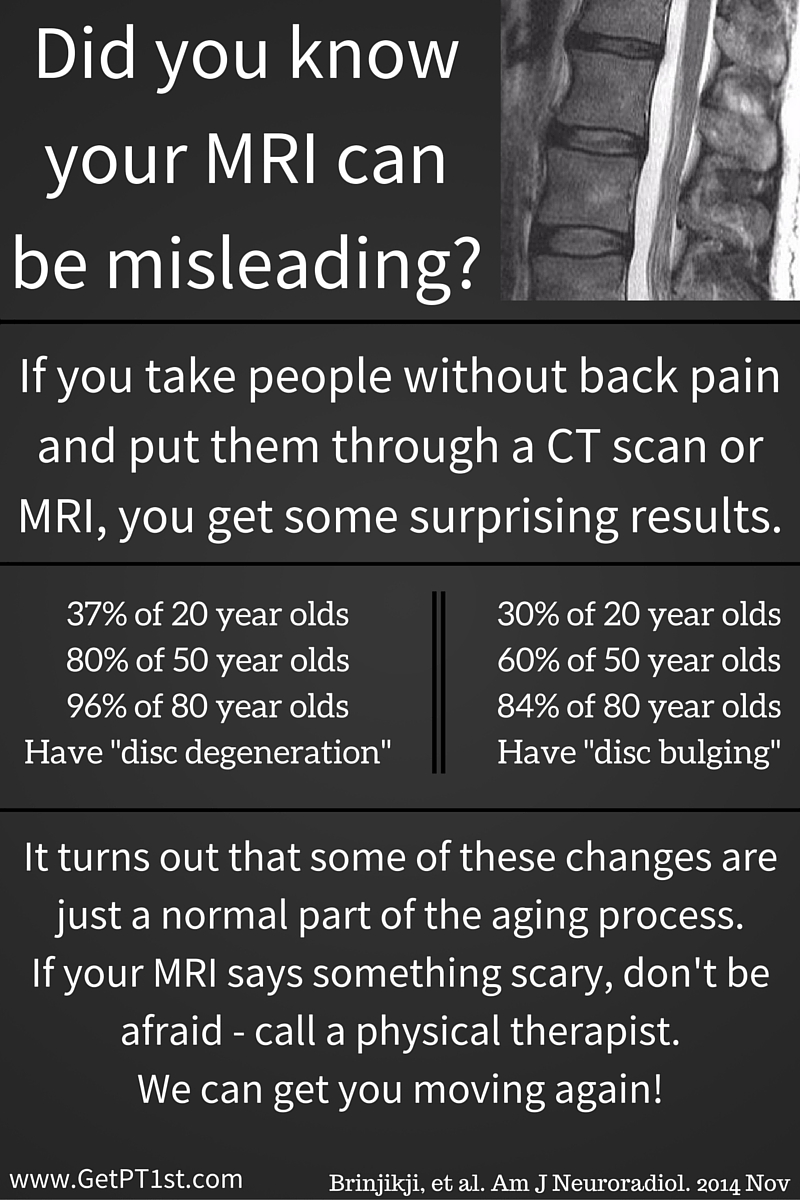
did-you-know-your-mri-can-be-misleadingYou are not your MRI…at least not for long.
 

MORAL OF THE STORY: Stop your whining over your herniated disc, bulging disc or exploding disc. You are probably not the outlier. If your pain is lasting longer than six months, your disc is probably healed, but you still move like crap. Start to move better and take better care of yourself and the improvements will follow. In general, this means that you are most likely the problem…not your back.

Also, I will be taking a couple of weeks off from reading and writing to travel with the family.  Taking some time to breathe.  If you enjoy the blog, please add a topic that you would like to see covered at a later date.


  1. “Lumbar disc hernia (LDH) is a common cause of low back pain and radicular leg pain…majority of LDH patients recover spontaneously…Purpose of the present study was to investigate the natural history of the morphologic changes of LDH on MRI and to assess correlations with the type of LDH and the clinical outcome”


First, disc herniations are a common cause of pain. I believe this to be true and the research consistently reports this fact. The part that doesn’t get reported is the second part of the statement being that spontaneous recovery is normal.


When people come into the clinic, they have this seemingly rehearsed story of how they had an MRI and was told that they have a bulging/herniated/exploding (maybe a little overboard) disc. The doctors never tell them that this can recover on its own and patients then wear the herniated disc patch for the rest of their lives.


As you will see, you no longer need to wear that patch if your were told that you have an exploding disc.


  1. “…42 patients…mean age of 42…unilateral leg pain and low back pain…symptomatic level was L2-3 in 8 cases, L3-4 in 6 cases, L4-5 in 15 cases and L5-S1 in 13 cases”


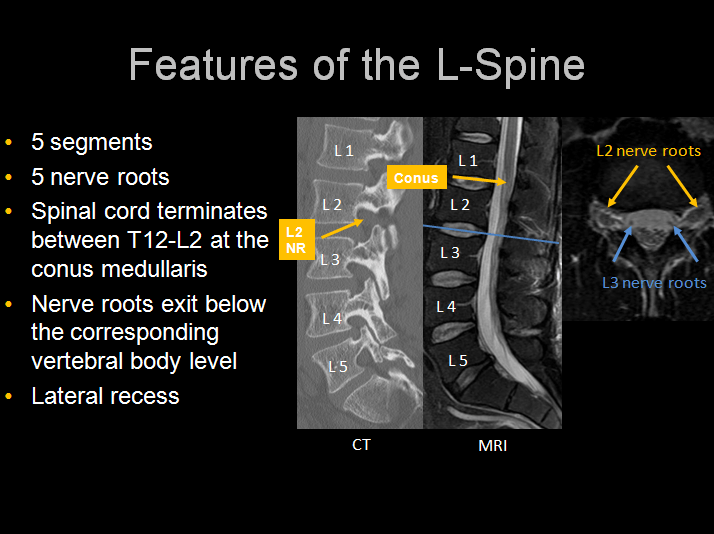
Let’s start here. l_spine


The lumbar spine is labeled as L1-5 and the sacral spine then starts. The intersection between the lumbar spine and the sacrum is L5-S1. The segments are named by the upper segment first-lower segment second.


Some interesting notes regarding this study:


  1. 66% of the patients have symptoms coming from the lower lumbar segments, those being L4-S1. This is inconsistent with published research reporting that up to 95% of symptoms come from these lower segments.
  2. Therefore, 34% of symptoms are coming from the upper segments. Again, previous research notes that only 5% of symptoms come from these segments.


Unilateral leg pain simply means that only one leg is affected. For those that may have experienced sciatica in the past, you will remember that it was only one leg that experienced symptoms. If you have symptoms in both legs, then it may not be sciatica.


  1. “All patients underwent MRI examinations every three months for a period of 3-24 months”


This is not affordable for most and won’t be approved by any insurance that I have encountered. The reason for the frequent MRI’s is to see how things change over time.


  1. “LDH was classified into three types: protrusion (n=7), extrusion (n=17 and sequestration (n=18)”


Here comes the jelly donut theory. If you have heard it, then you can pass this paragraph up. Think of the disc as a jelly donut (I know that this is an oversimplification, but this model makes the most sense…even if it is not the most accurate).


A protrusion means that the outer portion of the donut (the actual donut itself) has been deformed. If you plug the hole of the jelly donut so that the jelly can’t come out of the hole, you will be able to follow along with the rest of the idea. I personally don’t like jelly donuts. I much prefer custard or cream. Speaking of that, Tim Hortons has the best filled donuts that I have ever had. This reminds me of a trip to Canada with my best buddy Carl. If I have the time later, some stories from this road trip may come out. Back to business; if you squeeze the donut on an edge lightly, you will start to squeeze the jelly away from the area that you are squeezing. If you squeeze a little harder, you will see the donut “bulge” just prior to the jelly coming out. This is a protrusion.


An extrusion means that the jelly has escaped! Oh no! Now what? No big deal. You will see later that this may actually be a better situation for you than the protrusion.


A sequestration means that not only has the jelly escaped, but a piece has broken off and hit the floor. If enough nuclear material (the jelly inside the disc) breaks through the annulus (the donut in the example), then it may break off and be free floating in the spinal canal (near the nerves of the spine). This again may not be as bad as it sounds.


  1. Correlation between the clinical outcome and spontaneous changes of the herniated mass on MRI (6 months)


MRI change Excellent Good Poor Total%
Disappearance 6 2 0 19
More than 50% reduction 11 18 0 69
Little or no reduction 0 1 4 12
Total 40 50 10 100


What this means is that in 19% of patients, the herniation seen on the MRI disappeared over the course of time. Better yet, about 88% improved significantly over the course of time. You are not your MRI… at least not for long.


6.

Type of herniation Case Duration of symptoms
Protrusion 3 cases in total 3-14 weeks with 8 weeks average
Extrusion 17 cases 4-8 weeks with 4.8 weeks average
Sequestration 18 cases 1-5 weeks with 3.2 weeks average


What does this chart mean? Those that have a “more serious” appearing herniation on MRI actually respond faster than those with a smaller herniation. You are not your MRI…at least not for long


Excerpts taken from:


Takada E, Takahashi M. Natural history of lumbar disc hernia with radicular leg pain: Spontaneous MRI changes of the herniated mass and correlation with clinical outcome. Journal of Orthopaedic Surgery. 2001;9(1):1-7.

Old dog, new tricks

11429This is a great article for the “n” of one crowd. Not every article has to be a randomized control trial and sometimes we can learn much more from a case report than from a systematic review. This is one case report that taught me to be a little more exhaustive than I typically am when treating a patient. When a patient presents to the clinic with facial pain, the “jump to conclusion” idea is that the patient has larger issues that need to be addressed, as this is a sign of a cranial nerve (think direct to the brain nerve) dysfunction. I forgot some details of the nervous system, or a better way of saying it is that I didn’t have a complete understanding of this coming out of PT school that this review is more of a clinical application of the anatomy in order for it to make more sense. My ego is not too big to say that I am still learning daily. This article makes me a better therapist tomorrow than I was yesterday. Thank you J. Lincoln.


Big picture, the patient improved. We can’t draw cause and effect conclusions from a single case, but we can take the information provided and use it on a later patient in which stronger research-based interventions have failed the patient.


  1. “female…with symptoms of unilateral right sided head,face,ear, neck, shoulder and arm pain, as well as subjective sensation of swelling in the right side of the face and anterior triangle of the neck”


Yeah…we don’t particularly like seeing these types of patients. Especially not on a Friday after noon at 4PM. These symptoms are going to be difficult to try to figure out. Many therapists (myself included when I was a young buck) would just write this patient off as one of two things:

  1. psychosomatic: look it up. You will find that the psycho plays a role in the pain presentation. By psycho, I don’t always mean the patient, but the patient’s perception of the pain.
  2. secondary gain: This patient was either in a car accident looking for litigation, is trying to score some time off of work, or is trying to get money without working for it.


Needless to say, I don’t tend to lump patients into these categories as quickly as I did in the past ( I still do, as this is also a part of classifying patients), but I will at least take a crack at helping the patient before jumping to one of the above conclusions. On a side note: if you are faking/exaggerating or seeking some sort of financial gain, please don’t seek me out. I take pride in thoroughly assessing you and if I find inconsistencies in your presentation, it will not look good for your case.


  1. “referred for neck pain…complained of a constant ache in the right shoulder and neck extending down the entire anterior aspect of the right arm…intermittent pain in the right side of the face, ear and head as well as a constant sensation of swelling in the right side of the face and anterior triangle of the neck…waking at night with right arm pain…intermittent pins and needles in the right fingertips…aggravating activites included reaching or lifting with the right arm, ironing or wringing out clothes. Cold weather or having influenza generally made all symptoms worse…blowing her nose or sneezing specifically increased her facial pain.”


Get ready to swim because we are going into the deep end.


  1. Neck pain radiating down the arm. This is a very common symptom and can be coming from any structure that radiates symptoms down the arm (such as disc, nerve, facet) or from the brain’s heightened state of response to threat. This is a common symptom and I always think that there is a mechanical problem and force the patient’s symptoms to make me change my mind.

When assessing all patients, it is like one big chess game. Every movement and question that I ask of you provides me with your first move. I always let the patient start, except for very rare cases. Once the patient starts with their history or the first movements, the chess game begins. Every move the patient makes leads me to my next move. It is really like one complex dance. I will follow your lead and then take the lead when your body has given me my checkmate. Once I know how to win, I completely take the lead.

  1. intermittent pain in the face, ear and head leads most therapists to start thinking cranial nerves. These nerves are interesting because they don’t go through the spine. Think of it this way, why should the nerves go down into the spine only to come back up into the face. There is a much shorter distance from the brain to the face. When the face starts experiencing symptoms, we think brain first (and always keep this in the back of our minds if there is no change in the patient’s symptoms with movement, as nerves from the brain to the face won’t change much with neck movements). Secondly, the upper portion of the neck can refer into the head and face. Neck movement’s can affect these symptoms. This is why it is important to have a thorough evaluation.
  2. waking up at night with arm pain can be considered a red flag (think red light as our stop sign) and the therapist may start thinking of things such as cancer, but again the mechanical evaluation will help to start weeding out the white board (House MD reference).
  3. cold weather or influenza: This could also signal a systemic issue having a role in the patient’s systems.


Overall, the white board just got very confusing.


  1. “insidious onset of pain over a 12 month period, which had gradually worsened…no past history of shoulder or cervical spine injury…medical history included …diabetes, angina (chest pain), dizziness associated with postural changes and blurred vision bilaterally (both eyes)”


Big picture, this patient has a lot of stuff going on! I would call the doctor to ensure that he/she is aware of the atypical symptoms of blurred vision (possibly brain issue), dizziness (could be brain issue, neck issue, eye issue or ear issue) and chest pain (could be neck issue or heart issue). The fact that the patient is worsening over time is also a red flag that would also need to be alerted to the physician.


Many would think that the physician should already know all of this, but as a former teacher “Master John Luby” once said: “Never should on yourself” (say it fast and it will make sense). Most all of us have been to the doctor. I hear stories frequently from patients that they only see the physician for 5-10 minutes (if they ever see the physician at all). The therapist gets anywhere from 30 minutes to 1 hour with the patient and more information can be garnered in this time period (if the therapist cares enough to ask).


  1. “protracted cervical spine with forward head”


This is unfortunately more and more common. I can count on one finger how many patients enter the clinic with good posture. If your posture is crappy, then your movement will also be crappy. If you can’t stand still with good form, what makes you think that you can walk, run, jump, squat, or lift with good form.


  1. “an increase in the shoulder and neck pain at the end of range for left rotation and left lateral flexion”


This would indicate that opening up the facet joints would provoke symptoms. The spine has 3 holes in it…don’t worry, they are supposed to be there. When you move in a direction you can only do 1 of 2 thing to the hole: open or close. When you move to the left (either side bend like holding a phone to your ear or rotating in such a way to look over the left shoulder) you close down the left holes of the neck and open up the right holes of the neck. Opening up the right hole provokes symptoms.


  1. “Cervical spine extension produced central thoracic pain. Flexion, right rotation and right lateral flexion were asymptomatic”


looking up was no good, but looking right and leaning right were great. Looking down was okay. This creates a complicating factor because when you look down, you open the right hole and when you look up, you close the right hole. This patient will not be as simple as which holes are opening and closing.


  1. “arm,shoulder and neck pain was increased with flexion from 90 degrees through end range, abduction initially at 100 degrees through end range, and at the end of range with the hand behind the back movement”


White board: shoulder problem, neck problem, nerve problem.


Raising the arm can place tension on a nerve (they don’t like tension). Placing the arm behind the back doesn’t place tension on the same nerve, so this would start to rule out nerve tension as the major source of problems.


Neck problems can mimick all of the above symptoms, so not ruled out yet.


Shoulder problems can mimic the shoulder pain with the movement, but doesn’t typically cause neck pain with the movements.


Based on the pain presentation, we should probably start by looking at the neck.

  1. “Position assessment of the axis vertebra via palpation revealed the right transverse process to be prominent posteriorly as well as tender. This possibly suggested some rotation of this vertebra”


I understand what the author is saying, but I am so far removed from assessing each individual segment that I find it hard to believe that this is still a major component of performing a cervical evaluation.


  1. “patient was given a modified…neural mobilization exercise for home”


This doesn’t make sense to me when the author initially thought that there was a neck problem based on palpation. If I thought that you had a lug nut loose, I wouldn’t recommend putting air in the tire as a fix.


  1. “reported an initial increase in symptoms for 2 days and then large decrease for subsequent 4 days…active cervical spine movements reproduced right shoulder and neck pain at the end range or right rotation and right lateral flexion…it was decided to test for upper cervical spine stability…symptoms had virtually disappeared to a minor sensation…directly after treatment (headache snag).


Again, there are some topics here that seem like illogical jumps. The symptoms in the neck shifted sided from left to right. This is common, so I can understand that the symptoms shifted sides, but I can’t understand how the therapist made the jump to test for cervical instability after already having done all of the cervical movements. When a spine is unstable, it is like balancing a golf ball on a golf tee. If everything is aligned, the golf ball will stay on the tee, but if there is a slight change in alignment, off the tee it falls. Guess what your head resembles?! If there is a suspicion of cervical instability, this is a major clinical sign that needs to be assessed.


  1. “Infections in the tonsils, middle ear, teeth and nose may drain into the cervical spine region and the subsequent inflammation may lead to loosening of the transverse ligament attachments”


First, I didn’t know this. Second, this is a guess at best to state that this is the reason for the “loosening” of the ligaments of the spine.


  1. “It is therefore possible that this patient’s increased mobility was due to chronic loosening of the transverse ligament over time.”


This is a stretch and I would say long shot. First, we don’t know how mobile or hypermobile this patient was prior to the incident. The “increased mobility” may be the patient’s norm. We all know some people that can touch the floor and others that can’t even touch their knees. This may be the person’s norm.


Also, if the infections are causing the ligament loosening, then the exercises will not have a long-term effect on someone that continues to experience infections. If this is the case, then the best way to treat the facial symptoms is to treat the infection and wait to see if the ligament tightens up and the symptoms disappear.


  1. “This patient presented with pain at rest, suggesting the spine’s inability to maintain a sufficient neutral zone to prevent abnormal stresses on upper cervical spine…the development of a clinical instability situation”


If something has increased mobility from what is expected as normal, it doesn’t make sense to mobilize the segment. I don’t understand the author’s rationale for mobilizing a hypermobile segment. This may just be my ignorance though.

The patient improved over a short number of sessions.  This is obviously the goal of therapy.  If this patient’s symptoms were unchanged or worsened over the course of 6 visits, then it would be appropriate to communicate with a physician that either referred the patient or that the patient would like to see.  This is why it is important to shop around for therapists.  We have to demonstrate functional improvement.  Sometimes that function may just be reducing and eliminating pain so that you can continue to watch Game of Thrones or play the latest game on FB.

Sciatica of the Arm?

01-branch-615SCIATICA OF THE ARM


The great chameleon; the spine. It can mimick any symptom that you are feeling, or believe to be feeling. I can remember my first year in practice treating a patient with an amputation from WWII. He would tell me about his pain in the foot (which was no longer there). This is well before the mirror box studies became popular and the whole Graded Motor Imagery style of treatment. At the time I only knew directional preference and mechanical assessment procedures. Luckily for me, he fit the paradigm. This patient complaining of leg pain, without a leg, responded rapidly to repeated extension in lying.


Many patients will experience neck pain, which also radiates into the shoulder blade, chest, arm or hand region. I know, because I am also one of the 70% that will experience these symptoms in his/her lifetime. It was so bad that I had to go to the ER because I thought I was having a heart attack at the time. It doesn’t matter how much information may be known, chest pain is still no joke. After ruling out a heart attack, I was able to rapidly fix the chest pain through a few sets of cervical exercises.


When a person is experiencing symptoms that radiate into the arm, with associated neurological signs, such as weakness, numbness, or reflex loss, this is called cervical radiculopathy. There is a clinical prediction rule that is very strong for classifying patients with cervical radiculopathy, prior to the patient receiving any type of test, such as an EMG or NCV, while in the clinic.


We as therapists will do well to know the evidence. Whether we fall on the side of Chad Cook regarding CPR’s having little utility until they have been verified or we fall on the side of believing everything that is written, we at least have to respect the information and know it…more knowledge can’t be harmful when we have more options with which to treat patients.


Facts from the following:


Wainner RS, Fritz JM, Irrgang JJ, et al. Reliability and Diagnostic Accuracy of the Clinical Examination and Patient Self-Report Measures for Cervical Radiculopathy. Spine. 2003;28:52-62.


Introduction

  1. No universally accepted criteria for dx of CS radic have been est (2ndary)
  2. Useful to establish accurate clinical examination findings for a diagnosis of cervical radiculopathy
  3. Purpose of theis study was twofold: to assess the reliability and accuracy of

selected clinical examination findings for the dx of c/s radic using an electophysiologic reference criterion, and to identify and assess the accuracy of an optimum cluster of clinical examination findings for the dx of C/s radic.


METHODS

  1. 82 patients
  2. eligibility
  3. consecutive patients from 18-70
  4. suspected of CS radic or CTS
  5. Exclusion
  6. systemic disease that causes peripheral neuropathy
  7. primary report of bilateral radiating arm pain
  8. h/o condition affecting the UE interfering with function
  9. no work >=6 m 2nd to symptoms
  10. h/o surgical procedures for pathologies giving rise to neck pain or CTS
  11. Previous EMG and NCS testing for CR and/or CTS
  12. workman’s comp or litigation


patient self report items

  1. VAS
  2. NDI


Standardized Electrophyologic examination procedure

  1. Needle EMG and NCS served as reference criterion for radic


Standardized clinical examination procedure

  1. 34 items performed by examiner one after EMG and NCS
  2. same by examiner two after 10 minute rest to determine reliability
  3. blinded to EMG/NCS/PT 1 results


History:

  1. 6 questions thought to be diagnostic for CR


Conventional Neurologic Examination and Provocative Tests

  1. MMT of C5-T1
  2. Reflex of biceps, brachioradialis, Triceps
  3. absent/reduced, normal, increased
  4. Pin-prick sensation C5-C8


Provocative testing

  1. Spurling test A+B
  2. Shoulder abduction test
  3. Valsalva maneuver
  4. Neck Distraction
  5. ULTT A+B


Cervical ROM

  1. All inclinometer for saggital and frontal and goni for rotation


RESULTS:

  1. Prevalence of CR and CTS was 23% and 35%
  2. CPR
  3. ULTTA + (+LR 1.3)
  4. involved cervical rotation < 60 degrees (+ LR 1.8)
  5. distraction test (+LR 4.4)
  6. Spurling A (+LR 3.5)
  7. Two positive: +LR 0.88 PTP: 21%
  8. Three positive: +LR: 6.1 PTP: 65%
  9. All positive: +LR: 30.3 PTP: 90%


Clinical Utility: Three + tests increase the liklihood from 23% to 65%, which makes this cutoff worth looking at clinically. The fact that the PTP with all 4 is 90% is very clinically useful. With experience, I see that there are neurologists and orthopedic spine surgeons utilizing a version of this CPR . I am not aware if the study was read by these clinicians.

CPR…not that kind

In the PT world, those of us that follow the research like to quiz students on Clinical Prediction Rules, because these have become all of the rage in the Evidenced Based Practice world.  Unfortunately, few CPR’s have been validated through repeated testing and those that have are still being assessed in order to determine if the CPR actually changes the way that PT’s practice.  In my opinion the answer is no to this basic question. When we look at the clinical practice guidelines, it clearly states that manipulations are a tool to be used for patients with low back pain.

It would be great if all PT’s, in the outpatient setting were familiar and comfortable with performing grade V mobilizations (otherwise known as manipulations in the research).  This is an entirely different subject to begin with, but we should also go there.

Each profession owns certain terminology, and this varies by state.  For example, in the state of Illinois, chiropractors own the term manipulation, but therapists can use the term grade V thrust mobilization.  The end outcome is the same procedure, but we can get in trouble for performing interventions outside of our practice act if we call it by the wrong name.

Moving on to a gripe with the American Physical Therapy Association.  Many PTA’s are taught that they are not allowed to manipulate a patient.  The rationale for this is that when PT’s (Doctors of Physical Therapy) graduate from an accredited program, that the newly graduated PT is now considered an expert at performing the manipulations;whereas the PTA, because the topic wasn’t taught in school, is not an expert and therefore should not be performing the maneuver.  The problem with this rationale is that the APTA is greatly overestimating students’ ability upon graduating from a PT program.  Working closely with many students over the years, I have only had up to 3 students that were able to walk into the clinic on day one and perform manipulations without any cues.  This is up to 3 of 50 in total.  This is not a high percentage of students that are “experts”.  I would have to teach a PTA student in the same fashion that I teach a DPT student.  The maneuver didn’t change because the person’s title is different.  No where does it legally state that a PTA is not allowed to perform a manipulation.  I have worked with PTA’s that quickly grasp the concept and the mechanics of a grade V thrust mobilization and on the same note I have worked with many DPT’s that I wouldn’t want to perform this maneuver on a cadaver because the newly graduated DPT may get hurt.  That’s my axe to grind for the night.

Here’s my article for the night.  Not as exciting as above.

Beneciuk JM, Bishop MD, George SZ. Clinical Prediction Rules for Physical Therapy Interventions: A systematic review. Phys Ther. 2009;89:114-124.


INTRODUCTION:

  1. The purpose of the review was to determine the quality of CPR’s developled for interventions used by PT’s.
  2. included if the explicit purpose was to develop a CPR related to a specific

intervention approach for conditions commonly treated in PT.

  1. excluded if already validated (VG: This brings up a point: would the

previously validated CPR (manip LS) be approved based on the

criteria established in this article (topic for a later debate seeing that

the authors ask readers to examine the Type IV CPR prior to

attempting utilization).


METHODS:

  1. 18 criteria used to assess quality in the SR covering 8 qualities
  2. study population
  3. response information
  4. follow-up
  5. intervention
  6. outcome
  7. masking
  8. prognostic factors
  9. data presentation
  10. high score of 18/18 correlates with high quality
  11. taken from average of 3 reviewers per article.
  12. high quality is >60%
  13. 8 studies remained after the initial compilation of 25


methodological criteria

  1. items rated
  2. inception cohort
  3. inclusion/exclusion criteria
  4. Study Population
  5. Nonresponders vs. responders
  6. Prospective data collection
  7. Follow-up at >= 6 months
  8. Dropouts/loss to follow-up of <20%
  9. Inforation on subjects completing study vs. loss to follow-up/dropouts
  10. Intervention fully described/standardized
  11. Standardized assessment of relevant outcome criteria
  12. Masking of outcome assessor and treating clinician
  13. Standardized assessment of subject characteristics and potential clinical

prognostic factors.

  1. Standardized assessment of position psychosocial prognostic factors
  2. Frequencies of most important outcome measures
  3. Frequencieis of most improtan outcome measures
  4. Appropriate analysis techniques
  5. Prognostic model presented
  6. Sufficient numbers of subjects
  7. Five studies >60% (good quality), 4 rated 50-60%, 1 rated <50%


DISCUSSION

  1. Quality of derivation studies has never been assessed.
  2. Only 40% of the studies had adequate sample size.


CONCLUSION:

  1. Follow-up validation studies are needed.