modified STarT Back Tool

“For example, individuals at a low risk of persistent disabled problems can be reassured and discouraged from receiving unnecessary treatments and investigations, while those at high risk can matched to treatment which combines physical and psychological approaches”

For those of you that haven’t read my previous posts on the Start Back Screening Tool, then this first post may not make sense. It is recommended to read those posts before reading this post.

In short, some patients improve without treatment, with simple advice to stay active.

“In addition, an implementation study testing risk stratification for patients with low back pain in routine general practice demonstrated significant improvements in physical function and time off work, sickness certification rates and reductions in healthcare costs compared to usual non-stratified care.”

Who knew? 🤷‍♂️

If we start classifying patients, we tend to get better results.

This should be a no-brained. Two different patients with similar pains may respond completely different to treatments. We need to be able to determine which type of intervention/or lack of intervention is best paired with each type of patient.

Until we get better at understanding the patient and both the patient’s response to movement and belief systems, we will continue to fail a percentage of these patients when they come into the clinic. Some patients will improve regardless of the intervention/treatment.

“GPs are not alone in wanting information about patients’ likely prognosis over time, as >80% of musculoskeletal patients also want prognostic information from their GO, although less than a third actually receive this information”

The fact that almost 1/3 of patients receive information from their physician is surprising to me. With shortened face time with physicians and the incentive to refer within the system in which the GPs operate, I’m surprised that there is enough time to spend educating even 1/3 of patients.

We know that patients want information. What is bothersome to me is that some practitioners, throughout healthcare as a whole, give patients flippant answers without substance. These patients then hang on to that information and allow it to dictate how they live or avoid living life.

To tell a patient with osteoporosis that they will fracture their spine when flexing can produce fear of a movement and greatly impact the patients quality of life. Giving the patient statistics about fracturing, not just with bending but also with staying neutral, allows the patient to have a more active role in decision-making.

The last thing we want to do is to label a patient, or cause a patient to label themself, as having “big bones”, slipped discs, degenerative spines, or as many of my patients say “Uncle Arthur”.

“The distribution of primary pain regions was reported by clinicians as: lower limb 31.1%, Back 28.7%, upper limb 23.5%, neck 11.8%, and multisite pain 4.8%”

The modified STarT Back tool is a version explores more options than back pain only.

“…a modified STarT Back Tool is similarly predictive of 6-month physical health across different musculoskeletal pain regions.”

This type of prognostic data is important for healthcare providers to obtain in order to build a long-term plan for patients beyond simply 3 times per week for 6 weeks of therapy.

What happens to patients after this six weeks?

If we have not educated and empowered the patient, they will become a patient again.

“This implies that the existing STarT Back Tool score cut-point (4 or more out of 9) used to allocate patients with low back pain to the medium-risk/high-risk subgroups cannot simply became applied to patients with other musculoskeletal pain presentations or in different clinical services”

This is pretty self-explanatory. We can’t use a back tool to help us make decisions about a knee pain, neck pain, headache, etc.

“It is found that regardless of body region of pain, higher modified STarT Back Tool scores were associated with higher levels of kinesiophobia, catastrophising, fear avoidance, anxiety and depressive symptoms.”

Kinesiophobia is fear of movement. Catastrophising is making a bigger deal out of a situation than it actually is. Fear avoidance is actively avoiding an activity for fear of making oneself worse.

None of these descriptors are good, but you know what…we work with them in physical therapy.

Let me say this differently…a good physical therapist will work on these issues, but not all address these issues.

For more information on projects that I am working on, please visit my podcast

Article

Go to Physical Therapy to be Physical…think again

“affecting 60% to 80% of individuals during their lifetime”

This statistic gets thrown around so much that all PTs should know this without thinking about it.

LBP is such a common occurrence that many non-healthcare professionals are giving advice about how to fix it.

I was at a fundraiser recently and I heard people talking about back pain as part of the conversations had between laypeople. This is how prevalent that it has become, discussions of back pain have made their way into everyday conversation. Everyone and their mother has a remedy for it.

I heard about cutting out sugars, rolling on tennis balls and soaking in Epsom salt. It wasn’t until someone in the group turned to me (they had a previous knowledge of the website) that people stopped giving advice and started asking for information.

The public wants information. On that note, if you’ve found any information from this website helpful…please share it so others can learn.

“total annual direct healthcare costs in the United States incurred by patients with LBP were estimated at $90 billion in 1998, 60% higher than individuals without LBP.”

🤔

Sounds like we can start to create a change in total costs if we could just be better at treating this issue.

Back pain is top 5 reasons a person seeks out a healthcare provider.

We are spending so much money on this problem…you’d think we’d be making a dent in the number of people with back pain, and the expenses incurred for this ailment.

Nope!

Reading the rest of this post will start to shed light on why our system, as a whole, has a lot of sucky (scientific term 👍) parts.

“Recent reports suggest that the use of physical therapy for patients with LBP is increasing.”

This makes so many people tho I that our profession (as a PT) is booming. Yes, there is a bigger pool of patients daily, but insurance payments have been decreasing for decades.

This is a different conversation, but it also plays a role in why clinicians may choose on intervention over another.

Soapbox

***For instance, if there are 3 people in the clinic at the same time (which could be considered fraudulent if this is occurring for patients using Medicare as insurance), the therapist has to make the patient perform some activities independently (which also should not be billed for patients with Medicare) or they would have to place the patient on a non-effective piece of equipment in order to be paid, while the PT works with another patient. ***

It then makes sense that the use of PT is increasing if we are performing ineffective techniques in order to maximize reimbursement. Not all PTs operate in this fashion, but if the above scenario sounds familiar…go get a second, third or fourth opinion.

“…Consistent in recommending an active approach to pair with emphasis on maintaining and promoting activity, while avoiding passive interventions such as bed rest or physical methods (heat/cold, ultrasound, etc.)”

Look folks, doing nothing gets you nothing. We know this in many aspects of life. Don’t work, don’t get paid. This is no different.

If the patient doesn’t play an active role in the process of rehabilitation, the results tend to be no better than doing nothing…because that’s exactly what the patient is doing in many cases.

For instance, if a patient goes to physical therapy and the patient lays there while “therapy” is performed on the patient, then the patient has little active role aside from showing up and paying.

This has become such a problem in our profession that our national organization had to come up with a short read to help patients understand what generic therapy look like during an episode of care.

“…Adherence to this recommendation for an active approach was associated with better clinical outcomes of physical therapy, with fewer visits in lower charges for care.”

If a patient learns a home program that has been shown, in the clinic, to be effective at reducing that specific patient’s complaint, why should that patient go to a physical therapy session to get unproven passive treatment or to simply repeat the same exercises over and over?

I’ll wait for your response…because I don’t know the answer to this question aside from the fact that increasing a patient’s frequency in therapy also increases the total profits of the company benefitting from the therapy.

“… it is now understood that the natural history of LBP includes subsequent periods of exacerbation and recurrence for most individuals.”

A high percentage of patients, anywhere from 25% up to 80%, experience multiple periods of low back pain during the lifespan.

How one defines recurrence has a huge role in how this number is determined. It used to be that researchers would look at a group of patients with low back pain and then see how many of them had back pain one year later. The problem with this approach is that for many of the patients, the pain never went away from the first episode.

How can this be classified as a recurrence if it never went away?!

Better questions were then asked and about 25% of patients experience at least a period of one month of relief before having a recurrence.

Because of this, it is prudent for the PT (physical therapist, not personal trainer) to teach the patient how to self-manage and to reduce as many risk factors that one particular patient has for developing back pain in the future.

“The ratio of active: passive codes had to be at least 3:1 for each phase, and every visit had to have at least one active code for the patient care to be considered inherent to guideline recommendations.”

I think that this is very conservative.

This means that for each hour a patient is seen, anywhere from 8-22 minutes are spent on manual (hands on) therapy, ultrasound, electrical stimulation, heat, ice.

The other 38-52 minutes are spent working on balance, exercise, returning to a functional activity.

This type of scenario would allow for 3 units of an active charge (75% of the session) and 1 unit of a passive charge (25% of the session).

Keep in mind, a clinician doesn’t have to follow this type of ratio, but a higher ratio of passive treatment is not consistent with the guidelines of treating patients with back pain.

“Consistent with previous studies, a successful outcome was defined as achieving at least 50% improvement on the 0SW – disability score.”

I’ve seen many patients that have gone through an episode of care without any relief before coming to see me in the clinic. For patients to get a 50% improvement in symptoms and ability to live the life they want, many would be happy with that outcome. In the research, we see as little as a 2-3 point change being considered significant when using the (pain scale). A 50% improvement is considered significant.

“471 patients with LBP met the criteria for inclusion. (18-60y, at least 3 visits of PT, duration of PT at least 10 days, initial OSW >10%, and no surgery recorded)”

This simply shows that there were a large number of patients that could be studied.

The inclusion criteria is important because it’s hard to take a study and apply it to a patient that doesn’t fit the inclusion criteria. For instance, this study included people from age 18-60. The results of the study may not apply to those under the age of 18 or over the age of 60.

Also, the study may not be applicable to those that experienced a back surgery.

“132 patients (28.0%) received adherent care and 339 (72.0%) received non-adherent care.”

Less than 1/3 received care that was consistent adherent to an active plan of care. This is disturbing!

This means that many patients going to therapy are having treatment DONE TO THEM instead of DONE WITH THEM!

There are many treatments that can be billed without the therapist directly treating the patient one-one. For instance, mechanical traction can be performed while the therapist is treating another patient. Other treatments that can be performed while the PT is treating another patient is “electrical stimulation”, moist heat and cold packs.

“Patient receiving adherent care experience greater improvement in disability, and pain intensity, and were more likely to experience a successful physical therapy outcome than patient receiving nonadherent care.”

This literally means that when patients are doing more for themselves, they get more from PT. It doesn’t have to be hard.

The PT should act as the guide in order to introduce the patient into a more pain-free, more functional and self-sustaining state. If the PT is acting as the “hero” of your story and not the “guide” in your story, it may be time to find another PT.

“Patient receiving adherent care also attended fewer physical therapy visits, had a shorter length of stay, and lower charges for physical therapy care.”

Fewer therapy visits = less money!

Is it getting easier to see why some clinics are more than happy to perform traction and electrical stimulation to patients?

💵💸💰

In the end, the patients are rarely at the center of care. Physical therapy is also is a business. Businesses function based on profit.

When you find a PT that treats you as a patient and not a $$$, then you have found the right person.

“296 patients (62.8%) had billed charges for additional healthcare related to the management of LBP in the 1-year period After completion of the physical therapy episode of care.”

It is common for patients with back pain to go to multiple providers, such as pain management, orthopedic surgeons, chiropractors and other PTs in order to seek treatment throughout the year.

“Receiving adherent care was associated with decreased use of prescription medication…also associated with a decreased likelihood of receiving diagnostic imaging procedures…associated with decrease use of MRI”

This is simply saying that when patients do more activity in physical therapy (PT), that the patient is less likely to seek out imaging.

There could be many reasons for this outside of just being active in therapy. This is purely conjecture, but if the therapist is able to educate the patient on when imaging is needed and the patient buys in, then it may have a rom in future imaging.

If the therapist demonstrates to the patient that they are strong and robust through the exercises or movements performed in therapy, then the patient may believe that the injury is less severe than initially believed.

If the therapist can change the patients belief system in order to understand that what is seen in imaging may not give them the answer they are looking for, the patient may be less likely to get imaging.

The one constant in all of this is the patient-PT relationship. It may be harder to foster that patient in an environment where multiple patients are being seen at the same time compared to when a patient is seen one-one.

These are great questions to ask when calling a PT clinic to inquire about treatment prior to actually signing up

1. How comfortable are your PTs at treating LBP

2. Do I need to use electrical stimulation and how many patients is this used on in your clinic?

3. Will the therapist be treating more than one patient at a time?

You have the right to this information prior to signing up. If you don’t care about this information, then don’t bother. If it is important to you that you have the individual attention you are paying for…ask away.

“Similar to other healthcare providers, it appears that physical therapy care for patients with LBP is characterized by widespread and unwarranted variations in practice”

We see PTs using craniosacral therapy , dry needling, MDT and other methods/interventions to treat back pain. Because of the variability, it is imperative that the PT ask about previous treatments because there is no common standard with physical therapy.

“…it may be surprising that adherence to an active approach has been reported to be low in studies of both primary care physicians and physical therapists”

Nope! ❌🙅‍♂️

When determining what interventions have the least amount of friction in order to get paid, the passive interventions win every time.

It’s unfortunate, but until insurance based physical therapy is linked to total costs for the treatment issued to a patient (such as a large lump sum issued to the clinic at the beginning of the year in order to manage a patients physical therapy needs and complaints), we will continue to see passive treatments as they reimburse with little time spent with patients.

Excerpts from:

Fritz JM, Cleland JA, Speckman M et al. Physical Therapy for Acute Low Back Pain: Associations with Subsequent Healthcare Costs. Spine. 2008;33:1800-1805.



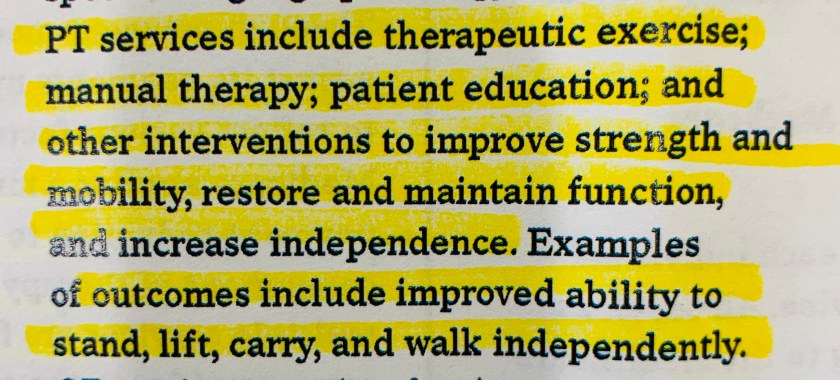
Outpatient Therapy Services Payment System

Physical therapy services are performed by someone licensed in the physical therapy profession. This can either be a licensed physical therapist (either a Bachelor, Master, or Doctor of Physical Therapy) or a licensed Physical Therapist Assistant (Associate degree).

Aspects of our profession that are performed in the clinic are as follows:

therapeutic exercise: exercises performed in order to help a patient improve function, strength, endurance, range of motion and/or reduce pain

Neuromuscular re-education: training movement patterns, balance, coordination, kinesthetic sense (where the body is at in space during movement), posture, and proprioception (where the body is at during one moment in time)

Manual therapy: using ones hands or tools to perform massage, joint mobilization (moving individual or groups of joints), traction, passive ROM (using hands to move a joint through its range) in order to improve pain, range of motion, swelling or other restrictions

These are the most common interventions used in my clinic. Other interventions used are modalities (which may or may not have evidence to support the intervention and may or may not be covered by an insurance plan). Some are as follows:

Ultrasound

Electrical stimulation

Heat/cold

Mechanical Traction

Iontophoresis

Laser therapy/light therapy

This is still a grey area for many Physical Therapists (PTs). Although the rules are very straightforward, some clinicians never read the rules that insurance companies impose to the clinicians. When a clinician is treating a patient and is in-network with the insurance company, the PT is accepting the rules imposed by insurance companies. Medicare will pay for medically necessary services.

It is up to the PT to establish this necessity in the documentation. The PT the. Needs to have a physician or other allowable non-physician provider (think nurse practitioner) sign off on the initial documentation, which establishes the PTs plan of action/treatment/care. This plan of action must establish a few details and is valid for up to 90 days.

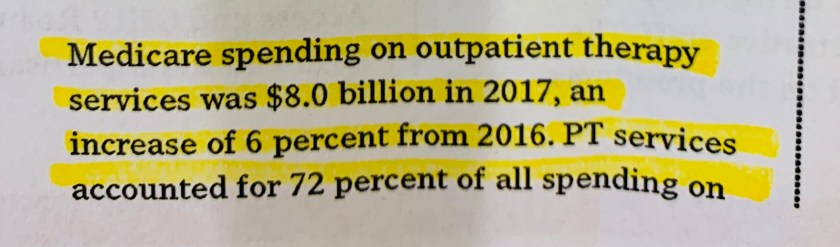
Let’s talk numbers. Our spending on outpatient therapy services (occupational therapy, speech therapy, physical therapy) is more than many countries spend to run the entire country. This is a very large number and insurance companies, both public and private, are trying to cut down on the total expenditures over time.

It makes sense, because expenses have increased by 6% year to year for the previous years.

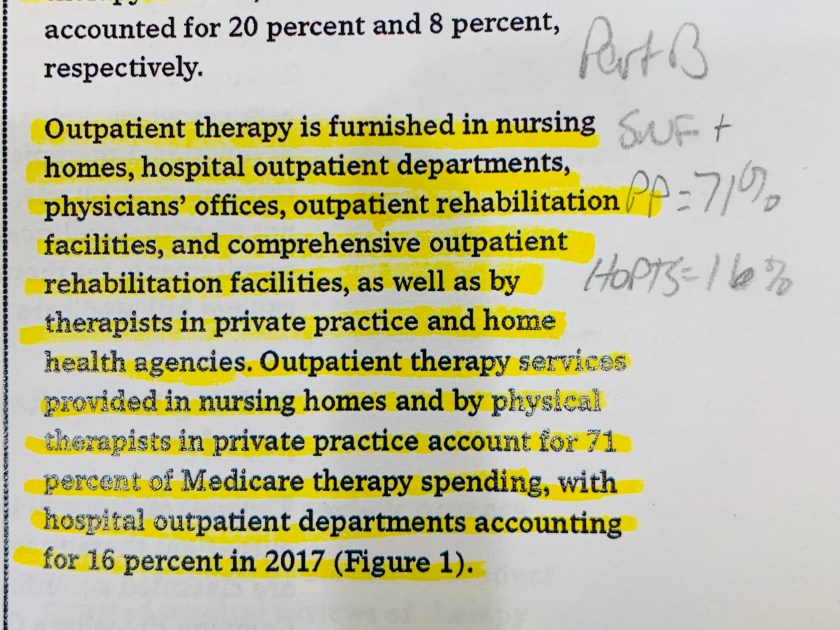
It may come as a shock to many patients, but “outpatient” benefits can be used in an inpatient setting 🤫.

If you were in a nursing home, they may have used your outpatient benefits to pay for part of your rehab. This may not be the best use of your funds as seen Here and Here.

Surprisingly hospital outpatients use fewer funds than I suspected. It has been documented that many physicians are pressured to keep a patient “in-house”. This means that physicians are not “supposed to” refer a patient out of the hospital network. This keeps all of the money within the hospital to find profits. This was highlighted in a previous news Article

In a way, I’m not surprised that private practices see such a large amount of the Medicare pie, as it’s been noted how many are abusing the system for large payouts. Such as this company that settled for $7M for performing abusive practices. These practices are very common to see in the field of PT.

Patients with Medicare are only to be billed for non-group services (which by the way pay at a much lower rate), when they are actually seen one-one.

Also, patients are only to be seen by licensed professionals. This means that technicians (techs) or aides are not allowed to guide a patient through their exercise program, at least if the company plans to bill for these services. Don’t believe me…here’s another Example.

So I guess that I am not surprised by how much money is spent in outpatient settings.

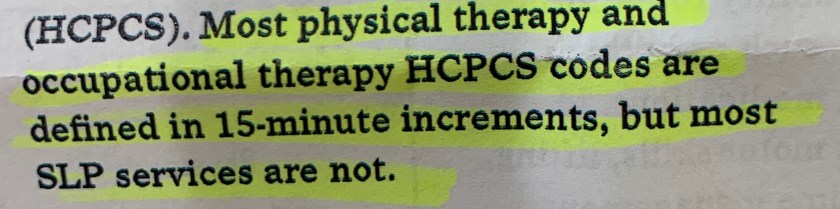
Many patients don’t understand that sessions are typically billed by the “15 minute rule”. This essentially means that for every 15 minutes, or at times the better half of 15 minutes (8 minutes), that the patient will see a charge on their explanation of benefits or receipt for services.

For example, a patient may see 3 separate charges for a session if the patient was seen in the clinic for 45 minutes. It can get messy if this is not explained to the patient.

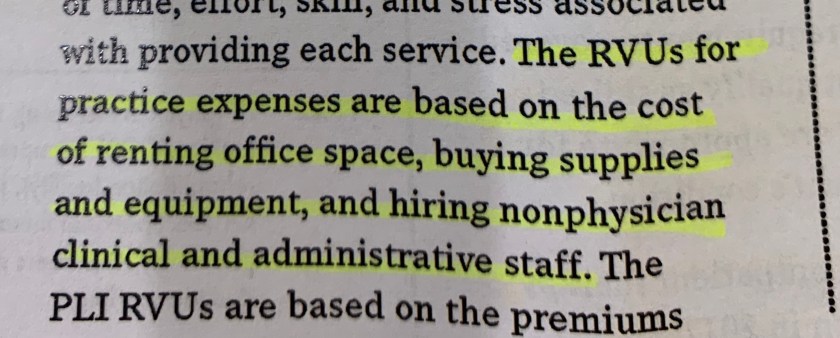
The amount of money that Medicare reimbursed is different for different areas of the country. This is based on how much the cost of performing business is within a certain locale.

Those that have Medicare have to pay 20% of accepted/fee schedule amount.

This is where things can get confusing. For instance, I’ve seen an average visit (1 hr) be charged from $360-$1200 to the insurance company. This is a huge range in charges, which is also a problem with our healthcare system because it makes it difficult for patients to understand the actual charge.

Out of the charge for an hour, Medicare will allow close to $100 depending on how that hour was broken up into charges. The other $260-1100 is written off as an “adjusted” amount based off of insurance “savings”. (This savings number is also arbitrary to make it look like you get a great deal from having insurance).

Of the $100 that is allowable, the patient is responsible for 20% of that charge. The patient can choose to have another entity, a Medicare supplement or secondary, pay the other 20%. Of course the patient has to pay a monthly premium, unless on state aid, for that other 20%.

This is a way for business to start gaming the system. They will start to shorten session lengths so that they don’t lose as much money per session. There are three separate components that go into what is allowable by Medicare. They cut one of the three components by 50%.

Companies are then shortening sessions to the least allowable to maximize charges, such as shortening sessions to 25 or 40 minutes in order to maximize their reimbursement per session. They will then keep the patient coming in for more sessions per week in order to maximize payment.

Sometimes it’s what’s best for the patient, but many times it’s only what’s best for the company.

Those companies that charge more, or are in the upper tier of chargers in our profession. For instance, in our state their was a company that was audited and asked to pay back over $600K to Medicare due to inappropriate charges.

The article can be found Here

Start Back Screening Tool

“Lifetime prevalence for LBP (low back pain) has been reported to be between 60% and 95% and 34% of the participants in a large population study in Norway reported to have had LBP last week”

These numbers are scary, but are consistent with other published research that notes about 80% of the population will have back pain at some point in life. Think of how lucky you would have to be to go an entire lifetime without having back pain based on these numbers?

It can happen, as I’ve seen patients in their 80’s with a first time occurrence of back pain.

The part that is sad for me, as a PT, is that less than 10% of these people will ever get in to see a PT for back pain.

“Due to the lack of diagnostic tests that can identify objective signs of the condition, most of the patients are characterized as having ‘non-specific LBP'”

If you’re not familiar with the numbers, it has been said that any diagnosis trying to name a specific tissue (disc herniation, arthritis, spondylisthesis, spinal stenosis etc) is only correct about 10% of the time. The more severe the diagnosis the more likely that the specific tissue is the correct diagnosis (such as a tumor, spinal cord injury, infection).

Because of this, a majority (90%) of back pain is just labeled as “non-specific low back pain”. The problem with this is that the treatment for a non-specific problem tends to be…non-specific.

Don’t get me wrong, a majority of back pain doesn’t need much treatment, if any at all, and tends to improve over the course of 6 weeks. Some pains from the back require a specific treatment and a treatment outside of this Specific treatment can worsen symptoms.

This means that we have to actually attempt to classify a patient’s presentation. Understand please that a classification is not a diagnosis but instead more of putting the symptoms into a non-specific “bucket” that most resemble that presentation. For instance, there could be a bucket for fast changing, slow changing and unchanging. There could be buckets for a primarily psychosocial component, chemical component or a bio mechanical component.

“Based on the SBT (Keele Start Back Tool) scores, patients can be categorized into three subgroups: patients with low, medium, or high risk for developing persistent LBP and activity limitations….the low risk group should receive minor attention from health professionals and self management strategies are recommended for these patients. The medium risk group should be offered physiotherapy. For the high risk group more psychologically informed interventions are recommended”

This statement may upset some of my colleagues in PT, but we aren’t always needed for patients that experience back pain. For instance, it is advocated to see a PT if you have pain lingering more than a couple of Days. I’m not sure I completely agree with this, as much back pain reduces spontaneously. The last thing you, as the patient should want is to pay for unneeded treatments. The last thing that I want to do as a PT is to take a patients money if I am not needed at that time.

Again, don’t get me wrong there is a group of patients, with back pain, that should be treated by a Physical Therapist. These patients will score higher on the Start Back Screening Tool.

With that said, it is important that the patient be classified correctly within the first 6 weeks of experiencing symptoms. Some research demonstrates an early classification is beneficial and others demonstrate that it should be done within 6 weeks of symptoms. The reason for this is that the patient may benefit from more psychologically informed interventions, which should be performed by someone with

“To be useful as a screening tool in physiotherapy practice, it is important that the SBT-scoring is reliable and that the allocation to risk groups reflects the severity of the patients back problems.”

There are two things that we look at in terms of performing testing. One, is the test valid. This means does the test actually tell us what we think it tells us.

The second thing is reliability. This means that if I have multiple therapist from different settings performing the same exact task, would I get similar or exact scoring if performed on the same exact patient by different therapists.

“The SBT consists of nine items; referred leg pain, comorbid pain, disability, bothersomeness, catastrophizing, fear, anxiety, and depression…. The total score range from 0 to9, with nine indicating worst prognosis. The last five items are summarized into a psychosocial sub scale with five as the maximal score, indicating high risk for development of chronic LBP”

For more information about scoring, I personally like to use the Shirley Ryan website of outcome measures found here.

“Patients with a total score of 0-3 are classified as low risk (minimal treatment, eg self-management strategies).

I use this tool frequently in PT. I rarely have patients score a 3 or less, but this may be because they are already filtered out by the physician in primary care.

I recently had a patient score a 3 and lo and behold his symptoms were abolished in 6 weeks without intervention.

It’s a small sample size, but it seems to match the research.

To summarize: the STarT Back Screening Tool is an option to utilize in practice in order to determine if a patient

1. Requires little/no intervention and will return to prior level of function (PLOF) through regression to the mean (time > interventions).

2. Requires PT/Rehab only

3. Requires a more psychologically intensive approach to care.

Click here for original research article.

STarT Back Screening tool revisited

“…changes in psychosocial risk factors during the course of treatment may provide important information for a patient’s long-term prognosis”

As professionals, we should be performing repeated assessments of patients during the plan of care (POC) and not waiting until the patient is ready for discharge (either because their benefits have been exhausted, the insurance company dictates that an assessment needs to be performed or the patient self-discharged). Performing repeated assessments throughout the POC allows us, as professionals, to understand if the patient is improving, worsening or remaining unchanged with care and to assist us in modifying the POC.

The STarT Back Screening Tool is one method of assessing psychosocial factors that may impede rehab potential.

“… repeated assessments during an episode of care can also provide valuable information about changes in a given variable that can be used for treatment monitoring”

Utilizing a standardized approach to assessing a patient will enable the professional (PT in my case) to determine if a patient is catastrophizing, losing hope, or requires the assistance of a more psychologically focused treatment approach.

“The STarT Back Tool (SBT) is a Screening questionnaire consisting of nine items related to physical and psychosocial statements that are used to categorize patients based on risk (low, medium, or high) for persistent LBP-related disability.”

Here is a copy of the tool in question.

“Wideman et al found that early changes in SBT scores were predictive of four month treatment related changes in several relevant psychological and clinical outcome measures.”

This is a little different than what is expected from an outcome tool. For instance, many tools are utilized to tell the clinician where the patient is at currently and if this patient Hs a risk of developing chronic pain.

When we utilize multiple scores instead of a standalone score, this is indicative of how a patient will progress over the course of time.

“all patients (in this study) were referred for physical therapy by a physician and did not seek physical therapy services through direct access… this setting was considered secondary care.”

This is an important topic. For instance, the previous blog post indicated that the tool gives us information when read minister over a 4-week time period. This indicates that there are changes that occur over the course of 4 weeks.

Many complaints of low back pain improve independently over the course of 6 weeks. If a patient is issued this test at the first visit and classified as low, medium or high, this may lead to an inaccurate classification. Seeing as this study issued the tool to patients in a secondary care (meaning that the patients were referred by a physician) indicates that the patient is not being seen within the first few days of injury.

“1. Aged 18-65 years,

2. Seeking physical therapy for LBP (symptoms are T12 or lower, including radiating pain into the buttocks and lower extremity), and

3. Able to read and speak English”

“treatment was not standardized or tracked in this study and was provided at the discretion of the physical therapist.”

This may also be an issue, as there is a newer study that indicates the treatment interventions may have a role in the patient’s scoring.

Please see the previous post about how to utilize this tool.

“…123 patients (84.2% of the entire sample) who completed the SBT at intake and 4 weeks…The percent of patients for each SBT risk category who were classified differently at intake and four weeks was 81.8% for SBT high risk, 76.0% for SPT medium risk and 11.3% for SBT low risk.”

This indicates that a patient’s initial score should be interpreted with caution because there is a high probability that it will change over the course of 4 weeks.

“most patients either improved (48.8%) or remained stable (40.6%) based on changes in SBT categorization.”

“Thirteen (10.6%) patients were categorized as worsened based on changes in SBT categorization, with six of those patients categorized as SB team high-risk at intake and four weeks later.”

This is interesting to me. Typically, in PT, a therapist will cite regression to the mean. This essentially states that given time the patient will transition from an extreme score towards a more moderate score. This doesn’t account for those that transition from a moderate score towards a more extreme score. To me, this indicates that the episode of care had an effect, albeit a negative effect, on this patient encounter.

Primary findings of this present study were as follows:

1. At over 4 weeks, approximately 11% of patients worsened SBT risk;

2. Clinicians should be less confident in the stability of an intake SBT categorization of high risk than that of medium and low risk;

3. Prediction of 6-month pain intensity scores was not improved when considering intake or 4-week change for SBT categorization; and

4. Prediction of 6-month disability scores was improved when considering intake, 4-week, and 4-week-change SBT categorization”

This indicates that the first measurement may not be a good indication of what will take place with the patient regarding disability over time and some patients can be made worse with therapy. We already knew the second part from previous blog posts.

Excerpts from:

Beneciuk JM, Fritz J, George SZ. The STarT Back Screening Tool for Prediction of 6-month Clinical Outcomes: Relevance of Change Patterns in Outpatient Physical Therapy Settings. J Orthop Sports Phys Ther. 2014;44(9):656-664.

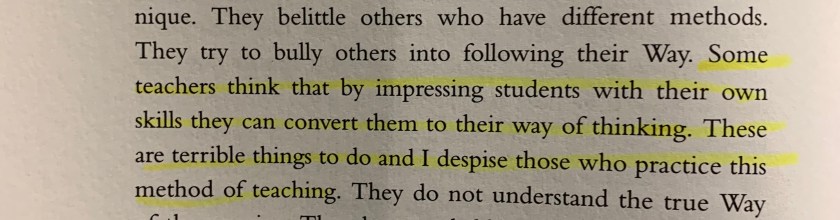
Great teachers build students to be great

Image: Kaufman SF. The Martial artist’s Book of Five Rings: The Definitive Interpretation of Miyamoto Musashi’s Classic Book of Strategy

I have had many students over the course of my career as a PT.

It is not hidden that I practice with a base of MDT (Mechanical Diagnosis and Therapy). This is the base from which I begin every new patient evaluation. It allows me to keep information in an order that makes sense to me and keeps me thinking systematically.

When I take students, I don’t dictate how they practice. I want for them to learn about what is their passion within this profession.

Everyone has to follow his/her own dreams and goals.

I frequently get students that ask me how did I get to where I am at in this profession.

I tell them about reading textbooks, thousands of pages, two to three times in order to understand the words. The students go from feeling great about the energy that I bring and the mentoring and teaching that I have done through the clinical to telling me that they don’t think they can do it.

I DON’T CARE!

You do you. Don’t try to do the things I’ve done in my career. Becoming better at anything takes work. I can feed you my information and this can put you a little further in your quest for information, but you will never own the information in the same way that I own the information. It takes time and work to own the topics.

I only hope that the students can take from me an inspiration that this profession has a lot to offer. Each professional could be great at any one niche AND there would still be enough information, topics, niches for everyone to be great at something.

In the end, the responsibility is on the person…the student.

It is not on the teacher, for the teacher has already paved his/her own way.

The student must choose the path and forge forward.

What path have you taken as a student…professional?

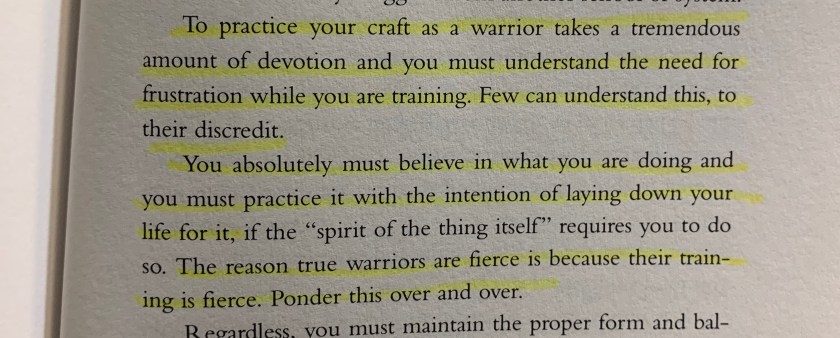
Training for game day…everyday

Image: Kaufman SF. The Martial artist’s Book of Five Rings: The Definitive Interpretation of Miyamoto Musashi’s Classic Book of Strategy

There is so much to unpack here.

First, don’t do as I do because you may have different goals than I.

When I worked at Sams Club, I could have two conversations: gym stuff and Sams stuff. I was so single minded. I would go to school in undergrad and read Ironmind, Flex, Powerlifting USA and books by authors such as the great Mel Siff, Mike Menzter, Fred Hatfield and others.

I wanted to make myself better at the things I enjoyed and school was just something I had to do in order to eventually make money.

I became employee of the year at Sams Club in 2003 and quit the same year to go work at a gym making half that money and to start PT school.

Once in PT school, I still devoted my time to learning about lifting. I went deeper into methodologies and theories of exercise.

Once I graduated from PT school, I devoted all of my free time to becoming a better physical therapist. I want to be the best (warrior) at this craft (physical therapy) that I could attain.

This is not necessarily healthy. I want to start by saying this because it’s been told to me my entire career.

I studied research between sets at the gym. I read textbooks multiple times over. I sacrificed personal relationships to become better…I won’t even say good, but better than the day before.

I’m glad I put all of that time in during those first ten years.

This does not conform to the thought of work-life balance. Again, I’ve heard this my entire career.

When looking at balance, it has to be what makes you happy. Not everyone has the same definition of happiness. When I go to work, I’m sure my patients are grateful that I sacrificed a decade of my life to get better at my craft. When I believe in something I give it my attention. In giving it my attention, I give my time. In giving my time, I am giving my life.

I understand that not everyone is devoted to their craft, but I would hope those depending on that craft can see the difference between those who do and those who don’t.

Cervical myelopathy: how to test clinically

“… The onset is often insidious with long periods of episodic, stepwise progression, and may present with a vast array of clinical findings from patient to patient.”

Cervical myelopathy is like neck pain to the extreme. It isn’t just a neck issue, but it ends up encompassing anything below the neck. It can cause arm symptoms, leg symptoms, difficulty walking, weakness throughout the body, spastic robot-like walking, and breathing issues.

This is a neck problem that needs to be addressed ASAP!

Let’s take a look at some of the research on this problem, what your therapist should check, and when it’s time for the patient to be sent back to a physician for imaging to determine if the patient is a candidate for surgery…it is that important.

Some quick stories (or not so quick).

I’ve had two patients with cervical myelopathy. One patient had symptoms of this, but also had arm problems from a previous injury. Because of this, the CSM (cervical spine myelopathy) was delayed in diagnosis until the patient demonstrated abnormal gait…10 months later!

The second case was picked up in the clinic immediately on the first day. I performed this cluster, to be learned later, on the patient and he was very positive. We had a conversation about the need for imaging and a consult with a neurosurgeon. The patient essentially said…thanks but no thanks.

Unfortunately this patient lost use of his hands and developed a walking pattern that was very abnormal before he decided that surgery was the right choice.

Here’s a quick Video describing CSM.

“May involve lower extremities first, weakness of the legs, and spasticity”

Spasticity is an issue that could be seen in walking for some people, but is testing using movements under speed like in this Video

What we will see is that the body reflexively slows down or stops the movement from happening rapidly.

“lower motor neuron findings in the upper extremities such as loss of strength, atrophy, and difficulty in fine finger movements, may present”

This means that we may see generalized weakness, loss of muscle mass (smaller muscles) and difficulty with picking up pennies and buttoning buttons.

“neck stiffness, shoulder pain, paresthesias in one or both arms or hands, or radiculopathic signs”

Neck stiffness is self explanatory. The neck movement may not be fluid or it may be restricted due to pain. There may be symptoms such as pain, tingling or numbness radiating into the shoulder(s) regions, arm(s) region or down to the hand(s) region. We may also see changes in sensation or reflexes.

“An MRI is most useful because the tool expresses the amount of compression placed on the spinal cord, and demonstrates relatively high levels of sensitivity and specificity.”

There is little reason for a PT to recommend an MRI, unless there are specific conditions found during the evaluation. The type of presentation notes above is one reason for a PT to recommend an MRI to the referring physician or the patient’s primary care physician.

X-rays do not do a good job of demonstrating any soft tissue (muscle/spinal cord/disc/ligaments/tendons) abnormalities.

Mind you, this presentation is not common and for the most part, an early MRI is not indicated for neck or back pain.

“The tests, when used alone, are not overtly diagnostic and may lead to a number of false negatives and in rare occasions, false positives”

It is recommended that, when CSM is suspected, the physical therapist use the cluster (groups) of testing in order to strengthen the likelihood of this suspicion. One test used alone is not enough to consider other testing.

“in reality, the diagnosis of CSM involves MRI findings and clinical findings, with equal weighting of both results”

Because the clinical exam is so important for this diagnosis and subsequent imaging, it is important that the PT and physician be familiar with the testing described.

“Of the 10 variables included in the regression modeling, the tests of Babinski and Hoffman’s signs, the Inverted Supinator sign, gait Abnormality, and age > 45 years were retained.”

I’ll be honest. In my first 10 years, I never tested for the inverted supinate sign or Hoffman’s sign until I read this paper. This is a testimony to continuing one’s education beyond taking courses. I don’t recall (those that know me know that I have a pretty good memory) ever learning this cluster through any of the coursework that I took since 2007.

After reading this article, I practiced these tests on a bunch of healthy individuals, those with neck pain in which I didn’t suspect a spinal cord issue, so that I could get better st the test and understand the normal response. This way, I learned the test mechanics and felt confident performing the test on anyone. It enabled me to understand the difference between the “healthy” patients on which I tested this specific cluster and the few in which had a positive test.

Rant: I hear it from so many students and new grads that they feel like they haven’t learned how to perform the tests or what to see as a result of the test because they only get to test healthy individuals. Having gone through the mechanics of this cluster for years, I hope that students understand that they must become confident at performing the mechanics of the test (kinesthetic learning) and know how a healthy response looks. One may go his/her entire career without ever seeing this presentation, but that doesn’t mean that one can’t perform the test and understand a normal result. I bring this up because I hear the same type of arguments regarding vestibular testing and ocular testing.

Every patient that has a history of stroke gets a vestibular-ocular exam because there may be lingering positive testing after the neurological event. This again strengthens my ability to perform the test and increases my likelihood that I will see positive testing…so I know what it looks like for future patient evaluations that may come in off of the street through direct access.

“A finding that included three of five positive tests yielded a positive likelihood ratio of 30.9 and a post test probability of 94%”

Even if you’re not a statistician, this is important information.

A positive likelihood ratio greater than 10 is an indication that your testing is giving a result that increases the chances of that being the diagnosis.

A post-test probability of 94% indicates that there is less than a 10% chance that the diagnosis or classification is incorrect after testing.

This is a much better percentage than we have of most orthopedic issues.

“”this study found that selected combinations of clinical findings that consisted of (1) gait deviation; (2) + Hoffman’s sign; (3) inverted supinator sign; (4) + Babinski test and (5) age > 45 years were affective in ruling out and ruling in cervical spine myelopathy.”

If you are a student and plan on treating patients…you must know these tests.

If you are a therapist treating these patients…you must know, be confident administering and understand the repercussions of a positive test.

If you are a patient…know that not all therapists have the same training and some may not even know these tests exist. I hope this makes you take a more thoughtful approach in choosing your next PT.

Article

Functional movement screening: the use

The FMS (TM) can be used to assess movement, but not predict injuries in all populations.

“The rehabilitation professional must realize that in order to prepare individuals for a wide variety of activities, screening of fundamental movements is imperative.”

I agree with this statement. I disagree that we yet have a tool that can screen all individuals from all sports. This screening tool has yet to prove its worthiness of use on athletes.

I recently was certified by USAW as a weightlifting coach. I really like what they use to screen participants before allowing them to train the weightlifting lifts of the clean and jerk and snatch. They use the basic movement patterns, without load or speed, that are needed in order to perform the entire lift safely.

This makes logical sense, but I don’t think a study has been performed to see if this is a good/bad thing to do prior to allow safe lifting.

The FMS is proposed to be a screening tool for athletes and tactical workers. I’m not sure this one tool can encompass all of the movements required in life.

It’s still a good thing to learn about, not for use as a screen, but instead to better understand how the body as a system can move through the spectrum of very stiff and weak through very mobile and supportive.

“Many individuals train around a pre-existing problem or simply do not train their weaknesses during strength and conditioning (fitness) programs.”

If a person is unaware of a problem, this is also a problem. I would be all for a low cost screening tool, which everyone is required to have tested on a yearly/decade basis.

For instance, someone that lacks ankle mobility may not know that they are unable to squat without something under their heels. They may not know that this leads to increased use of the anterior chain, which increases knee stresses. They may not utilize their hips and may round their back when performing their repetitive squatting activities.

There are so many possibilities for a person to lose mobility, that this should be screened. The problem is that we have yet to know an effective screening tool.

“The perception of many past researchers is that no set standards exist for determining who is physically prepared to participate in activities”

If there are no standards, then everyone can participate in a physical training program. This is only partially true. There are some standards, but not many.

1. The person must be breathing

2. The person must not be at a major risk of death if participating in an exercise program

3. Start exercising!

“…the main goals in performing pre-participation, performance, or return to sport screening are to decrease the potential for injury, prevent re-injury, enhance performance, and ultimately improve quality of life”

This is what makes a universal screening tool so hard to find. I don’t even think we have a tool for different positions of the SAME sport because the requirements are so diverse. I keep bringing up the USAW screening tool, but that’s because the athlete, in the end only needs to be safe enough to perform TWO movements. The screening tool has more movements than needs to be performed. If this were to hold true for any other sport, the screening tool would be too long to be useful.

“…intended purpose of movement screening (1) identify individuals at risk, who are attempting to maintain or increase activity level (2) assisting in program design by systematically using corrective exercise to normalize or improve fundamental movement patterns (3) providing a systematic tool to monitor progress and movement pattern development…(4) creating a functional movement baseline”

I can agree with all of the above stated. Im not sure if research supports these statements, but they sound pretty good.

I do like the idea of creating a movement baseline, but that baseline measurement will need to be extensive enough to capture relevant information to that patient.

“The FMS (TM) is comprised of seven fundamental movement patterns (tests) that require a balance of mobility and stability (including neuromuscular/motor control)”

This is true. The seven movement patterns tested are adequate tests for ADL’s but I don’t know if it goes far enough to test anything other than a persons baseline movement.

“The term ‘regional interdependence’ is used to describe the relationship between regions of the body and how dysfunction in one region may contribute to dysfunction in another region”

I speak with many PTs throughout the week that know this term and can recall this term, but don’t apply this term on a daily basis when working with people. For example, a significant loss of dorsiflexion (ankle flexibility) will keep the knee from bending and shifting towards your toes. This will in turn cause you to learn more forward with your hips.

A loss of movement at your shoulder can make you move your back more when reaching overhead.

This is the term regional interdependence at play.

“Programmed altered movement patterns have the potential to lead to further mobility and stability imbalances, which have previously been identified as risk factors for injury”

This is where I start to deviate a little from the article. There are way too many logical jumps being made without proof that a screening tool is predictive of injury.

“…an important factor in prevention of injuries and improving performance is to quickly identify deficits in symmetry, mobility, and stability because of their influences on creating altered motor programs throughout the kinetic chain”

I don’t agree with this.

Everything here forward is my opinion and I don’t have any proof that it’s true: we live in an asymmetrical world. We start off as one handed or one footed. We play sports that drive this asymmetry. It’s hard to say that moving towards a more symmetrical society will improve performance in asymmetrical sports or activities.

I personally don’t think it happens.

There are many saying that at a young age that kids shouldn’t specialize, and I would agree with that, but at what age does specialization become more appropriate. I remember hearing stories about Ken Griffey Jr (one of the greatest baseball players of all time with baseball being a very asymmetrical sport) playing basketball in order to improve mobility and hand eye coordination.

It’s a theory that working towards symmetry improves performance, in just not at that point yet.

“Scores serve to tell the professional when a person needs more investigation or assessment”

The score on the movement screen does not predict injury. It just states that the person doesn’t move like the ideal.

For instance, my shoulder mobility for the internal/external rotation test is not ideal. That’s expected for me because I have shorter arms and am overweight. The investigation of this test is that I have to lose weight in order to see if that has an effect on my testing. The same “problem” of being overweight can affect the rotary test in quadruped as the belly can get in the way of the test. “Problem” solved. It may not be a muscle/joint problem at all.

Read the article to see the testing and what the authors propose that the test is measuring.

Link to article

Part I: TBCS revision

“In order to optimize the treatment effect, patients with LBP should be classified into homogeneous subgroups and matched to a specific treatment. Subgroup-matched treatment approaches have ben shown to result in improved outcomes compared with nonmatched alternative methods.”

There is more information coming out over time that demonstrates certain patients do well with specific treatments related to that particular patient.

Looking at the broad scale, there are many people with LBP across the world.  Not everyone with LBP has similar symptoms or will respond to the same treatment.

For instance, if your pain gets worse with repeated or prolonged bending, prolonged sitting an standing slouched, your treatment will look differently than someone that gets better with the aforementioned activities.

This is what is meant by subgrouping patients into groups.  We take the patient’s presentation and history and match that to an intervention that tends to work well for that group.

One such method of subgrouping can be found here.

This article will highlight a different approach to subgrouping, the Treatment-Based Classification System. This is a post that I previously wrote on this system.

“There are 4 primary LBP classification systems that attempt to match treatments to subgroups of patients using a clinically driven decision-making process: 1. the mechanical diagnosis and therapy classification model described by McKenzie, 2. the movement system impairment syndromes model described by Sahrmann, 3. the mechanism-based classification system described by O’Sullivan and 4. the treatment-based classification system described by Delitto et al.”

I won’t hide from my deficiencies.  I am well versed in the MDT system and fairly well versed in the treatment based classification system.  I am not well versed in the MIS or the MBC.  I will limit my advice to that which I am knowledgeable.

Yet, these systems-without exceptions- have 4 main shortcomings:

  1. No single system is comprehensive enough in considering the various clinical presentations of patients with LBP or how to account for changes in the patient’s status during an episode of care.
  2. Each system has some elements that are difficult to implement clinically because they require expert understanding in order to be utilizied efficiently.
  3. None of these classification systems consider the possibility that some patients with LBP do not require any medical or rehabilitation intervention and are amendable for self-care management.
  4. The degree to which the psychosocial factors are considered varies greatly among these systems, which runs contrary to the clinical practice guidelines established by the American Physical Therapy Association (APTA) that advocate using the biopsychosocial model as a basis for classification.”

I will address these points regarding my knowledge of MDT and TBC.  I will not address the MIS or the MBC due to my lack of knowledge regarding these systems.

1. No single system is comprehensive enough or accounts for changes in status during an episode of care.

First, I can’t fully agree with this statement.  Yes, there is no system to date that can account for every patient that walks through the door.  This is true.  This is why a therapist must be well versed in multiple systems.  For instance, MDT is a system that doesn’t take into account non-movement based pain presentations.  When paired with an approach that takes this patient presentation into account, it makes for a great pairing.

The TBC does not account for change during the patient’s episode of care.  Once a patient is classified and the intervention is applied, there is no algorithm for further improvement or progression.

This is not true though for MDT.  For instance, a patient can be classified into one of three categories.  The first two categories have built in progressions, regressions and modifications to movement.  The third category is a category that doesn’t require much intervention aside from advice.

With the first category, derangement (another way to say this would be rapidly changing) there is a clear progression.  Let’s start with the term derangement.  No one likes this term to be used for patients.  It’s a long running joke that we should never tell patients that they have a derangement. Words do matter and the patient’s perception of this term may be just as important as our expectations for the patient.

Now, moving on to the important part of the post.  When a person is classified as a der…I mean a rapidly changing presentation, here is what the progression looks like in the clinic:

  1. Reduce the der…Dangit! I almost did it again.  Make the symptoms better quickly.
  2. Make sure that the patient can maintain the reduction in symptoms.
  3. Return to the functional activities that the patient would normally do during the day without reproducing symptoms
  4. Teach how to prevent the symptoms from returning

That seems like a fairly simple strategy when bringing patients through a program in PT, but unfortunately this simple construct is lost on a lot of professionals.


Why you ask?


Thanks for asking.


Because unfortunately, there is no profit in getting people better.  Shhhh….You didn’t hear it from me.


Regarding the second category of Mechanical Diagnosis and Therapy: Dysfunctional tissues, it also comes with a game plan that is easier to follow than the first, but not as fun to implement.

Also, the name dysfunction is another term that I have gotten away from in the clinic.  Again, patients don’t want to be deranged or dysfunctional, although if given the choice, I would much rather have a derangement.  They want to know is it going to improve and if yes, what’s the timeline.

These issues are like hamstring or achilles problems…they tend to get better if left alone until….WHAM! You goin for a quick sprint to keep your child from running out of the door at the grocery store.  OR you run down the stairs because you are feeling froggy.

It let’s you know….DUFUS! YOU NEVER CORRECTED THIS PROBLEM!

This tissue issue (say that 5 times fast!) needs to be loaded to the point of pain and then allowed to recover before it is loaded again.

Like one of my mentors Annie O’Connor says in her courses “No pain… No gain…No guts…No glory”

This example is rarely used in therapy, but this is one case in which this example is fitting.  Ideally, this tissue is loaded consistently.  I have seen research that states the achilles tendon should be loaded about 1200X/week.  That’s a whole hell of a lot of repetitions.

As a matter of fact, if you would like to read more about this, you can find a previous article that I commented at this link.

  1. “Each system has some elements that are difficult to implement clinically because they require expert understanding in order to be utilized efficiently.”

I would wholeheartedly agree with this statement.  There is research that demonstrates good reliability when MDT is applied by those that have taken, and passed, the credentialing exam.  It has been shown multiple times, but here is one of the more current articles.

The systems are not easy to use, nor should they be easy to utilize.  It irritates me to no end when I hear about a therapist “using the McKenzie exercises” even though he/she has no idea regarding the wrongness of the statement.  Open mouth…insert foot.

There has to be something sacrificed in order to learn a method or system.  Time, money, life…these are all things that I sacrificed in order to get to where I am at in my career, which much to learn remaining.


“None of these classification systems consider the possibility that some patients with LBP do not require any medical or rehabilitation intervention and are amendable for self-care management.”

Again, can I disagree with these statements.  At one of the MDT conferences (they blend together), Nadine Foster presented on the STarTBack screening tool.  MDT is advancing to keep up with the research.

Those that keep up with the research or attend MDT-based conference, understands that not all patients require follow-up, or even an evaluation!  Some patients do get better with time.

To follow-up with this, there is still one classification that I didn’t describe yet. This is the postural syndrome. In this syndrome, the patient has no signs or symptoms of a problem…unless he/she maintains one position for too long.  Once the patient moves from that position…the symptoms disappear.  It’s like Wizzo (it’s a Chicago thing).  I bet you didn’t know that you were going to get a history lesson.

“The degree to which the psychosocial factors are considered varies greatly among these systems, which runs contrary to the clinical practice guidelines established by the American Physical Therapy Association (APTA) that advocate using the biopsychosocial model as a basis for classification.”

I agree with this, in that MDT or the TBCS doesn’t appear to utilize psychosocial factors in classifying patients.  There is another classification that appears to be paired well with MDT.  Check out this podcast with Annie describing this system.

This will be continued in the next article that goes more into depth on TBCS.

If you would like to read the article highlighted above, you can find it at this link.

Thanks for reading.  For those that gained a little knowledge from this article…please share so others can learn about classification of low back pain.